Kia K4 vs K5 in 2026: Which Best Sedan Should You Actually Buy?

Kia K4 vs K5 in 2026: Which Sedan Should You Actually Buy?
Kia K4 vs K5 is one of the most searched sedan comparisons in America right now — and for good reason. Both cars share Kia's bold design DNA, industry-best warranty, and a feature-rich approach to value. But underneath the similar styling, they serve completely different buyers.
What is the difference between Kia K4 and K5?
The Kia K4 is a compact sedan starting at $22,290, replacing the Forte. It prioritizes fuel efficiency (30/40 MPG city/highway) and affordability. The Kia K5 is a midsize sedan starting at $28,735, replacing the Optima. It offers more space, stronger engines (up to 290 HP in GT trim), available AWD, and a more premium cabin. They are different segments, not direct competitors — but heavily cross-shopped.
Whether you're choosing your first new car, upgrading from a Forte, or deciding if the K5's extra $6,000 is worth it — this expert guide settles the debate with real numbers.
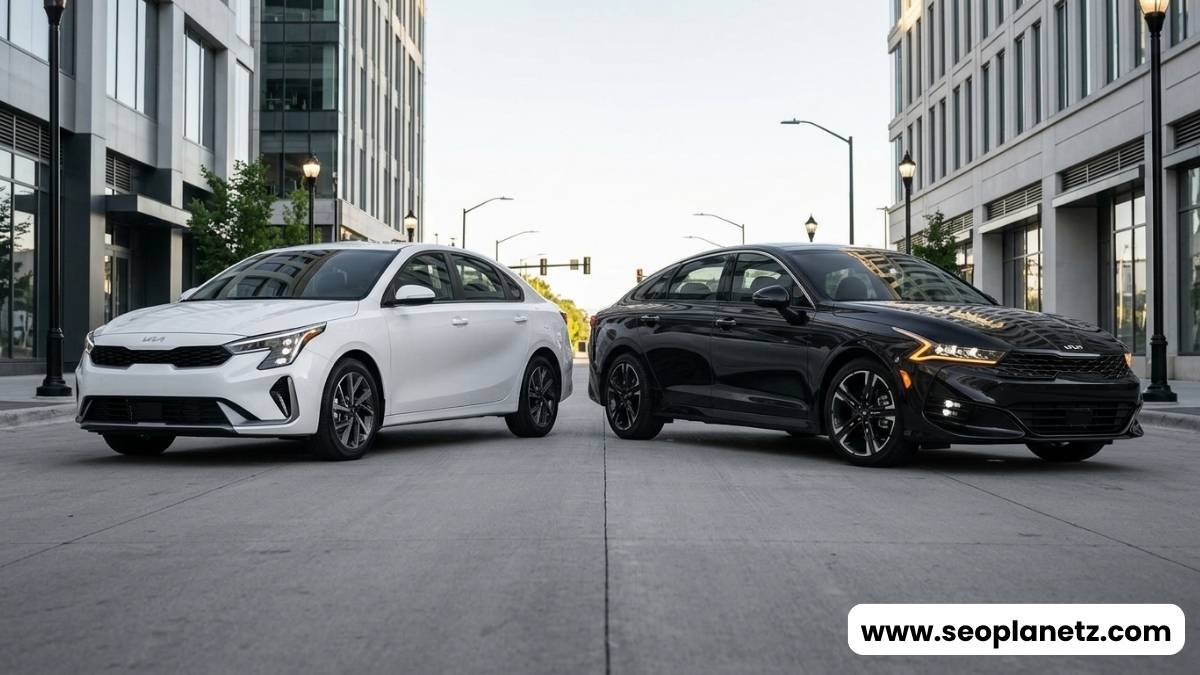
Kia K4 vs K5 — At a Glance: 5 Key Differences
Before the deep dive, here are the five things that actually matter when choosing between these two:
- Size — K4 is compact, K5 is midsize (7.7 inches longer)
- Price — K4 starts $6,000 cheaper ($22,290 vs $28,735)
- Engine power — K5 goes up to 290 HP; K4 tops at 190 HP (turbo)
- AWD — K5 offers it; K4 does not
- Fuel economy — K4 wins clearly (34 MPG combined vs 30 MPG combined)
Engine & Performance — K4 vs K5
This is where the two sedans diverge most significantly.
Kia K4 Engine Options
| Engine | HP | Torque | Transmission | 0–60 mph |
|---|---|---|---|---|
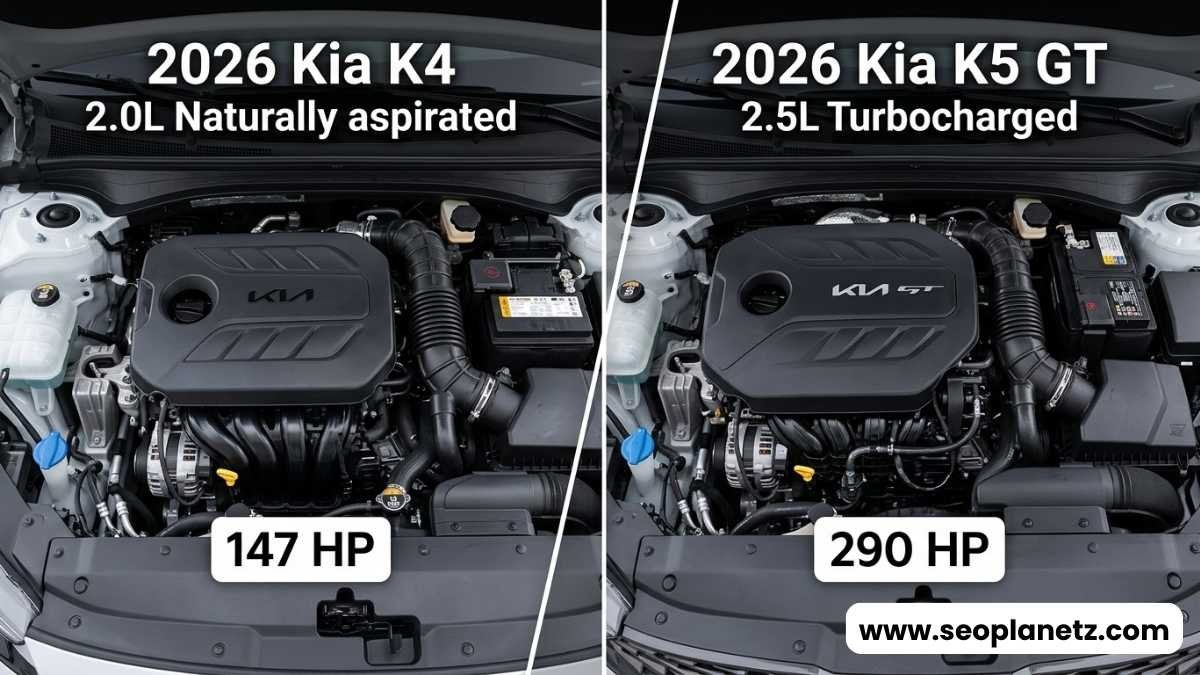
| 2.0L 4-cyl (base) | 147 HP | 132 lb-ft | CVT | ~8.5 sec |
| 1.6L Turbo (GT-Line) | 190 HP | 195 lb-ft | 8-speed Auto | 7.1 sec |
The base K4 2.0L is tuned purely for efficiency. It's smooth in city traffic but feels underpowered when merging onto highways at speed. The 1.6L turbo GT-Line changes the equation entirely — 190 HP with an 8-speed automatic makes the K4 genuinely enjoyable to drive, not just economical.
Kia K5 Engine Options
| Engine | HP | Torque | Transmission | 0–60 mph |
|---|---|---|---|---|
| 2.5L 4-cyl (base) | 191 HP | 181 lb-ft | 8-speed Auto | ~7.5 sec |
| 2.5L Turbo (GT) | 290 HP | 311 lb-ft | 8-speed DCT | 5.2 sec |
The K5 GT's 290 HP turbocharged engine with a wet dual-clutch transmission (DCT) is genuinely fast — 5.2 seconds 0–60 mph puts it in sports sedan territory. This is one of the few mass-market sedans at this price point with a proper DCT gearbox.
Performance winner: Kia K5 — especially the GT trim. No contest.
Fuel Efficiency & Real-World MPG
The K4 is one of the most fuel-efficient non-hybrid sedans you can buy in 2026. That's a major selling point for daily commuters and budget-conscious buyers.
| Model | City MPG | Highway MPG | Combined MPG |
|---|---|---|---|
| Kia K4 LX (2.0L) | 30 | 40 | 34 |
| Kia K4 GT-Line Turbo (1.6T) | 27 | 37 | 31 |
| Kia K5 LX (2.5L FWD) | 26 | 37 | 30 |
| Kia K5 GT-Line AWD | 24 | 32 | 27 |
| Kia K5 GT (2.5T DCT) | 22 | 32 | 26 |
At $3.50/gallon and 15,000 miles annually, the base K4 saves approximately $350–$450 per year in fuel costs compared to the base K5. Over 5 years of ownership, that's $1,750–$2,250 in savings — real money.
Fuel economy winner: Kia K4 — by a meaningful margin across every trim.
Size, Dimensions & Space — K4 vs K5
This is the second most important comparison. The K5 is physically larger in every dimension, and that translates directly to cabin and cargo experience.
| Measurement | Kia K4 | Kia K5 | Difference |
|---|---|---|---|
| Length | 182.7 in | 190.4 in | K5 is 7.7 in longer |
| Width | 71.5 in | 73.2 in | K5 is 1.7 in wider |
| Height | 55.7 in | 56.9 in | K5 is 1.2 in taller |
| Wheelbase | 107.1 in | 111.8 in | K5 is 4.7 in longer |
| Front Legroom | 42.3 in | 44.0 in | K5 wins front |
| Rear Legroom | 37.4 in | 35.9 in | K4 wins rear |
| Trunk Space | 14.3 cu ft | 16.0 cu ft | K5 has more cargo |
Surprising finding: The K4 actually offers more rear passenger legroom than the K5 — 37.4 vs 35.9 inches. The K5's longer wheelbase prioritizes front-row space, giving it a "grand tourer" feel. The K4's more balanced front/rear distribution makes it genuinely comfortable as a family commuter.
Taller drivers (6'0"+) will prefer the K5's front headroom and legroom. Rear passengers, especially on family trips, may actually prefer the K4.
Trim Levels & Pricing — Complete Comparison
Kia K4 Trims 2026
| Trim | Starting MSRP | Key Features |
|---|---|---|
| LX | $22,290 | 2.0L engine, CVT, LED headlamps, 8-inch touchscreen |
| LXS | $23,290 | Blind spot monitor, rear cross-traffic alert |
| EX | $25,290 | 10.25-inch touchscreen, heated front seats, wireless CarPlay |
| GT-Line | $26,490 | Sport styling, 1.6T turbo engine, 8-speed auto |
| K4 Hatchback (base) | $24,990 | Hatchback body style, same powertrain options |
Kia K5 Trims 2026
| Trim | Starting MSRP | Key Features |
|---|---|---|
| LXS | $28,735 | 2.5L engine, 8-speed auto, 8-inch touchscreen |
| GT-Line FWD | $30,490 | Sport styling, 10.25-inch screen, wireless CarPlay |
| GT-Line AWD | $32,490 | 4MOTION AWD, Snow mode, torque vectoring |
| EX | $31,990 | Ventilated seats, remote start, premium materials |
| GT | $35,490+ | 2.5T turbo, 290 HP, 8-speed DCT, Brembo brakes |
Best value pick in K4: EX at $25,290 — heated seats, large touchscreen, modern safety tech. Best value pick in K5: GT-Line FWD at $30,490 — sporty look, full tech suite, without AWD premium. For enthusiasts: K5 GT at $35,490 — 290 HP DCT performance at this price is extraordinary value.
Interior, Tech & Comfort
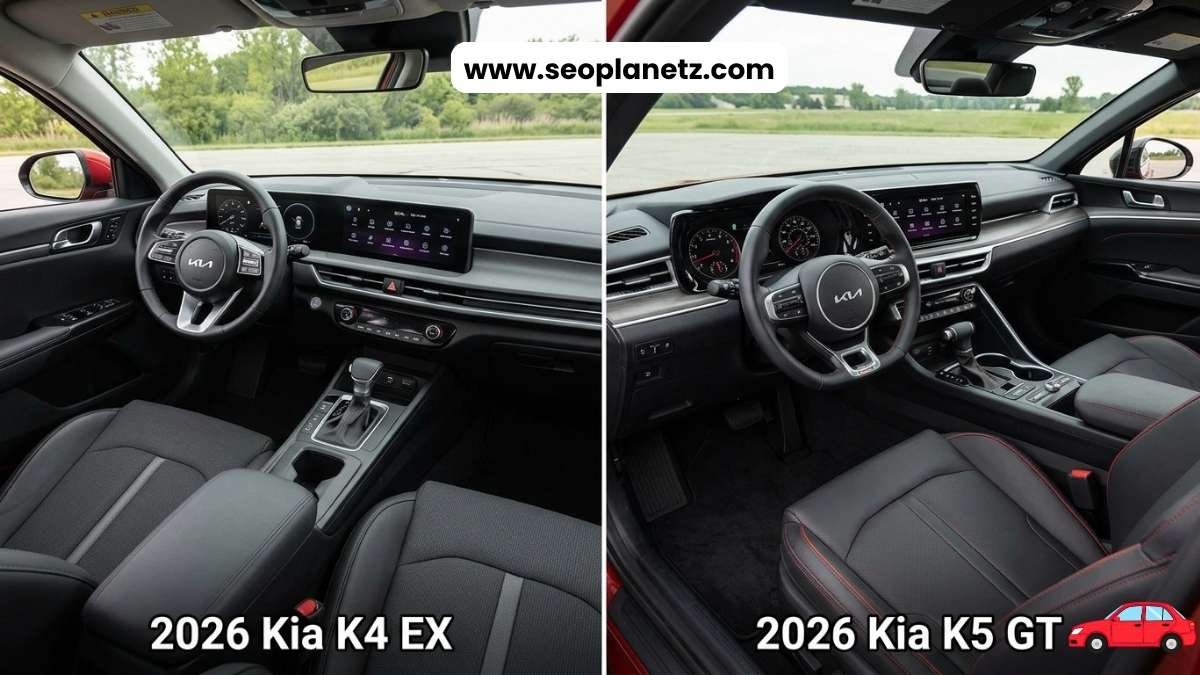
Both cars share Kia's "Opposites United" design philosophy — dramatic lines, premium-feeling layouts, and tech-forward dashboards. But there are real differences in material quality and feature availability.
K4 Interior Highlights:
- Standard 8-inch touchscreen (10.25-inch on EX+)
- Wireless Apple CarPlay / Android Auto (EX+)
- Cloth seats base, leatherette on higher trims
- Dual-zone automatic climate control (EX+)
- 4-speaker base audio
K5 Interior Highlights:
- Standard 10.25-inch touchscreen across all trims
- Bose premium audio available
- Ventilated front seats (EX and above)
- Remote start standard
- Available heads-up display
- Near-luxury material quality on GT trim
The K5's cabin genuinely feels a segment above the K4 — particularly in upper trims. Soft-touch materials, better sound deadening, and wider front seats give the K5 a near-luxury feel at a mainstream price.
Safety Suite — K4 vs K5
Both Kia sedans take safety seriously. Standard driver-assist tech comes on every trim of both models — no paying extra for basic safety.
Standard on Both K4 and K5:
- Forward Collision-Avoidance Assist (FCA)
- Lane Keeping Assist (LKA)
- Driver Attention Warning
- Blind Spot Collision Warning
K5 Adds (higher trims):
- Highway Driving Assist (HDA)
- Blind Spot View Monitor (camera view in instrument cluster)
- Adaptive Cruise Control with Stop & Go
- Rear Occupant Alert
Safety Ratings:
- Kia K4: IIHS Top Safety Pick 2026 — top marks in all crash categories
- Kia K5: IIHS Good ratings — structure, safety cage, and driver protection all top-rated
Verify full crash ratings directly on IIHS official ratings and NHTSA 5-Star database.
AWD — The K4's Biggest Limitation
This is where the K4 loses buyers who live in cold-weather states. Every single K4 trim is front-wheel drive only. No AWD option exists — not even as a paid upgrade.
The K5 GT-Line AWD at $32,490 fills this gap with a torque-vectoring all-wheel drive system and a dedicated Snow driving mode. For buyers in Minnesota, Colorado, Wisconsin, or any state with serious winter weather — this alone might make the K5 the only logical choice.
If you live in a warm climate and never deal with snow, this difference is irrelevant. But if winter driving matters, the K4 simply can't compete with the K5 GT-Line AWD.
Transmissions — An Underrated Difference
Neither sedan offers a manual gearbox, but their automatic transmission choices reveal a lot about each car's character.
| Model | Transmission |
|---|---|
| K4 base (2.0L) | CVT — smooth but uninspiring |
| K4 GT-Line (1.6T) | 8-speed automatic — engaging |
| K5 base (2.5L) | 8-speed automatic — refined |
| K5 GT (2.5T) | 8-speed wet dual-clutch (DCT) — genuinely sporty |
The K5 GT's wet DCT is rare at this price point. Most sedans under $40,000 use traditional automatics. The DCT delivers faster, more precise gear changes — making the K5 GT feel legitimately sporty rather than just powerful.
Competitor Comparison — K4 & K5 vs The Market
| Model | Segment | HP | MPG (combined) | Starting MSRP | AWD Available |
|---|---|---|---|---|---|
| Kia K4 | Compact | 147–190 | 31–34 | $22,290 | ❌ No |
| Kia K5 | Midsize | 191–290 | 26–30 | $28,735 | ✅ Yes |
| Honda Civic | Compact | 158–180 | 32–36 | $24,950 | ❌ No |
| Toyota Corolla | Compact | 138–169 | 32–35 | $23,500 | ✅ Yes |
| Hyundai Elantra | Compact | 147–276 | 29–33 | $22,615 | ❌ No |
| Honda Accord | Midsize | 192–204 | 29–33 | $29,600 | ❌ No |
| Toyota Camry | Midsize | 203–301 | 28–32 | $28,400 | ✅ Yes |
K4 vs Honda Civic: The K4 is cheaper and offers more rear legroom. The Civic has a stronger reliability track record and a sportier Type R variant. Near-equal overall.
K4 vs Toyota Corolla: The Corolla offers AWD — a genuine advantage. The K4 counters with better standard tech and sharper styling.
K5 vs Toyota Camry: These two are the closest rivals in the midsize segment. The Camry has a longer reliability pedigree; the K5 GT is faster and more exciting. The Camry Hybrid wins on fuel economy by a large margin.
K5 vs Honda Accord: Both are excellent midsize sedans. The K5 GT beats the Accord on raw performance. The Accord wins on refinement, cabin quality, and long-term reliability data. For more on the KIA range, visit our full 2026 KIA Telluride review for the SUV equivalent comparison.
Pros & Cons
Kia K4 Pros:
- Most affordable entry point ($22,290)
- Best-in-class fuel economy for non-hybrid compact
- IIHS Top Safety Pick 2026
- More rear legroom than K5
- Sharper, more youthful styling
- Available hatchback body style (unique in segment)
Kia K4 Cons:
- No AWD available at any trim level
- Base 2.0L CVT is slow and unexciting
- Smaller trunk (14.3 cu ft)
- Less rear headroom than K5
- No ventilated seats available
Kia K5 Pros:
- Available AWD (GT-Line AWD)
- Up to 290 HP with DCT in GT trim — genuinely fast
- Larger cabin and trunk
- Ventilated front seats available
- More premium interior feel
- Remote start standard
Kia K5 Cons:
- $6,000+ more expensive than comparable K4
- Lower fuel economy across all trims
- Less rear legroom than K4 (surprisingly)
- GT trim pricing ($35K+) approaches near-luxury territory
- Heavier vehicle dynamics vs K4
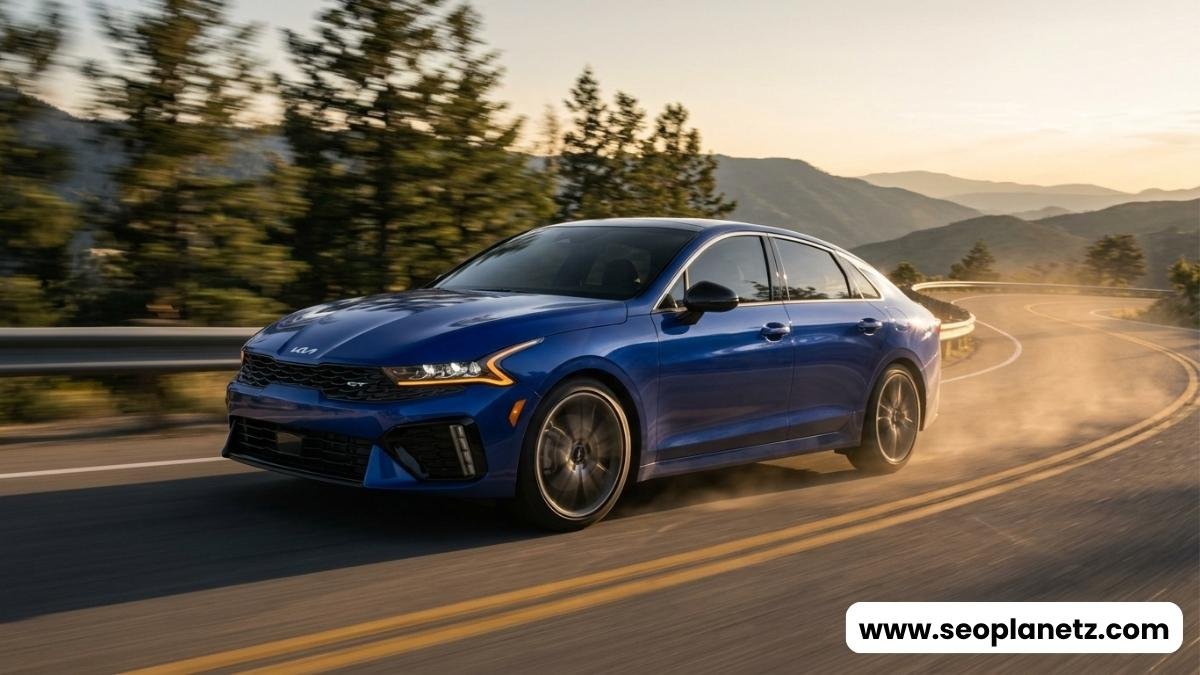
Who Should Buy the Kia K4?
The K4 is the right choice if:
- You prioritize fuel economy and low running costs
- Budget is under $27,000
- You live in a warm-weather state (no AWD needed)
- City commuting and parking ease matter
- You want a hatchback option
- You're a first-time new car buyer
Ideal buyer: A 25–35 year old urban professional or small family in a warm-weather city who wants a stylish, fuel-efficient daily driver with modern tech, without paying midsize prices.
Who Should Buy the Kia K5?
The K5 is the right choice if:
- You want AWD for winter driving
- Performance matters — especially the K5 GT
- You frequently carry adult passengers who need front seat space
- Long highway road trips are common
- You want near-luxury cabin feel under $35,000
- The K4's base engine feels too underwhelming
Ideal buyer: A 30–45 year old professional or family in a cold-climate state who wants a refined, spacious, and capable sedan — or a driving enthusiast who wants the GT's 290 HP DCT performance at a mainstream price.
2026 Model Update — What's New?
Kia K4 2026: The major 2026 addition is the K4 Hatchback starting at $24,990 — giving buyers a practical 5-door option that no direct K4 rival offers. The powertrain lineup carries over unchanged.
Kia K5 2026: The K5 continues with its refreshed 2025 platform — revised Tiger Nose grille, updated lighting signatures, and improved interior materials. No major mechanical changes for 2026. The GT trim remains the performance highlight of the entire Kia sedan lineup.
For buyers considering used options, read our guide on How to Negotiate Price for Used Car in 2026 — both the K4 and K5 hold their value well but have room to negotiate.
Reliability & Warranty — Both Win Here
Both cars back Kia's industry-best warranty:
- 5 years / 60,000 miles — basic warranty
- 10 years / 100,000 miles — powertrain warranty
- 5 years / unlimited miles — roadside assistance
J.D. Power Quality & Reliability scores: K4 — 86/100, K5 — 85/100. Both are above segment average. For long-term ownership data, Kia's official warranty information covers full terms and conditions.
Neither car has a problematic history comparable to Hyundai/Kia's earlier engine recall issues (those affected Theta II engines, not the current GDI lineup in K4/K5). Also see our Nissan Rogue Years to Avoid guide for how to evaluate reliability before buying any used car.
Total Cost of Ownership — K4 vs K5 Annual Estimate
| Cost Category | Kia K4 (annual) | Kia K5 (annual) |
|---|---|---|
| Insurance (USA avg.) | $1,400–$1,700 | $1,600–$2,000 |
| Fuel (15k mi, $3.50/gal) | $1,450–$1,550 | $1,750–$1,900 |
| Scheduled Maintenance | $300–$450 | $350–$500 |
| Unexpected Repairs | $200–$500 | $250–$600 |
| Total (typical year) | ~$3,350–$4,200 | ~$3,950–$5,000 |
Over 5 years, the K4 saves approximately $3,000–$4,000 in total ownership costs versus the K5. That gap narrows if you finance — K5's higher resale value partially offsets the difference.
Most Asked in 2026
Is Kia K4 better than K5 for city driving?
Yes. The K4's smaller footprint, lighter steering, and 34 MPG combined fuel economy make it genuinely superior for urban driving. It's easier to park, cheaper to fuel, and more maneuverable in traffic. For city-only use, the K4 wins clearly over the K5.
Does Kia K4 have AWD?
No. The 2026 Kia K4 is front-wheel drive only across all trims — LX, LXS, EX, and GT-Line. No AWD option is available. If AWD is required, the Kia K5 GT-Line AWD is the natural step up within the Kia sedan family.
Is Kia K5 GT worth it over K5 base?
For driving enthusiasts, absolutely. The GT's 2.5L turbocharged engine produces 290 HP and 311 lb-ft of torque with a wet dual-clutch transmission — delivering 5.2 second 0–60 mph times. That's sports car performance at a $35,000 mainstream price. The base K5 at 191 HP is refined but unremarkable by comparison.
What replaced the Kia Forte?
The Kia K4 replaced the Forte for the 2025 model year, debuting at the New York International Auto Show on March 27, 2024. The K4 brings sharper styling, better standard tech, and a new hatchback body option that the Forte never offered.
What replaced the Kia Optima?
The Kia K5 replaced the Optima starting with the 2021 model year. The name change to K5 aligned Kia's USA lineup with its global model naming convention (K1 through K9). The K5 brought significantly improved performance, styling, and technology over the outgoing Optima.
Which is better for families — K4 or K5?
It depends on family size and priorities. The K4 surprisingly offers more rear passenger legroom (37.4 vs 35.9 inches) — good for backseat passengers. However, the K5 has a larger trunk (16.0 vs 14.3 cu ft) and available AWD for winter-weather families. For a small family in a warm climate, the K4 is sufficient. For larger families or cold-climate use, the K5 is the better choice.
How long do Kia K4 and K5 last?
Both are built to exceed 200,000 miles with proper maintenance. The 10-year / 100,000-mile powertrain warranty reflects Kia's genuine confidence in these drivetrains. Key maintenance items: oil changes every 7,500 miles, transmission fluid at 60,000 miles, and spark plugs at 100,000 miles. See Kia's official maintenance schedule for complete guidance.
Frequently Asked Questions
Is the Kia K4 the same as the Forte?
The K4 replaced the Forte for the 2025 model year. It's not a rebadge — it's a completely new vehicle on a new platform with sharper styling, improved tech, and a new hatchback body option. The Forte's legacy lives on in the K4's value-focused pricing and fuel efficiency orientation.
Does the K5 have a V6 engine?
No. The 2026 Kia K5 uses four-cylinder engines only — a naturally aspirated 2.5L (191 HP) and a turbocharged 2.5L (290 HP in GT trim). The era of V6 midsize sedans has largely ended across the segment, with turbocharged four-cylinders offering superior power-to-efficiency ratios.
Can you negotiate price on Kia K4 and K5?
Yes. Both models have room for negotiation, especially in markets with higher inventory. The K4's volume sales make dealers more flexible on pricing. The K5 GT in particular — a lower-volume enthusiast trim — may have less negotiating room. For a full negotiation strategy, see our How to Negotiate Price for Used Car guide.
Which Kia sedan is most reliable — K4 or K5?
Both score nearly identically in J.D. Power reliability — K4 at 86/100, K5 at 85/100. Neither has a problematic reliability history. Both benefit from Kia's 10-year powertrain warranty. Long-term data beyond 5 years is limited for the K4 (new in 2025) but the K5 has a solid 4-year track record since 2021.
Is Kia K4 good for long road trips?
Reasonably good, but the K5 is better suited for frequent long-distance travel. The K5 offers more front legroom, better sound insulation, and available highway driving assist with stop-and-go adaptive cruise — features that reduce fatigue on long drives. The K4's fuel efficiency advantage does partially offset its comfort deficit on extended trips.
Final Verdict — K4 vs K5: Who Wins?
There is no single winner — because these two cars serve genuinely different buyers.
Choose the Kia K4 if you want the best value compact sedan in America right now. At $22,290, with 34 MPG combined, IIHS Top Safety Pick status, and a sharp design, it's one of the strongest new car propositions at any price. The new hatchback variant adds versatility that no direct rival offers at this price point.
Choose the Kia K5 if you want more car — more space, more power, more options, and the option of AWD. The GT trim's 290 HP DCT performance is extraordinary value at $35,000. Even the base K5 LXS at $28,735 feels like a near-premium sedan.
The tipping point: If you're seriously considering the K4 GT-Line Turbo at $26,490, pause and look at the K5 GT-Line FWD at $30,490 — you're only $4,000 apart, and the K5 gives you a larger car with a more powerful engine and more standard features. That $4,000 gap might be worth it.
Both cars carry Kia's 10-year warranty. Both are IIHS safety performers. Both will last 200,000+ miles. The choice comes down to your lifestyle — not the cars themselves.
For a broader look at Kia's full SUV range, read our KIA Cars complete guide to see how the K4 and K5 fit within Kia's growing lineup. And if you're buying used, don't miss our Best AWD PHEV SUV 2026 guide for electrified alternatives worth considering.