How to Negotiate Price for Used Car in 2026: Best Expert Guide

How to Negotiate Price for Used Car in 2026 You Need to Know Before Buy Used Car
Learning how to negotiate price for used car purchases is the single most valuable skill you can develop before stepping onto any dealership lot or messaging a private seller. In 2026, with used car inventory stabilizing post-pandemic and average used vehicle prices hovering around $27,000–$29,000 according to Edmunds, buyers have more leverage than they've had in years. Whether you're eyeing a certified pre-owned BMW, a Tesla with fixed pricing, or a private-seller Honda Accord, the right negotiation strategy can save you anywhere from $1,500 to $5,000 or more.
How do you negotiate a used car price effectively? Research the vehicle's fair market value via Kelley Blue Book or Edmunds, get pre-approved financing, focus on the out-the-door price (not monthly payments), and be ready to walk away. Starting 10–15% below asking price gives you a solid opening position.

1. How to Negotiate the Price of a Used Car with a Dealership
Dealership negotiation in 2026 follows a structured game — and knowing the rules is everything.
Start by researching the vehicle's market value on Kelley Blue Book and Edmunds before you walk in. Get pre-approved financing from your bank or credit union so you arrive as a "cash-equivalent" buyer. Always negotiate the out-the-door (OTD) price — total cost including taxes, registration, and dealer fees — never the monthly payment.
Request quotes from at least three dealerships via email simultaneously. This creates competition without you setting foot in a showroom. When you're in-person, inspect the car carefully, note every flaw, and use them as negotiating points. Silence is a powerful tool — let the salesperson fill it.
How much do dealerships negotiate on used cars? Most franchised dealerships have 3–10% flexibility on used car prices. On a $25,000 vehicle, that's $750–$2,500 in real savings. Independent dealers often have more room. Certified pre-owned (CPO) vehicles from brands like BMW and Mercedes tend to have tighter margins but are still negotiable.
2. What's a Reasonable Initial Offer for a Pre-Owned Sedan?
For most used sedans — think a 2022 Toyota Camry, 2021 Honda Accord, or 2023 Nissan Altima — a reasonable opening offer is 10–15% below the asking price.
If the listed price is $22,000, open at $18,700–$19,800. This gives you negotiating room while not insulting the seller. Back your offer with printed market data from Edmunds or KBB. Mention any comparable listings you've found. Always anchor low — you can always come up, you can never go back down.
3. Best Apps or Websites to Compare Used Car Prices for Negotiation
These platforms are your pre-negotiation arsenal:
| Platform | Best For | Free? |
|---|---|---|
| Kelley Blue Book (KBB) | Fair market value, trade-in pricing | Yes |
| Edmunds | True Market Value (TMV), dealer reviews | Yes |
| CarEdge | Negotiation scripts, dealer profit data | Freemium |
| Cars.com | Inventory comparison, price history | Yes |
| AutoTrader | Wide inventory, private + dealer listings | Yes |
| CarGurus | Deal ratings (Great/Good/Fair/Overpriced) | Yes |
CarEdge used car negotiation tools are particularly powerful — they show you exactly what dealers paid for a vehicle at auction, giving you a floor to negotiate from.
4. How to Accurately Determine the Market Value of a Used Truck?
For used trucks — Ford F-150, Chevy Silverado, GMC Sierra — value is driven by mileage, trim, towing package, and regional demand.
Use KBB's Private Party Value and Dealer Retail Value as your range. A 2021 Ford F-150 XLT with 45,000 miles and a 2.7L EcoBoost (310 hp, 400 lb-ft torque) might list for $38,000 at a dealer. KBB Dealer Retail might show $36,500 — that's your ceiling. Factor in any rust, tire wear, or deferred maintenance to justify going lower. The NADA Guides are also excellent for trucks and provide regional pricing adjustments.
5. Tips for Negotiating a Lower Price on a Used Car from a Private Seller
Private seller negotiation is less formal but requires equal preparation. Key tactics:
- Run a CARFAX or AutoCheck report first — accidents, flood damage, and title issues are immediate price-reduction leverage
- Bring a mechanic for a pre-purchase inspection ($100–$150 investment that can save thousands)
- Point out every flaw visually — worn tires, faded paint, dashboard warning lights
- Make a firm, written offer — "Based on the CarFax report showing a prior accident and KBB private party value of $14,200, I can offer $13,000 today"
- Create urgency from your side — tell them you have two other cars to look at today
Private sellers are often more emotionally attached to their vehicle's value. Be respectful, factual, and never aggressive.
6. Should I Arrange a Third-Party Vehicle Inspection Before Purchase?
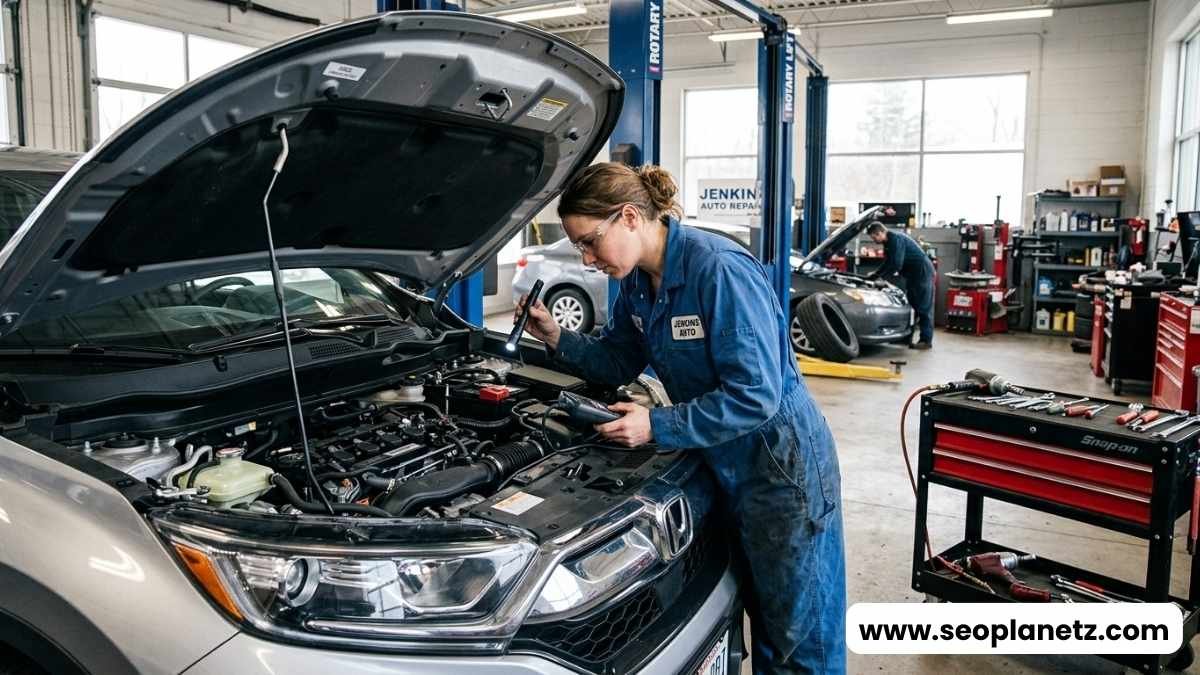
Absolutely yes. A pre-purchase inspection (PPI) by an independent mechanic is the single best $100–$150 you'll spend in the entire car-buying process.
A PPI can reveal hidden issues — worn brake pads, leaking gaskets, transmission slipping, or suspension damage — that aren't visible on a test drive. Armed with this report, you can either renegotiate the price downward or walk away entirely. Most reputable sellers and dealers will allow it. If a seller refuses, that's a major red flag.
7. Which Used Car Buying Services Offer Negotiation Support or Advice?
Several services now help buyers negotiate or handle it entirely:
- CarEdge – Provides dealer cost data, negotiation scripts, and a concierge buying service
- TrueCar – Shows what others paid; dealers agree to transparent pricing
- Costco Auto Program – Pre-negotiated prices through member dealerships (no-haggle)
- Consumer Reports Build & Buy – Connects you with dealers at pre-researched fair prices
- AutoNation used car negotiation – AutoNation operates a "no-haggle" pricing model on many listings, though their "MaxCare" add-ons are still negotiable
For those who hate negotiating, used car no haggle services like Carvana and CarMax offer fixed pricing — convenient, but you typically pay $500–$2,000 more than a negotiated deal.
8. Effective Negotiation Tactics When Buying from an Individual Seller
The best tactics for private seller deals:
Tactic 1 – The Silent Offer: Make your offer, then go quiet. Let them respond. Most people feel compelled to fill silence and will often counter at a price closer to yours.
Tactic 2 – The Walk-Away: Start heading for your car. A serious seller will call you back — often with a better number.
Tactic 3 – The Bundle Ask: "I'll do $X if you include the snow tires / second key / fresh oil change."
Tactic 4 – Cash in Hand: Showing physical cash or a bank check creates psychological urgency and real payment certainty for the seller.
Tactic 5 – The Deadline: "I need to make a decision by end of today — I have another appointment at 4pm."
9. How to Use Vehicle History Reports to Negotiate a Better Price
A CARFAX or AutoCheck report is a negotiation document, not just a safety check.
Every entry is leverage:
| Report Finding | Estimated Price Reduction |
|---|---|
| Minor fender-bender (1 accident) | $500–$1,500 |
| Two or more accidents | $1,500–$3,000+ |
| Rental/fleet use | $800–$1,500 |
| High number of owners (3+) | $500–$1,000 |
| Service records gap (6+ months) | $300–$800 |
| Odometer discrepancy flag | Walk away |
Print the report, highlight the issues, and hand it to the seller with your adjusted offer. This depersonalizes the negotiation — it's not you vs. them, it's the data vs. the price.
10. Key Questions to Ask a Salesperson During Price Discussions
These questions shift power back to you:
- "What's the out-the-door price, all-in?" — Exposes hidden fees
- "How long has this car been on the lot?" — Cars over 45–60 days are far more negotiable
- "What did the dealership pay for this vehicle at auction?" — Many will dodge, but CarEdge can tell you anyway
- "Is there any reconditioning cost already included in the price?" — Leverage to remove it
- "What's the best price you can do if I write a check today?" — Creates urgency
- "Can I take it to my mechanic before we finalize?" — Separates legitimate dealers from shady ones
- "Is this price negotiable or is this a no-haggle price?" — Clarifies the field quickly

11. How to Negotiate Best Price on Used Car: Scenario Breakdown
Here's how the full process looks in practice for a 2022 Toyota RAV4 LE with 38,000 miles listed at $29,500:
Step 1 – Research: KBB Dealer Retail = $27,800. CarGurus shows "Fair Deal" at $28,200.
Step 2 – Inspection: Pre-purchase inspection reveals worn rear brake pads and a minor paint scratch on the rear bumper. Repair cost: ~$350.
Step 3 – Opening Offer: $26,500 (10.2% below asking), citing KBB value + brake repair cost.
Step 4 – Counter: Dealer counters at $28,800.
Step 5 – Middle Ground: You come to $27,400. Dealer agrees at $27,600 OTD.
Result: You saved $1,900 off asking price. That took 45 minutes.
12. Negotiating by Scenario: Dealership, Online, Cash, Financing, Phone
How to Negotiate Used Car Price at Dealership When Paying Cash
Cash doesn't mean what it used to. Dealers make money on financing (F&I income), so paying cash sometimes gets less enthusiasm. However, you can still leverage it: "I'm ready to sign today if we can agree on $X." Bring a bank draft and show it. Focus always on OTD price.
How to Negotiate Used Car Price Online
Email multiple dealers simultaneously with: "I'm looking at a [Year/Make/Model]. I have KBB value of $X and will purchase this week. What's your best OTD price?" This pits dealers against each other without awkward in-person pressure. Consumer Reports recommends getting at least 3 email quotes before visiting any dealer.
How to Negotiate Car Price with Pre-Approval
Pre-approval is your superpower. Walk in with a bank or credit union pre-approval letter. This means you're not dependent on dealer financing, eliminates F&I manipulation, and signals you're a serious buyer. The dealer may try to beat your rate to capture the financing profit — that's fine, let them compete for your business.
How to Negotiate Car Price When Financing
Never reveal your target monthly payment. Dealers use monthly payment focus to obscure total price. Always say: "Let's agree on the vehicle price first, then we can discuss financing terms." According to the Federal Trade Commission, this is the most important rule in financed car purchases.
How to Negotiate Car Price Over the Phone
Call the internet sales department (not the floor), identify the car by stock number, and say: "I've done my research and I'm ready to buy. Can you beat $X OTD?" Phone negotiation is fast, pressure-free, and extremely effective when you have competing offers in hand.
How to Negotiate Used Car Price – Reddit Community Wisdom
The r/personalfinance and r/askcarsales subreddits consistently advise: get pre-approved, negotiate OTD price only, shop multiple dealers simultaneously, and use CarEdge for dealer cost data. One commonly cited tip: ask for the "dealer's best price" via email first — it often saves $500–$1,000 before you even visit.
13. Does BMW Negotiate Price on Used Cars?
BMW certified pre-owned (CPO) vehicles through BMW Financial Services typically have less negotiating room than non-certified used cars — usually 2–5% flexibility.
However, non-CPO used BMWs at independent dealers have significantly more room — sometimes 8–12% below asking. Always verify CPO status at BMW's official CPO portal. The CPO warranty value is real (up to 100,000 miles powertrain), so factor that into your valuation before pushing too hard on price.
Tesla used car negotiation: Tesla has fixed pricing on its used inventory — no negotiation is possible on the vehicle price. You can negotiate on delivery fees or request a recent service record for battery health verification.
AutoNation used car negotiation: AutoNation uses a "no-haggle" Price Promise model, though finance and add-on products like MaxCare extended warranties remain negotiable.
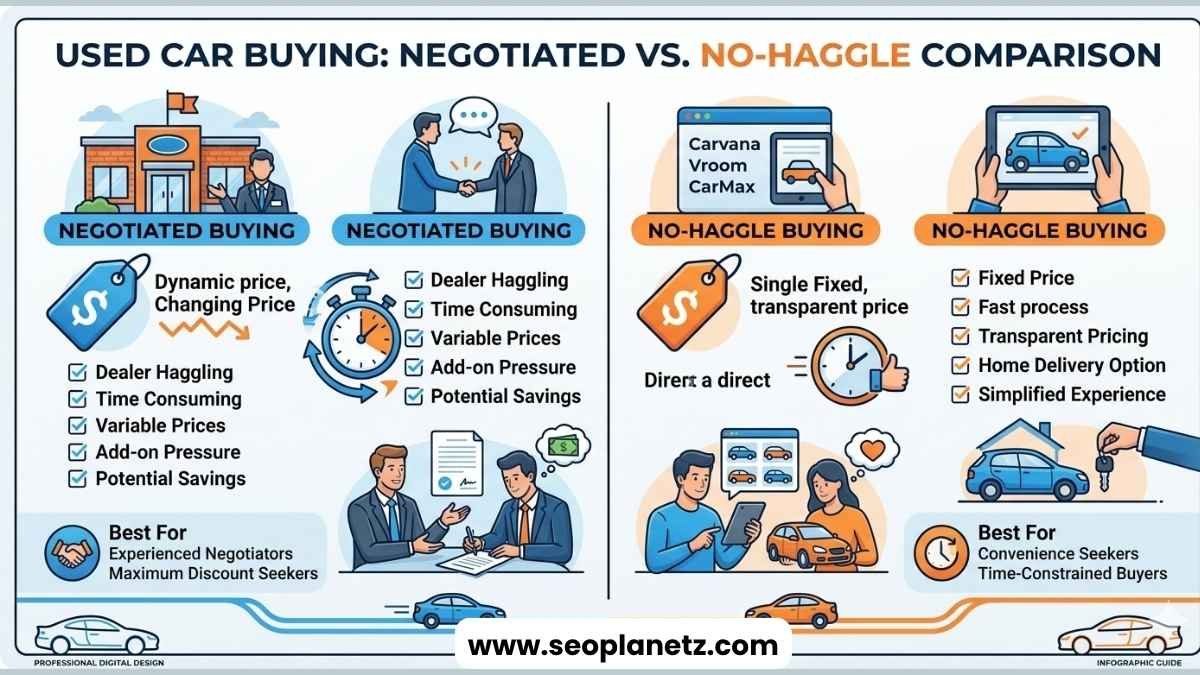
14. Pros & Cons of Negotiating vs. No-Haggle Buying
| Factor | Negotiation | No-Haggle (Carvana/CarMax) |
|---|---|---|
| Potential savings | $1,000–$5,000+ | $0 |
| Time required | 2–4 hours | 30–60 min |
| Stress level | Moderate–High | Low |
| Price transparency | Low (requires research) | High |
| Best for | Prepared, confident buyers | First-time or time-pressed buyers |
15. Total Cost of Ownership Consideration in Negotiation
When negotiating, factor in ownership costs beyond purchase price:
| Cost Factor | Annual Estimate (Midsize Sedan) |
|---|---|
| Fuel (15,000 mi @ $3.20/gal, 30 MPG) | ~$1,600 |
| Insurance (full coverage) | $1,400–$2,200 |
| Maintenance (oil, tires, brakes) | $800–$1,400 |
| Registration & taxes | $200–$600 |
| Depreciation (year 1) | $2,000–$3,500 |
| Total Annual Cost | ~$6,000–$9,300 |
A car that costs $1,500 more upfront but has better reliability ratings and lower insurance premiums can be cheaper over 5 years. Use NHTSA's safety ratings and IIHS crash data as part of your total-value calculation, not just purchase price.
For more car buying guidance, check out our detailed guides on Mercedes vs BMW vs Audi Comparison 2026, the 2027 GMC Yukon Denali Specs & Prices, and Best Electric Cars UK 2026.
FAQs: How to Negotiate Price for Used Car
Q: What is the best way to negotiate the price of a used car?
Research fair market value on KBB and Edmunds, get pre-approved financing, and always negotiate the out-the-door price — not monthly payments. Get competing quotes from multiple dealers via email, arrive prepared with a vehicle history report, and be willing to walk away. That combination delivers the best results consistently.
Q: What is the 70/30 rule in negotiation?
The 70/30 rule means you should listen 70% of the time and talk only 30%. In car buying, this means letting the salesperson reveal information, offer concessions, and fill silences — while you stay calm, ask targeted questions, and respond with data-backed counteroffers rather than emotional reactions.
Q: What is the 20% rule when buying a car?
The 20% rule advises putting at least 20% down payment on a vehicle purchase to avoid being "underwater" on your loan (owing more than the car is worth). For a $25,000 used car, that's $5,000 down. Combined with a loan term no longer than 48 months, this keeps total ownership cost manageable.
Q: Is asking 10% off a used car too much?
No — 10% is a reasonable and commonly accepted opening negotiation position. On a $24,000 car, that's a $2,400 reduction, and most dealers have 3–10% flexibility built into used car pricing. Back your offer with KBB data, a vehicle history report, and any mechanical issues found in a PPI to justify the ask.
Q: What is the 30-60-90 rule for cars?
In used car negotiation, this refers to lot age: vehicles on a dealer's lot for 30 days start to cost the dealer in floorplan interest. At 60 days, the dealer is losing money daily. At 90 days, they are highly motivated to sell at or near cost. Always ask how long a car has been on the lot — it's one of your strongest leverage points.
Q: What are the 5 C's of negotiation?
The 5 C's are: Clarity (know exactly what you want), Credibility (back claims with data), Compromise (be willing to meet in the middle), Control (manage emotions and pace), and Commitment (close decisively). All five apply directly to used car price negotiation at both dealerships and with private sellers.
Q: What are the 4 golden rules of negotiation?
The 4 golden rules are: (1) Never make the first offer if you can avoid it, (2) Always anchor with a specific number backed by data, (3) Never accept the first counteroffer — always pause and respond thoughtfully, and (4) Be willing to walk away — it's your most powerful negotiating tool.
Q: What are the 7 pillars of negotiation?
The 7 pillars are: Interests, Options, Alternatives (BATNA), Legitimacy, Communication, Relationship, and Commitment. In car buying: your BATNA (best alternative to a negotiated agreement) is another car you're considering — and referencing it casually during negotiation is a proven tactic to accelerate dealer concessions.
Q: What not to say when negotiating a car price?
Never say: "I love this car," "I need this car by this weekend," "What's the monthly payment?", "I'm pre-approved for up to $X," or "This is my maximum budget." All of these give the dealer leverage. Reveal only that you're ready to buy today — nothing more. Protecting information is as important as using it strategically.
Final Verdict
Knowing how to negotiate price for used car deals in 2026 is not about aggression — it's about preparation. The buyers who save the most are those who arrive with market data, pre-approved financing, a clear OTD price target, and the confidence to walk away.
Whether you're negotiating a certified pre-owned BMW, a no-haggle AutoNation listing, or a private seller's Tacoma on Craigslist, the core principles remain the same: research, anchor low, negotiate total price, use inspection findings as leverage, and never reveal your ceiling.
The market in 2026 favors buyers. Inventory is healthier, prices are more realistic, and AI-powered tools like CarEdge give you more dealer-side transparency than ever before. Use that advantage. The $1,500–$4,000 you save in a single hour of preparation is the best return on time you'll find in any financial decision this year.
Also read: Takata Airbag Recall 2024–2026 Safety Guide | Wireless CarPlay & Android Auto Upgrade Guide