Hybrid Car Problems in 2026: 10 Real Issues, Fixes & What Every Buyer Must Know
Hybrid Car Problems in 2026: Real Issues and their Fixes
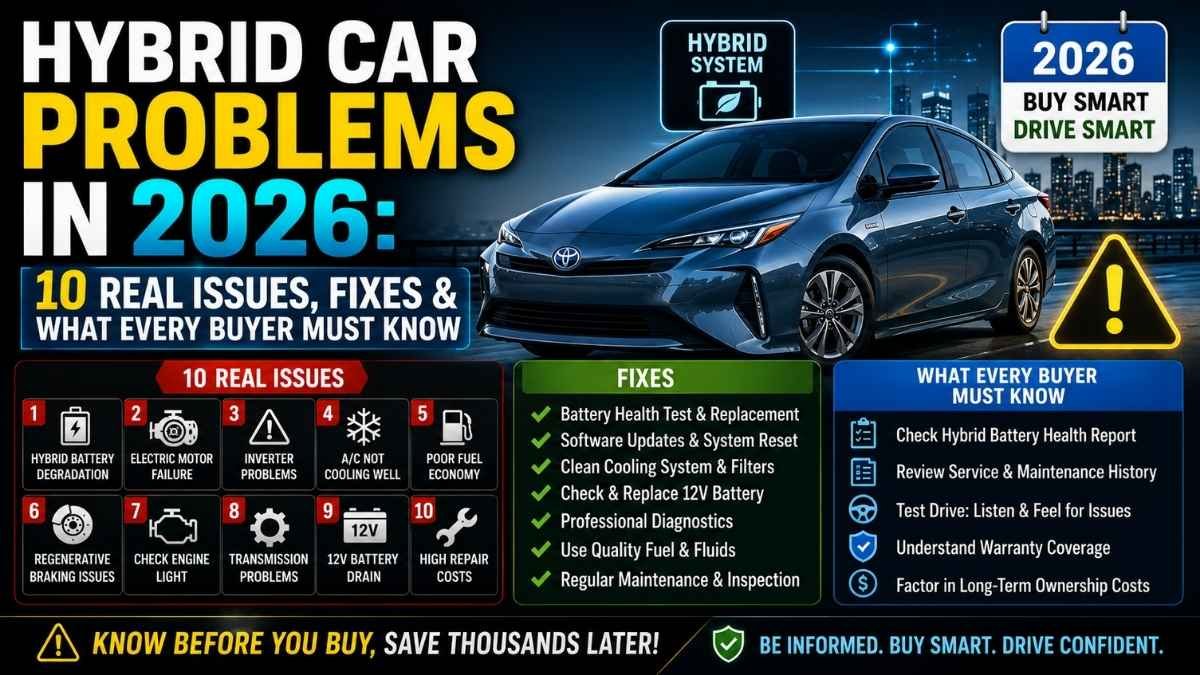
Hybrid car problems are more common in 2026 than most manufacturers want to admit — and the data backs that up. According to JD Power's 2026 Vehicle Dependability Study, hybrids now score 213 problems per 100 vehicles (PP100), which is worse than traditional ICE vehicles at 198 PP100. That is a significant gap for a technology that has been in production for over two decades.
The most common hybrid car problems in 2026 involve the high-voltage battery pack, regenerative braking system, inverter failures, software glitches, and cooling system faults. Full hybrids are generally more reliable than PHEVs — Consumer Reports found PHEVs experience roughly 80% more problems than gas-only cars.
I have reviewed owner reports, recall databases, and real workshop cases to build this guide. Whether you already own a hybrid or are considering buying one, knowing these problems upfront can save you thousands in unexpected repairs. If you are also comparing hybrid options, our Best AWD PHEV SUV 2026 buying guide covers the most reliable picks available right now.
Are Hybrid Cars Actually Reliable in 2026?
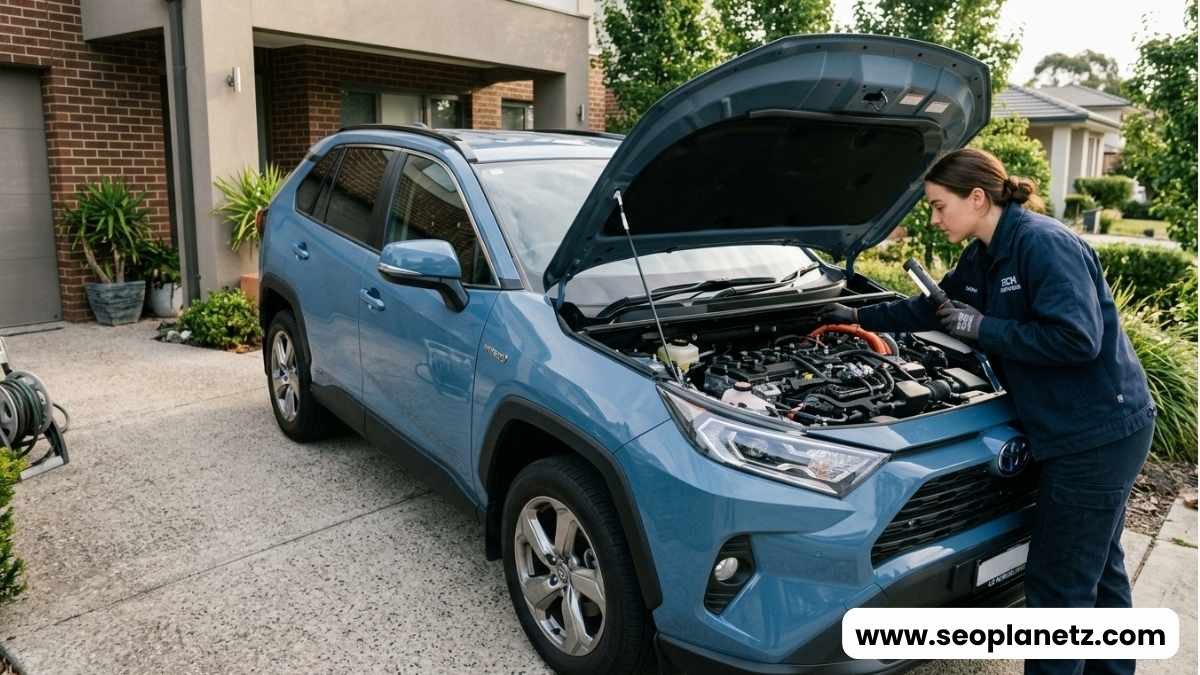
The answer depends heavily on the type of hybrid. Full hybrids — those that use the electric motor to assist the gas engine but cannot be plugged in — have a strong reliability record. According to Consumer Reports' annual hybrid reliability survey, full hybrids average 15% fewer problems than gas-only vehicles. Toyota and Honda lead this category by a wide margin.
PHEVs (plug-in hybrids) tell a very different story. The same Consumer Reports survey found PHEVs average 80% more problems than gas cars — largely driven by more complex electrical architecture, charging systems, and software that is still being refined across the industry.
💬 From Experience: The most common call I get about hybrids goes like this — "everything was fine for 3 years, then suddenly three problems showed up at once." That pattern is real. Hybrid systems are relatively trouble-free early on, but the 80,000–120,000 mile range is when battery degradation, inverter stress, and deferred maintenance catch up at the same time.
10 Most Common Hybrid Car Problems in 2026
1. High-Voltage Battery Degradation (Most Common)
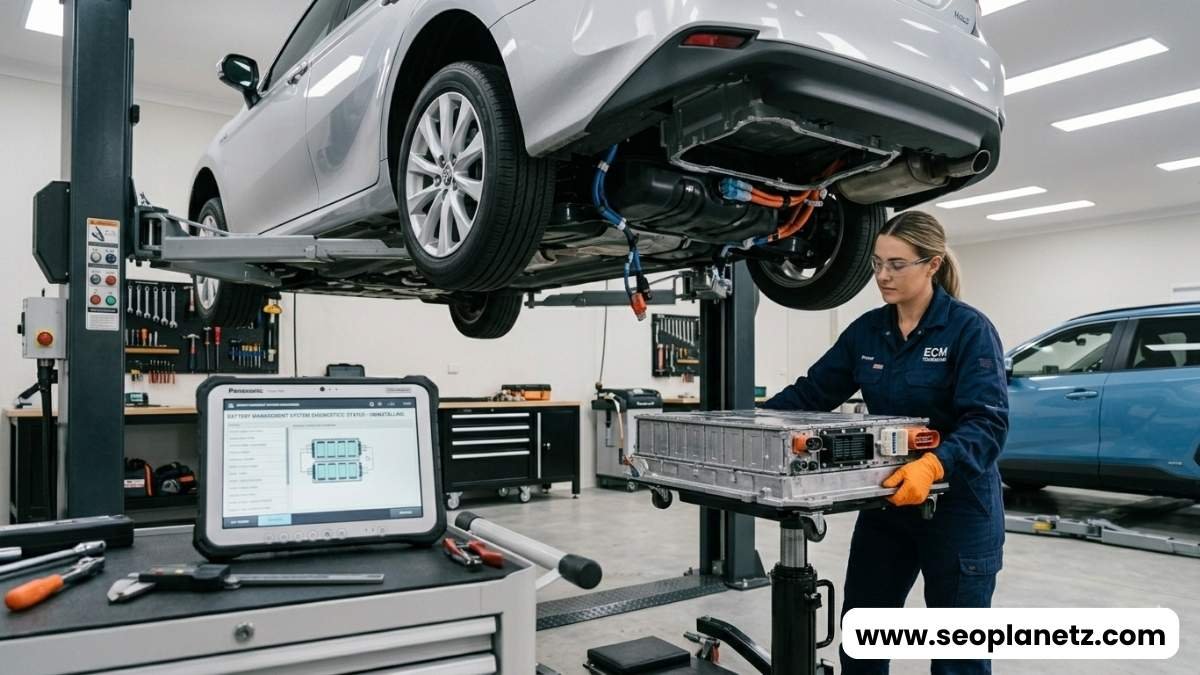
The hybrid battery pack is the most expensive and most discussed problem in any hybrid ownership experience. Over time — typically 8–10 years or 100,000–150,000 miles — the battery's capacity to hold charge decreases. This affects fuel economy first, then eventually triggers warning lights and reduced performance.
Replacement costs vary dramatically by brand:
- Toyota Prius hybrid battery: $2,500–$4,500 installed
- Honda Accord Hybrid: $3,000–$5,000
- Ford Escape PHEV: $5,000–$8,000
- Hyundai Sonata Hybrid: $3,500–$6,000
🔧 Pro Tip: Before assuming battery replacement, always request an individual cell capacity test — not just a general battery check. In many cases, only 2–4 cells out of an entire module are degraded. A shop that replaces individual modules rather than the full pack can cut your cost by 40–60%.
2. Inverter and DC-DC Converter Failure
The inverter converts DC power from the battery into AC power for the electric motor. It is one of the hardest-working components in a hybrid drivetrain and also one of the most expensive to replace when it fails. Inverter failure typically appears as sudden power loss, overheating warnings, or a "check hybrid system" light.
Inverter replacement costs: $2,000–$5,500 depending on vehicle and labor market.
Toyota issued TSBs on certain Prius models for inverter coolant pump failures — a known weak point that, if left unaddressed, leads to full inverter failure. Always check the NHTSA recalls and TSB database for your specific model before the warranty expires.
3. Regenerative Braking System Problems
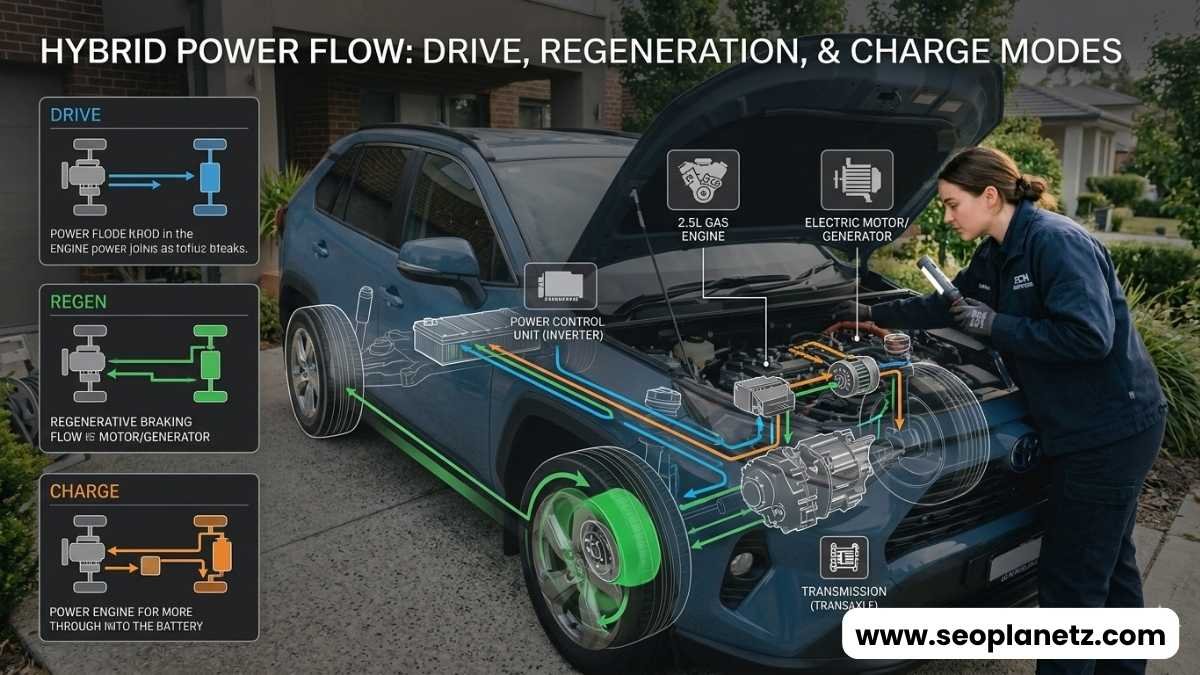
Hybrid vehicles use regenerative braking to recover energy during deceleration — but this system adds complexity that conventional brakes do not have. Common issues include:
- Brake pedal feel inconsistency (switching between regen and friction braking)
- Brake actuator failures causing ABS warning lights
- Premature rear brake wear due to reduced regenerative braking at the rear axle on some AWD hybrids
- Brake fluid contamination from heat cycling in the hydraulic brake booster
🔧 Pro Tip: Many hybrid owners skip brake fluid changes because the brakes seem to last longer. This is a mistake. The brake booster and actuator in hybrid braking systems are particularly sensitive to moisture-contaminated fluid. Flush brake fluid every 2 years regardless of mileage.
4. Software and Infotainment Glitches
This is the fastest-growing problem category in 2026. The JD Power 2026 Vehicle Dependability Study specifically cited "added electronics and software bugs" as the primary driver behind the year-over-year reliability decline. Hybrid systems rely on complex control software to manage power distribution, battery state, and regeneration — and bugs in this software can trigger false warning lights, erratic power delivery, or full system shutdowns.
The 2026 Hyundai Sonata Hybrid was recalled specifically for a software malfunction that prevented safety indicators from displaying correctly on the instrument panel. Ford Escape PHEV owners have reported infotainment failures and AWD system errors traced back to software calibration issues.
💬 From Experience: If you see a "check hybrid system" warning that disappears on its own and returns intermittently, do not wait. That is almost always a precursor to a more serious fault. Get the error codes pulled before the warning clears — once it clears, the codes may reset and you lose the diagnostic trail.
5. Cooling System Failures (Hybrid Battery Cooling)
The high-voltage battery pack requires its own dedicated cooling system — separate from the engine cooling circuit. This system uses either air cooling (older Toyota Prius) or liquid cooling (most modern hybrids). Failures in this system cause battery overheating, which accelerates capacity degradation and in severe cases can trigger a full battery shutdown.
Common failure points:
- Battery cooling fan failure (air-cooled systems)
- Coolant pump failure in the battery cooling circuit
- Clogged battery cooling vents (especially in rear-seat area on Prius)
- Coolant leak in dedicated battery circuit
6. Fuel System Problems Unique to PHEVs
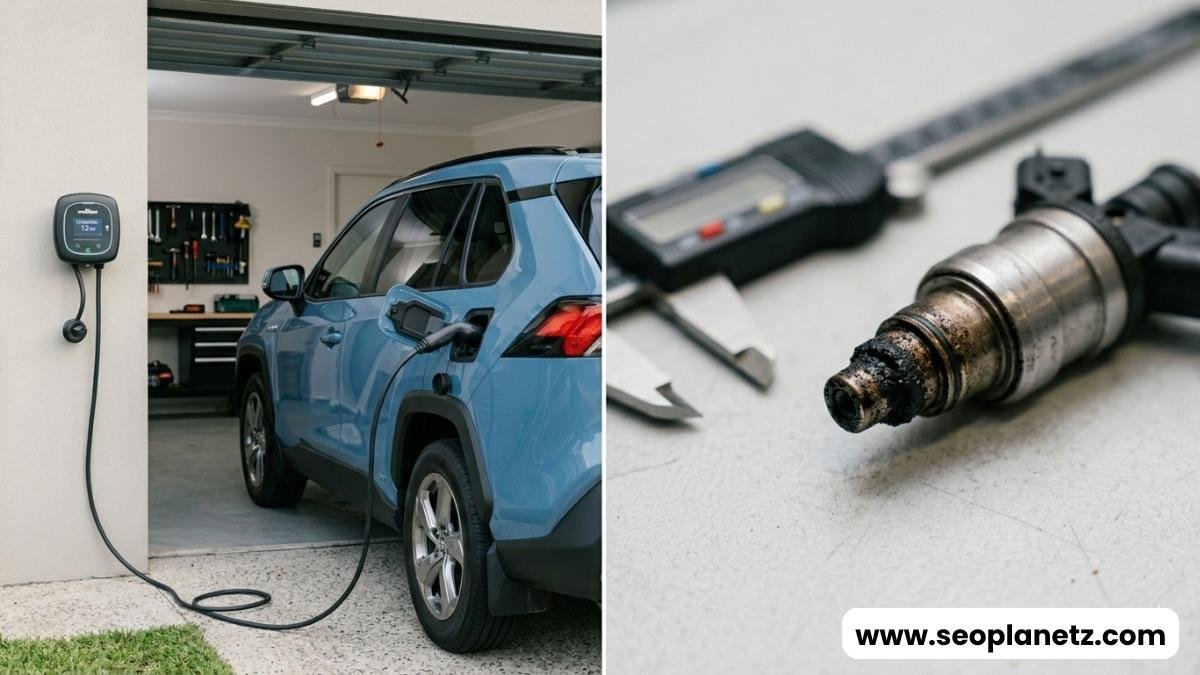
PHEVs that are driven primarily in electric mode often go weeks without the engine running on gasoline. This causes fuel to stale in the tank and fuel lines, leading to injector deposits, fuel pump issues, and rough running when the engine eventually does start. Some PHEVs have a built-in "engine exercise mode" to prevent this — but many owners disable it because they do not understand its purpose.
🔧 Pro Tip: If you drive a PHEV primarily on electricity, manually run the engine for at least 20 minutes every two weeks. This circulates fresh fuel through the system, prevents injector varnish buildup, and keeps the engine seals properly lubricated. Most manufacturers recommend this in the owner's manual — it is just buried in the fine print.
7. Electric Motor and Transmission Issues
Most hybrid transmissions — particularly Toyota's e-CVT (electronic continuously variable transmission) — are significantly more reliable than conventional automatics because they have fewer moving parts and no traditional clutch packs. However, seal failures, bearing wear in the motor/generator units, and planetary gear wear do occur at high mileage.
Ford's hybrid transaxle has a documented history of bearing noise and seal failure in the 150,000+ mile range. Honda's two-motor hybrid system is generally excellent but requires specific fluid intervals that many generic shops miss during service.
8. 12V Auxiliary Battery Drain
This surprises many hybrid owners — your hybrid has two batteries. The high-voltage pack powers the drivetrain, but a conventional 12V battery powers all the accessories, ECU, and the system that "wakes up" the hybrid drivetrain. If the 12V battery fails, the car will not start even if the main battery is fully charged.
The 12V battery in hybrids often fails earlier than in conventional cars because the engine runs less frequently, meaning the alternator charges it less. Many hybrid owners replace the main battery warning light without ever checking the 12V — and then find the car dead the next morning. Our guide on car battery dies overnight causes and fixes covers this overlap in detail.
🔧 Pro Tip: Replace the 12V auxiliary battery every 3–4 years in a hybrid — one year earlier than you would in a conventional car. It is a $100–$200 investment that prevents a completely unexpected no-start situation.
9. Oxygen Sensor and Emissions System Issues
Because hybrid engines start and stop more frequently and run at lower temperatures than conventional engines, the catalytic converter and oxygen sensors experience different thermal cycling patterns. This can cause premature sensor failure and catalytic converter degradation, especially in colder climates where the engine takes longer to reach operating temperature.
Hybrid owners in cold climates report more frequent P0420 (catalytic converter below threshold) codes than conventional car owners — a direct result of the engine's stop-start behavior keeping the cat from reaching full operating temperature on short trips.
10. Suspension and NVH Issues from Added Weight
Hybrid battery packs add significant weight — typically 150–300 lbs depending on the vehicle. This extra weight accelerates wear on suspension components, particularly the rear springs, strut mounts, and wheel bearings. On SUVs like the Ford Escape PHEV or Hyundai Tucson PHEV, rear suspension complaints are among the top owner-reported issues.
This weight also affects ride quality and NVH (noise, vibration, harshness), particularly on longer road trips where road noise transmitted through the battery floor tunnel becomes noticeable.
Hybrid Reliability by Brand in 2026
Based on current owner data and the CarEdge 2026 hybrids to avoid guide, here is how major brands compare:
| Brand/Model | Reliability Score | Known Problems | Avoid? |
|---|---|---|---|
| Toyota Camry Hybrid | Excellent | Minor software issues | No |
| Honda Accord Hybrid | Very Good | None major | No |
| Toyota RAV4 Hybrid | Very Good | Slight AWD software | No |
| Hyundai Sonata Hybrid | Below Average | Instrument panel recall | Caution |
| Ford Escape PHEV | Poor (37/100 CR) | Infotainment, AWD, depreciation | Yes |
| Lincoln Nautilus Hybrid | Below Average (37/100 CR) | Reliability concerns | Caution |
| Dodge Hornet PHEV | Poor (39/100 CR) | Multiple recalls, parts delays | Yes |
Full Hybrid vs PHEV — Which Has Fewer Problems?
| Full Hybrid | PHEV | |
|---|---|---|
| Problems vs gas cars | 15% fewer | 80% more |
| Battery replacement risk | Lower | Higher |
| Software complexity | Moderate | High |
| Fuel system risk | Low | Moderate (stale fuel) |
| Charging system failures | N/A | Common |
| Best for | Daily commuters | Long-distance + city mix |
The data is clear — if reliability is your priority, a full hybrid from Toyota or Honda is the lower-risk choice in 2026. PHEVs offer compelling running cost advantages but carry meaningfully higher ownership risk, particularly in the first 5 years while the technology matures.
What Top 10 Results Miss — Gaps This Article Covers
Most articles on hybrid problems cover battery degradation and stop there. What they consistently miss:
- 12V auxiliary battery failure — the hidden no-start cause most hybrid owners never anticipate
- PHEV fuel staling — a real and preventable problem completely absent from most guides
- Inverter TSB documentation — specific to Toyota Prius, rarely mentioned in general hybrid problem lists
- Software-caused problems now outnumbering mechanical ones — the JD Power 2026 data shows this shift clearly
- Weight-related suspension wear — specific to PHEV platforms with large battery packs
Common Questions About Hybrid Car Problems
These are the questions that come up most from hybrid owners in real diagnostic situations — answered based on actual workshop patterns.
Why does my hybrid battery warning light keep coming on?
Intermittent hybrid battery warnings are usually caused by one of three things — individual cell degradation within the pack, a cooling system fault keeping the battery too hot, or a failing 12V auxiliary battery preventing proper system startup. Get the fault codes pulled immediately rather than waiting for the light to clear on its own.
How long do hybrid batteries actually last?
Toyota and Honda hybrid batteries consistently reach 150,000–200,000 miles with proper maintenance. Ford and Hyundai PHEV packs typically show meaningful degradation between 80,000–120,000 miles. Climate plays a significant role — extreme heat accelerates degradation faster than cold.
Are hybrid cars expensive to maintain?
Full hybrids are generally cheaper to maintain than conventional cars — reduced brake wear from regenerative braking, less engine stress, and fewer oil changes required. PHEVs are more expensive due to charging system maintenance, more complex software, and higher repair costs when electrical components fail.
Which hybrid has the fewest problems?
Based on 2026 Consumer Reports data and JD Power VDS, the Toyota Camry Hybrid and Honda Accord Hybrid have the fewest reported problems. Both have proven powertrain architectures with over a decade of refinement. The Toyota RAV4 Hybrid is the top pick in the SUV category.
Can a hybrid car run without the hybrid battery?
No. The hybrid control system requires the high-voltage battery to be functional to operate. If the HV battery fails, the car will not start even though the gas engine is mechanically intact. Some older Toyota Prius models can be coaxed into "limp mode" briefly, but this is not a reliable workaround.
Is it worth buying a used hybrid with high mileage?
Yes — with conditions. A Toyota or Honda hybrid with 150,000+ miles can still have years of life remaining if the battery health test shows above 70% capacity and the maintenance history is clean. Avoid high-mileage PHEVs from brands with below-average reliability scores (Ford Escape PHEV, Dodge Hornet) unless the price accounts heavily for battery replacement risk. Our guide on how to negotiate price for a used car in 2026 covers exactly how to use battery health as a negotiating point.
Total Cost of Common Hybrid Problems
| Problem | DIY Possible | Shop Cost |
|---|---|---|
| 12V auxiliary battery | Yes — $100–$200 | $150–$300 installed |
| Hybrid battery replacement | No | $2,500–$8,000 |
| Inverter replacement | No | $2,000–$5,500 |
| Brake actuator | No | $800–$1,800 |
| Battery cooling pump | Moderate | $400–$900 |
| Oxygen sensor | Yes — $30–$80 | $150–$400 |
| Software update/reflash | No | $100–$300 |
Pros and Cons of Hybrid Ownership in 2026
Pros:
- Full hybrids 15% more reliable than gas cars (Consumer Reports)
- Significantly lower fuel costs — 40–60% savings in city driving
- Reduced brake wear — regenerative braking extends pad life 2–3x
- Lower emissions, especially in stop-start urban traffic
- Strong resale values for Toyota and Honda models
Cons:
- PHEVs 80% more problems than gas cars currently
- High-voltage battery replacement is expensive
- Software complexity increasing year over year
- 12V auxiliary battery failure is a hidden risk most owners miss
- Specialist repair knowledge still lacking at many independent shops
💬 Reader Feedback: A question we frequently receive is: "My hybrid runs perfectly but the fuel economy has dropped noticeably — is the battery going bad?" Yes — this is almost always the first sign of battery degradation. A 10–15% drop in real-world MPG before any warning lights appear is the hybrid battery telling you it is losing capacity. Get a cell-level capacity test done before waiting for a fault code.
Final Verdict
Hybrid car problems in 2026 are real — but they are not equal across all hybrid types. Full hybrids from Toyota and Honda remain genuinely reliable, often more so than equivalent gas vehicles. PHEVs, however, carry substantially higher risk right now, with 80% more problems than gas cars and several specific models with documented reliability failures worth avoiding outright.
The Ford Escape PHEV and Dodge Hornet PHEV stand out as models to avoid based on current data. The Toyota Camry Hybrid, Honda Accord Hybrid, and Toyota RAV4 Hybrid stand out as the most dependable choices.
If you already own a hybrid, the best investment you can make is proactive maintenance of the 12V auxiliary battery, regular brake fluid changes, and a battery capacity test every 30,000 miles after the 100,000 mile mark. Most expensive hybrid repairs are predictable — and preventable with the right diagnostic work done early.