7 Reasons Why Your Car Headlights Dim in 2026 Complete Guide
Introduction
If your car headlights dim unexpectedly while driving at night, you already know how dangerous that feels — one moment the road is clearly lit, the next you're straining to see past the hood. Dim headlights are one of the most underreported safety hazards on modern roads, yet millions of drivers ignore the warning signs until it's too late. According to the National Highway Traffic Safety Administration (NHTSA), nearly 50% of fatal crashes occur in low-light conditions, and poor visibility plays a direct role in many of them.
Whether you drive a 2026 Toyota Sienna, a 2026 Mercedes-Benz, or any other modern vehicle, dim headlights at night can catch you completely off guard. The causes range from simple aging bulbs to serious electrical faults that can damage your entire lighting system.
In this guide, we'll walk through the 7 most dangerous reasons your car headlights are dim in 2026, explain what causes them, and show you exactly how to fix dim car headlights before they put you or your family at risk.
Reason 1: Aging or Burned-Out Bulbs Causing Car Headlights to Dim
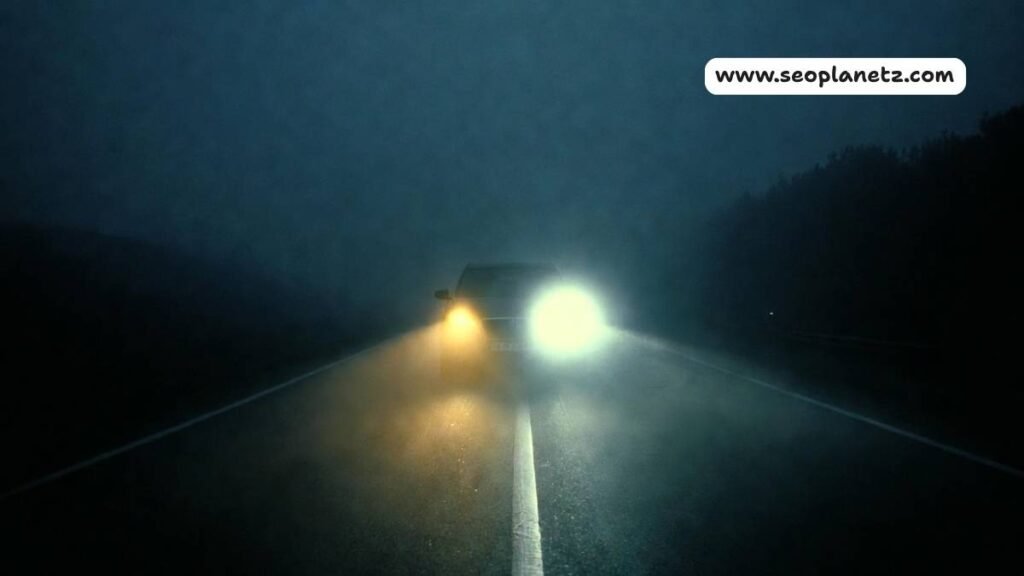
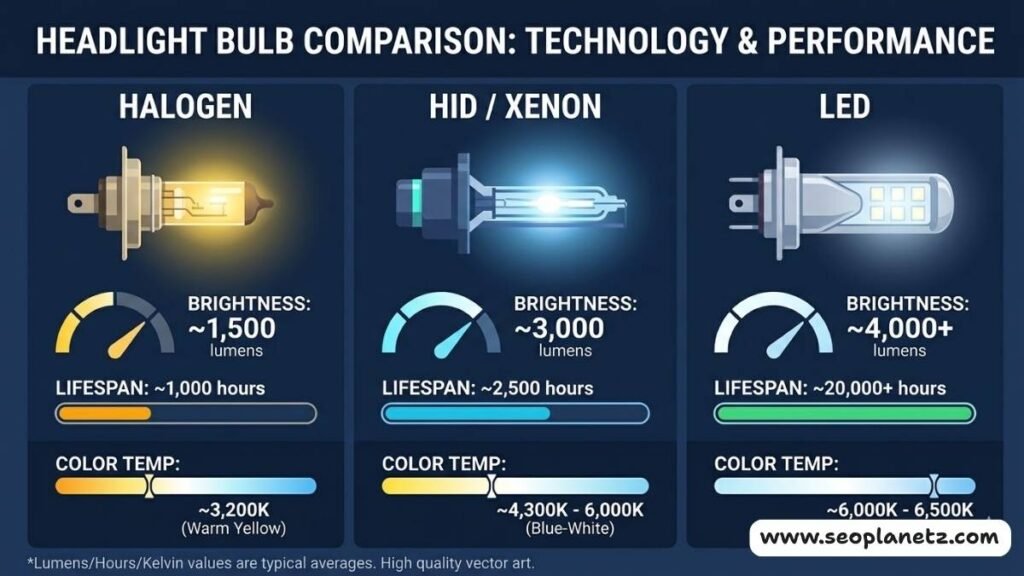
The most common reason car headlights dim is simply old age. Standard halogen bulbs have a lifespan of roughly 450–1,000 hours. As they near the end of their life, the filament weakens, output drops, and the light turns yellowish and faint.
Also Read: How to Jump a Car Safely and Correctly in 2026Many drivers are shocked when their low beam headlights become very dim even though they recently installed new bulbs. This happens because aftermarket bulbs vary wildly in quality. A cheap halogen from an unbranded seller might burn half as bright as an OEM (original equipment manufacturer) unit — right out of the box.
What Happens When Bulbs Age
- The tungsten filament thins over thousands of heat cycles
- Halogen gas inside the bulb depletes, reducing brightness by 20–30%
- The glass envelope darkens (blackening effect), blocking light output
- Color temperature shifts from white toward yellow, reducing road visibility
Pro tip: Always replace both headlight bulbs at the same time. If one has failed, the other is not far behind.
Why Are My Headlights So Dim Even With New Bulbs?
This is one of the most frustrating situations a driver can face. You replace the bulbs, expect a bright improvement — and nothing changes. Here's why.
Oxidized or Yellowed Headlight Lenses
The plastic lens cover on your headlights naturally oxidizes over time. UV rays from the sun break down the polycarbonate outer layer, turning it cloudy and yellow. This haze can block up to 80% of light output even from a brand-new, high-quality bulb.
Studies from the AAA Foundation for Traffic Safety show that yellowed headlight lenses reduce illumination to just 20% of a new lens — equivalent to driving with candlelight.
Fix: Use a headlight restoration kit or have the lenses professionally polished and UV-coated.
Also Read: How Long Do Car Batteries Last? 7 Critical Facts You Need to KnowWrong Bulb Type or Wattage
Installing a bulb with the wrong wattage or base type can result in dim output, overheating, or even electrical damage. Always cross-reference your vehicle's owner manual or use the SYLVANIA bulb lookup tool to find the correct replacement.
Reason 2: A Failing Alternator Making Car Headlights Dim While Driving
If you've noticed your car lights dim and brighten while driving, especially when you rev the engine or turn on other accessories, your alternator is the prime suspect. The alternator charges the battery and powers all electrical systems while the engine runs.
A weakening alternator produces inconsistent voltage — typically dropping below the required 13.5–14.5 volts. When voltage drops, headlights lose intensity noticeably. At highway speeds, the lights may flicker or pulse with the engine RPM.
| Symptom | Likely Cause | Urgency |
|---|---|---|
| Lights dim when idling, bright when revving | Failing alternator | High — fix immediately |
| Lights dim with AC/radio on | Overloaded electrical system | Medium |
| One headlight dim, other bright | Bad bulb or ground wire | Medium |
| Both headlights suddenly very dim | Battery or alternator failure | Critical |
| Lights flicker at random | Loose wiring or relay fault | High |
According to Car and Driver, a failing alternator is responsible for up to 20% of unexpected headlight dimness complaints in vehicles under 10 years old.
Also Read: Do Electric Cars Have Transmissions in 2026? The Complete GuideReason 3: Poor Grounding or Corroded Wiring
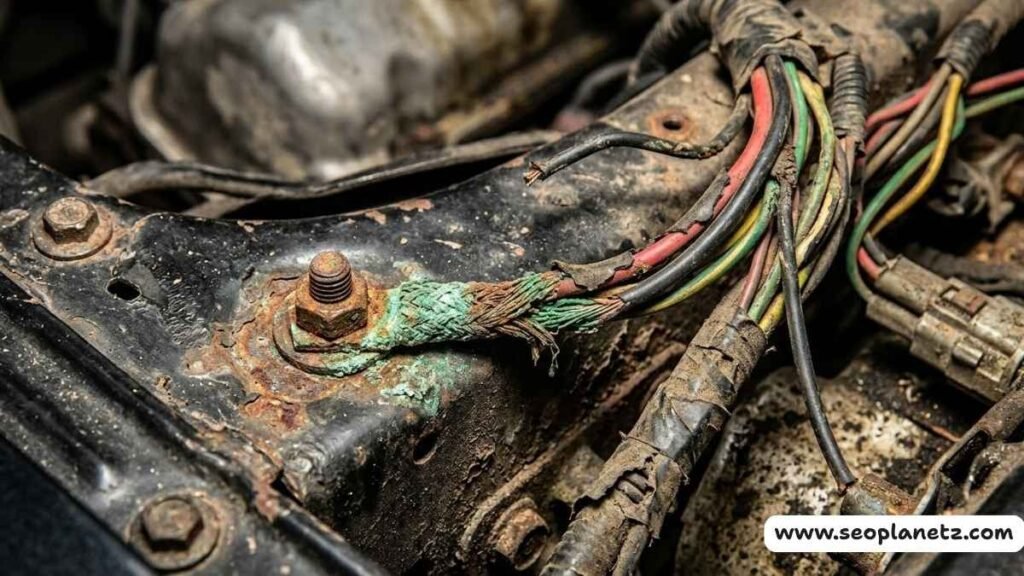
Electrical systems in modern cars rely on solid ground connections. When ground wires corrode or loosen, current flow becomes irregular. This is a very common reason why one headlight is dim and the other bright — each headlight has its own ground path, and if one corrodes, only that side dims.
Signs of a Ground Problem
- Intermittent dimming on just one side
- Headlights that flicker when you hit a bump
- Other electrical accessories behaving erratically
- Burning smell near the fuse box
Corrosion builds up in wet climates or in older vehicles where factory ground straps were undersized. Cleaning ground connection points with electrical contact cleaner and applying dielectric grease is often a quick, inexpensive fix.
Reason 4: A Weak or Dying Battery
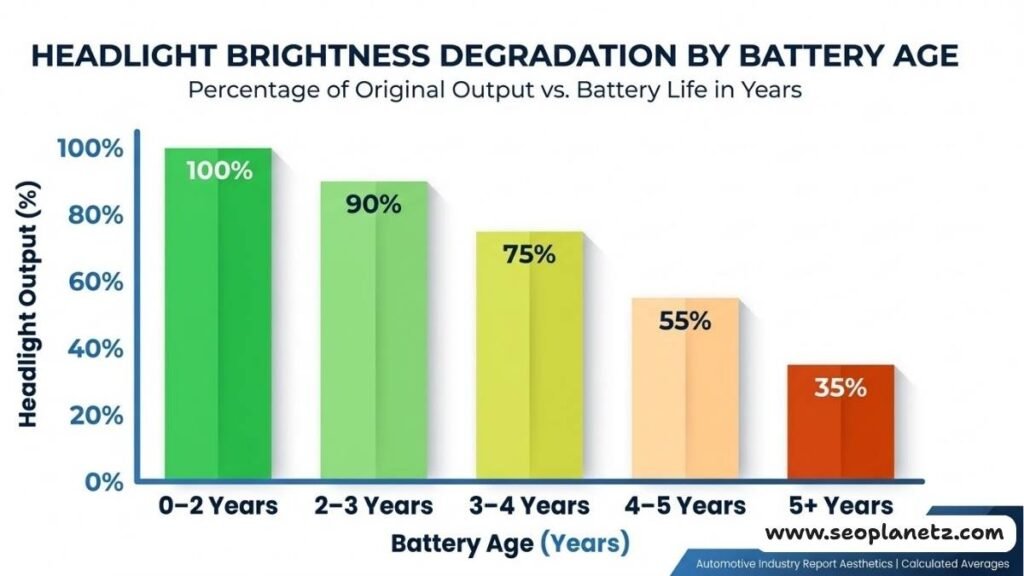
Your car's battery doesn't just start the engine — it stabilizes voltage across all systems, including the headlights. A battery that's losing its charge capacity causes car headlights to dim, especially during cold weather starts or when multiple accessories are running.
Also Read: Car Battery Draining Fast Reasons and Solutions in 2026Batteries typically last 3–5 years. After that point, their internal resistance increases and they can no longer maintain steady voltage under load. The Consumer Reports Auto Reliability Guide recommends testing your battery voltage every 12 months once it's past the 3-year mark.
| Battery Age | Estimated Capacity | Headlight Impact |
|---|---|---|
| 0–2 years | 95–100% | No impact |
| 2–3 years | 85–95% | Minimal dimming under load |
| 3–4 years | 70–85% | Noticeable dimming when accessories active |
| 4–5 years | 50–70% | Frequent dimming, especially at idle |
| 5+ years | Below 50% | Significant and consistent dimming |
Reason 5: Headlights Are Dim But Brights Work — A Relay or Switch Problem
One of the most confusing symptoms drivers report is: headlights are dim but brights work perfectly. This points directly to an issue with the low beam relay, low beam switch circuit, or a separate fuse for the low beam circuit.
Modern vehicles use separate relays for low beams and high beams. If the low beam relay is failing or partially burnt, it restricts current flow to the low beam filament — producing dim output — while the high beam relay continues to work normally.
How to Diagnose a Relay Problem
- Locate your fuse/relay box (usually under the hood or dashboard)
- Find the low beam relay (check your owner's manual for location)
- Swap it with an identical relay from another circuit temporarily
- If headlights return to full brightness, the relay was faulty
Relays typically cost $5–$15 and take minutes to replace. This is one of the cheapest fixes for dim headlights at night.
Also Read: Car Fuel Pump Price and Maintenance in 2026Reason 6: Car Headlights Dim on 2026 Toyota Sienna and Similar Vehicles — Software or Adaptive Lighting Calibration Issues
Modern vehicles like the 2026 Toyota Sienna use adaptive LED or matrix headlight systems that are controlled by onboard software. If the headlight module loses calibration — due to a firmware glitch, a fender-bender, or a sensor fault — the system may deliberately reduce output to protect itself.
This is increasingly common in advanced driver assistance system (ADAS)-equipped vehicles. The headlight ECU monitors leveling sensors, steering angle inputs, and camera data. A miscalibrated sensor can cause the system to tilt the beam down or dim it well below normal levels.
Fix for 2026 Toyota Sienna dim headlights: Visit an authorized dealer for a headlight module recalibration. Some issues can be resolved with a software update via the OBD-II port. Toyota's TechStream diagnostic software is the recommended tool for this job.
Also Read: 2026 Toyota Prius Review, Price, and SpecsReason 7: Car Headlights Dim on 2026 Mercedes — High-End System Complexity
2026 Mercedes-Benz models feature Digital Light technology — a system with over a million micromirrors per headlight unit. While breathtaking in performance, this complexity means more potential points of failure. Dim output on a 2026 Mercedes can result from:
- Failing MULTIBEAM LED control module
- Condensation inside the sealed headlight housing
- High-voltage ballast failure (on older HID-equipped trims)
- Headlight leveling motor failure causing downward beam direction
Mercedes-Benz Digital Light systems require dealer-level diagnostics using XENTRY software. Attempting DIY repairs on these units can void your warranty and cause additional damage.
For reference, Mercedes publishes technical service bulletins through their MBUSA owner resource portal.
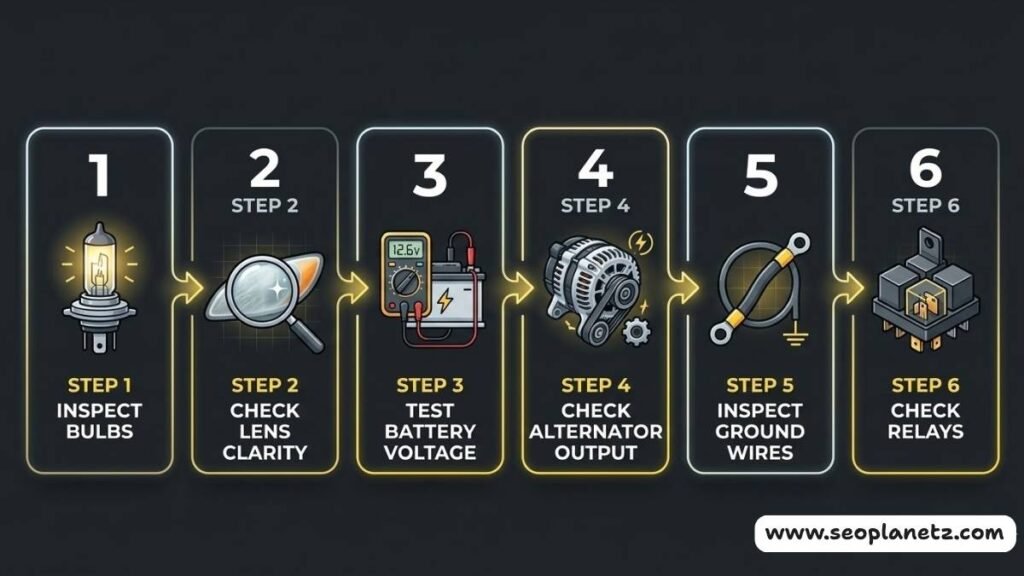
How to Fix Dim Car Headlights: A Quick Reference Guide
Whether you drive a budget commuter or a luxury 2026 Mercedes, the approach to fixing dim headlights follows the same diagnostic logic.
| Fix Method | Difficulty | Avg. Cost (USD) | Time Required |
|---|---|---|---|
| Replace bulbs | Easy (DIY) | $15–$80 | 15–30 min |
| Polish headlight lenses | Easy (DIY) | $10–$40 kit | 30–60 min |
| Replace low beam relay | Easy (DIY) | $5–$15 | 10–15 min |
| Test & replace battery | Moderate (DIY) | $80–$200 | 30–60 min |
| Alternator replacement | Difficult (shop) | $300–$800 | 2–4 hours |
| Recalibrate adaptive headlights | Dealer only | $100–$400 | 1–2 hours |
| Fix corroded ground wires | Moderate (DIY) | $5–$20 | 30–45 min |
For authoritative guidance on safe headlight standards and regulations, refer to the Insurance Institute for Highway Safety (IIHS) headlight ratings which test and score headlights across hundreds of new vehicle models.
Why Are My Headlights So Dim While Driving at High Speed?
Speed-related dimming is usually an alternator load issue. At high RPM, the alternator should produce more power — but a failing unit can't keep up with demand when the engine is working hard. You may also notice this when:
- Running the AC and defogger simultaneously
- Using heated seats in cold weather
- Playing audio at high volume with subwoofers
These loads compete with the headlights for available voltage. If your alternator's diodes are starting to fail, the voltage regulation becomes unstable and headlights bear the visible cost.
Have your alternator tested for free at most auto parts retailers. They use a load tester that simulates real-world electrical demand.
Also Read: 2026 Chevrolet malibu Revealed: Specs, Price & FeaturesKey Takeaways
- Car headlights dim most often from aging bulbs, oxidized lenses, or a failing alternator — all fixable with basic tools or a quick shop visit
- If your low beam headlights are very dim but brights work fine, check the low beam relay first — it's the cheapest and fastest fix
- Yellowed headlight lenses can block up to 80% of light — restoration kits cost under $40 and make a dramatic difference
- Car lights dim and brighten while driving is a classic alternator warning sign — get it tested immediately
- 2026 vehicles like the Toyota Sienna and Mercedes use software-controlled adaptive headlights that may require dealer recalibration when output drops
- Poor ground connections are the hidden culprit behind many one-side-dim scenarios
- Never ignore dim headlights at night — NHTSA data links reduced lighting to thousands of preventable crashes annually
Frequently Asked Questions
Q: Why are brand new headlights dim?
A: Brand new headlights can appear dim due to oxidized or yellowed lens covers that block light output, incorrect bulb wattage for your vehicle, or a poor ground connection. Even a perfect new bulb loses up to 80% of its light if the lens is heavily clouded. Always restore or replace the lens when changing bulbs.
Q: How to fix very dim headlights on a car?
A: Start by inspecting the headlight lenses for cloudiness and the bulbs for blackening or damage. Then test your battery voltage (should be 12.4–12.7V at rest) and alternator output (13.5–14.5V while running). If those check out, inspect the low beam relay and ground wires for corrosion. Most causes of very dim car headlights can be resolved with a DIY fix under $50.
Q: How to brighten dim headlights quickly?
A: The fastest improvement comes from polishing oxidized headlight lenses — a $15–$40 restoration kit can restore up to 70% of lost brightness in under an hour. Replacing aging halogen bulbs with upgraded OEM-equivalent halogens or LED conversion kits also delivers a dramatic brightness boost.
Q: Do car headlights naturally dim over time?
A: Yes. All headlight bulbs lose brightness gradually over their lifespan. Halogen bulbs can lose 20–30% of their output before they actually burn out. Plastic headlight lenses also yellow and haze from UV exposure. This is why dim headlights at night often go unnoticed — the change is slow and gradual.
Also Read: Car Battery Draining Fast Reasons and Solutions in 2026Q: How do I increase car headlight brightness legally?
A: Upgrade to higher-output OEM-spec halogen bulbs, restore or replace hazed lenses, and ensure your electrical system maintains proper voltage. In many states, aftermarket HID or high-powered LED conversions in projector-style housings are legal. Avoid bulbs that exceed your housing's design rating, as they can cause glare for oncoming drivers. Check local regulations via your state DMV website.
Q: Do newer cars have brighter headlights?
A: Generally yes. Most 2024–2026 vehicles ship with LED or adaptive matrix LED headlights that outperform older halogen systems by 200–300% in lumen output. However, the IIHS has found that even modern systems vary widely in performance — some expensive vehicles score "Poor" while certain economy cars earn "Good" ratings. Brightness alone doesn't equal good visibility; beam pattern and aim matter just as much.
Q: Why is one headlight dim and the other bright on my car?
A: This typically indicates a problem with one specific bulb, its socket, or the ground wire serving that side of the vehicle. Each headlight has its own circuit path, so when one is dim and the other isn't, the fault is isolated. Start by swapping bulbs to rule out a bad bulb, then check the socket for corrosion and the ground wire connection.
Also Read: Alternator Failure Reasons and Solutions in 2026Conclusion
Dealing with car headlights dim is more than an annoyance — it's a genuine safety issue that demands prompt attention. Whether you're driving a 2026 Toyota Sienna with adaptive lighting software quirks, a 2026 Mercedes with complex Digital Light technology, or a standard sedan with a dying alternator, the risks of dim headlights at night are the same: reduced reaction time, poor lane visibility, and increased crash risk.
The good news is that most causes of dim headlights are diagnosable and fixable without expensive dealership visits. Start simple — check bulbs, polish lenses, and test your battery. Work up from there to ground connections, relays, and the alternator. For software-controlled systems on newer vehicles, a dealer recalibration is often all it takes.
Don't let car headlights dim creep up on you. Set a reminder to inspect your headlights every six months, especially as fall and winter bring longer nights and more low-light driving. Bright, properly aimed headlights aren't a luxury — they're your first line of defense on every night drive.
For further reading on automotive lighting safety standards, visit the National Safety Council's driver safety resources.