
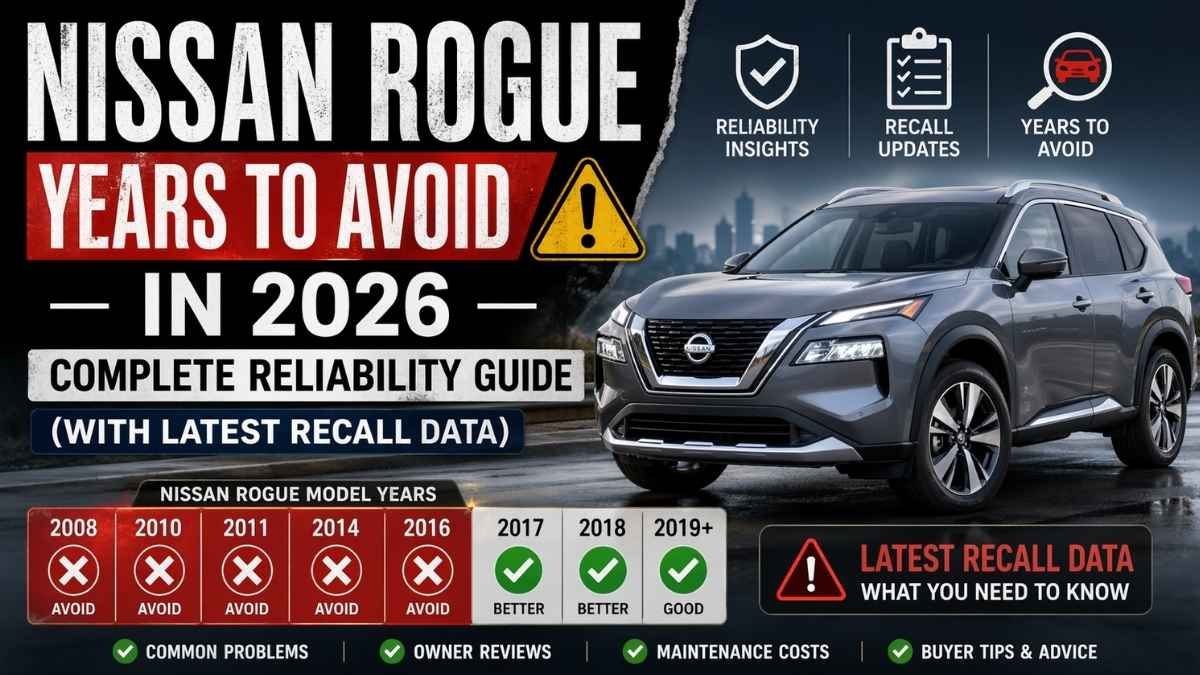
Nissan Rogue Years to Avoid in 2026 — Complete Reliability Guide (With Latest Recall Data)
If you are searching for Nissan Rogue years to avoid, here is the direct answer: avoid the 2008, 2013, 2014, 2015, and 2017 model years due to chronic CVT transmission failures. Additionally, approach the 2023, 2024, and 2025 models with caution — Nissan issued a massive 642,000-vehicle engine recall for these years in February 2026. The best used Nissan Rogue years to buy right now are 2019, 2020, and 2022.
That is the short answer. But if you are about to spend $15,000 to $35,000 on a used SUV, you need the full picture. This guide breaks down every Nissan Rogue model year from 2008 to 2026 — the worst years, the best years, what specific problems to watch for, and how to protect yourself when buying used.
Updated April 2026 with the latest NHTSA recall data, Consumer Reports reliability scores, and J.D. Power ratings.
Before diving in, if you are comparing the current Rogue lineup, check out our review of the 2026 Nissan Rogue Rock Creek Edition — and if you want to understand what the full Nissan SUV range looks like in 2026, our Nissan Qashqai 2025 Full Specs & Review is worth reading too.
What Makes a Nissan Rogue Year “Bad”?
Before listing the worst years, you need to understand what actually makes a model year worth avoiding. In the automotive world, a bad year means one or more of these things:
- High NHTSA complaints — formal federal government complaints filed by owners
- Expensive recurring mechanical failures — problems that happen before 100,000 miles
- Known defects that were never fully fixed — TSBs (Technical Service Bulletins) that only partially solved an issue
- Poor Consumer Reports or J.D. Power reliability scores — below industry average
- Active safety recalls — especially ones related to engine failure or loss of drive power
The Nissan Rogue has two distinct reliability problem eras. The first era (2008–2017) was dominated by CVT transmission failures. The second era (2023–2025) is defined by a completely different problem — a defective VC-Turbo engine that led to one of the largest Nissan recalls in recent history.
Understanding both eras will save you from making a very expensive mistake.

Nissan Rogue Years to Avoid: The Complete Breakdown
🚫 2008 Nissan Rogue — Generation One, Problem One
The Rogue launched in 2008 as Nissan’s compact crossover answer to the Honda CR-V and Toyota RAV4. It sold well. But underneath the attractive exterior was a brand-new CVT transmission that Nissan was still working out the bugs on.
Key problems with the 2008 Rogue:
- CVT shuddering and jerking during acceleration, especially from a dead stop
- Transmission failure between 80,000 and 100,000 miles — well before most buyers expect major repairs
- Cold-weather stalling — the CVT struggled to function properly in temperatures below freezing
- Weak acceleration despite the fuel economy claims — the CVT was underpowered for the Rogue’s weight
Replacing a CVT on a 2008 Rogue in 2026 costs between $3,500 and $5,500 at an independent shop. Given that a clean 2008 Rogue is worth maybe $5,000 to $7,000, this makes the repair economically catastrophic. Avoid completely.
🚫 2013 Nissan Rogue — The Single Worst Year in Rogue History
The 2013 Nissan Rogue is the model year you will see mentioned most frequently on “worst used cars to buy” lists — and for very good reason. NHTSA received over 847 formal complaints for this year alone, making it one of the most-complained-about compact SUVs of its generation.
What went wrong with the 2013 Rogue:
- CVT transmission failure before 100,000 miles — the most reported problem by a wide margin, with hundreds of owners reporting complete transmission shutdown with no warning
- Excessive engine oil consumption — engines burning through a quart of oil every 1,000 to 2,000 miles, leading to serious engine damage if owners didn’t check frequently
- Brake system failure — premature brake wear and in some cases actual brake failure, with owners reporting the pedal going soft unexpectedly
- Electrical gremlins — dashboard warning lights activating randomly, power windows failing, climate control malfunctions
- Rust around rear wheel arches — particularly in northern states where road salt is used, this became a structural issue on some vehicles
The financial reality: owners who bought a used 2013 Rogue for $8,000 often found themselves facing a $4,500 CVT replacement within months. Do not buy this year under any circumstances.
🚫 2014 Nissan Rogue — New Generation, Same Problems
Nissan launched the second-generation Rogue in 2014 with a completely new design, more interior space, and available third-row seating. On paper, it looked like a significant improvement. In practice, many of the same CVT problems followed the new generation, plus some new issues unique to the redesigned model.
Problems with the 2014 Rogue:
- CVT hesitation and delay when pulling away from a stop — many owners described it as the car “thinking about” accelerating before actually moving
- Spontaneous sunroof shattering — this was a documented defect where the panoramic sunroof would crack or shatter without any impact or apparent cause, sometimes while driving at highway speed
- Backup camera failures — the screen would go black, show static, or freeze, which created a safety hazard particularly in tight parking situations
- Squealing brakes that returned quickly even after replacement, indicating a systemic caliper or rotor issue
- Interior rattles and poor panel fit that worsened rapidly after the first year of ownership
The sunroof issue on the 2014 Rogue is particularly alarming because it creates a safety hazard — glass falling into the cabin — and replacement costs between $1,000 and $1,500. Combined with CVT risk, the 2014 Rogue is a model year to skip.
🚫 2015 Nissan Rogue — CVT Problems Continued
The 2015 Rogue carried the same CVT issues forward without meaningful improvement. Consumer Reports flagged it as below-average reliability, and NHTSA received over 543 complaints. New issues specific to 2015 included:
- CVT whining noise at highway speed — a high-pitched sound that indicated internal belt wear and often preceded total transmission failure
- Power liftgate failures — the motorized tailgate would stop functioning, sometimes leaving it stuck open or closed
- Engine hesitation under load — particularly noticeable when climbing hills or merging onto highways
- False airbag warning lights — triggering alert messages without any actual airbag fault, confusing owners and making it harder to detect real safety issues
If budget forces you to consider a second-generation Rogue, skip 2015 and look at 2016 or later.
🚫 2017 Nissan Rogue — The False Braking Problem
The 2017 Rogue introduced a new concern that was genuinely dangerous: the Automatic Emergency Braking (AEB) system would randomly activate on the highway with no obstacle present. This was not a minor inconvenience — it caused real accidents when vehicles behind the Rogue had no warning that it would suddenly decelerate at highway speed.
Problems with the 2017 Rogue:
- False AEB activation — the automatic emergency braking fired without cause, creating crash risk from following traffic
- Forward collision warning false alerts — the system would warn of collisions when no obstacles were present
- CVT judder returning — the shuddering and hesitation that plagued earlier years reappeared in this model
- Paint adhesion failures — paint peeling, particularly on the hood and roof, within the first few years of ownership
Nissan issued a software update for the AEB problem, but many owners reported it only partially resolved the issue. Given the safety implications, we recommend avoiding the 2017 Rogue unless you can confirm the recall work was completed and independently test the AEB system.
🚨 BREAKING: The 2023–2025 Nissan Rogue Engine Crisis (2026 Update)
This is the most important new information in this guide — something most “years to avoid” articles have not yet caught up with.
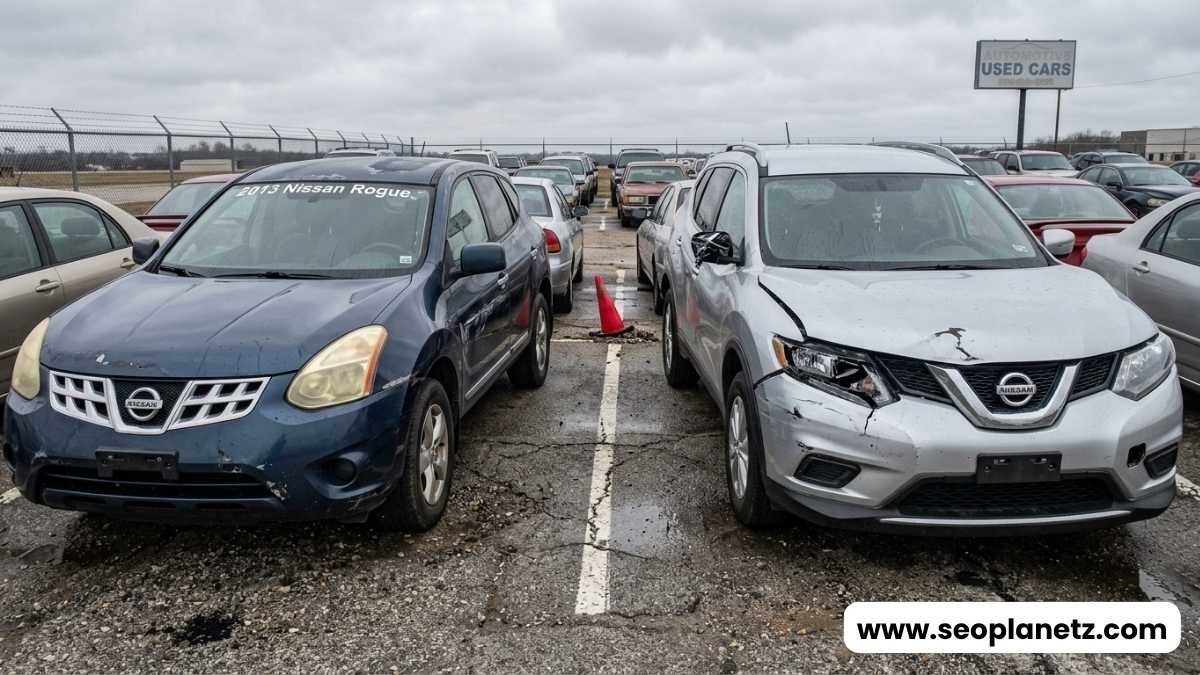
In February 2026, Nissan issued two separate recalls covering 642,698 Rogue SUVs from the 2023, 2024, and 2025 model years. This is one of the largest single-brand SUV recalls in recent American automotive history, and it affects the VC-Turbo engine that Nissan marketed as a technological breakthrough.
What Is the VC-Turbo Engine Problem?
The VC-Turbo (Variable Compression Turbo) engine was Nissan’s flagship engineering achievement when it launched — the world’s first production variable compression ratio engine. In theory, it could dynamically adjust its compression ratio between 8:1 and 14:1 to optimize for either performance or fuel economy.
In practice, the 1.5-liter three-cylinder version fitted to the Rogue has developed two serious defects:
Recall 1 — NHTSA Campaign 26V080 (Engine Bearing Failure): Covers 323,917 Rogue SUVs from model years 2023, 2024, and 2025. The connecting rod bearings in the engine have a manufacturing defect that causes them to seize over time. When bearings seize, metal debris contaminates the oil, leading to progressive engine damage and ultimately complete engine failure. In rare cases, a bearing failure causes a breach in the engine block, allowing hot oil to spray onto hot engine components — creating a fire risk. NHTSA reports that loss of drive power while driving increases the crash risk significantly.
Recall 2 — NHTSA Campaign 26V081 (Throttle Body Gear Failure): Covers 318,781 Rogue SUVs from model years 2024 and 2025. The gears inside the electronic throttle body assembly can fracture due to a manufacturing defect. When this happens, the engine loses drive power suddenly — either forward or reverse power can be lost without warning. Nissan reported 3,111 warranty claims related to this issue before the recall was issued.
What Does This Mean for Buyers?
If you are considering a 2023, 2024, or 2025 Nissan Rogue:
- Check the VIN on NHTSA.gov before purchasing to confirm whether the recall remedy has been performed
- Ask the dealer for proof of recall completion — a documented service record showing the ECM software update and engine inspection
- Understand the residual risk — recall fixes reduce but do not always eliminate the underlying issue; ask specifically whether the engine bearings were inspected and whether the oil pan was checked for metal debris
- Consider waiting — if you are not in urgent need, the 2026 Rogue has received its first recall for a minor issue (wrong spare tire pressure placard) and Consumer Reports expects average reliability based on early data
The 2023 Rogue specifically also received a separate recall for incorrectly manufactured seat belt pretensioners — meaning the front seat belts may not properly restrain occupants in a crash. This is a serious safety issue separate from the engine problems.
The Bigger Picture on VC-Turbo
This was not a surprise. The VC-Turbo engine had been showing problems since 2021, with NHTSA receiving complaints about unusual engine noise, difficulty starting, and stalling on 2021–2024 models. Nissan initially resisted a recall, telling NHTSA between February and April 2024 that the bearing failures “did not pose an unreasonable safety risk.” It was only after a reported vehicle fire and increasing NHTSA pressure that the June 2025 recall — and then the expanded February 2026 recall — were issued.
This pattern — manufacturer resistance followed by forced recall — is a red flag for long-term reliability of these engine units even after the software fix.
Nissan Rogue NHTSA Complaints by Year — Quick Data Table
| Model Year | NHTSA Complaints | Primary Problem | Risk Level |
|---|---|---|---|
| 2008 | 302+ | CVT Failure | 🔴 High |
| 2013 | 847+ | CVT + Oil Burn | 🔴 Extreme |
| 2014 | 612+ | CVT + Sunroof | 🔴 High |
| 2015 | 543+ | CVT + Liftgate | 🔴 High |
| 2016 | 287+ | CVT (reduced) | 🟡 Moderate |
| 2017 | 489+ | False AEB | 🔴 High |
| 2018 | 312+ | CVT + AC | 🟡 Moderate |
| 2019 | 198+ | Minor Issues | 🟢 Low |
| 2020 | 201+ | Transition Issues | 🟡 Moderate |
| 2021 | 344+ | VC-Turbo early | 🟡 Moderate |
| 2022 | 189+ | Minor | 🟢 Low |
| 2023 | 400+ | VC-Turbo + Recall | 🔴 High (Recall) |
| 2024 | 116+ | VC-Turbo + Recall | 🔴 High (Recall) |
| 2025 | 103+ | VC-Turbo + Recall | 🟡 Moderate (if fixed) |
| 2026 | 9 | Minor (spare tire) | 🟢 Low |
The Best Nissan Rogue Years to Buy
Now for the good news. Several Rogue model years represent genuinely smart used car purchases.
✅ 2019 Nissan Rogue — Best Value Used Buy
The 2019 Rogue is the sweet spot for used buyers in 2026. By this point, Nissan had meaningfully improved the CVT, and this model predates the VC-Turbo engine problems. It offers:
- Improved CVT reliability with failure rates significantly lower than 2013–2017
- ProPilot Assist available — Nissan’s adaptive cruise with lane centering
- 33 MPG highway fuel economy
- Available third-row seating on the Rogue Plus trim
- Used price in 2026: typically $14,000 to $19,000 for a clean example
- Consumer Reports score: Good reliability
One important note: the 2021–2024 Rogue VC-Turbo recall (25V437) also included some 2019 models with the 2.0L VC-Turbo. However, the base 2019 Rogue used the older 2.5L naturally aspirated engine — check the specific VIN to confirm which engine is fitted.
If you want to negotiate effectively when buying this year, our guide on How to Negotiate Price for Used Car in 2026 will save you real money.
✅ 2020 Nissan Rogue — Refined and Reliable
The 2020 model was the final year of the second generation — meaning it was the most refined and debugged version of that platform. Consumer Reports and J.D. Power both rated it above average. Key advantages:
- Apple CarPlay and Android Auto standard across most trims
- Nissan Safety Shield 360 as standard safety suite
- Improved interior noise levels compared to earlier years
- Reliability score: 79/100 (Good) according to AutoReliabilityIndex data
- Important caveat: some 2020 Rogues were equipped with the 2.0L VC-Turbo engine (particularly on sport trims) and are included in the VC-Turbo recall. Verify the engine before purchasing.
✅ 2022 Nissan Rogue — Best Overall Used Rogue
The 2022 Rogue represents the post-redesign model with meaningful quality improvements over the first year of the third generation (2021). It offers:
- New 1.5L VC-Turbo engine — yes, this is the engine that later had recall issues, but 2022 models have had more time for any issues to surface and be addressed
- Significantly better interior quality — genuinely premium materials and design
- Best-in-class fuel economy — up to 35 MPG combined in some configurations
- Google Built-in on higher trims — native Google Maps and Assistant integration
- Reliability score: Above average, with lower complaint rates than 2023–2024
The 2022 Rogue is the one to buy if you want the modern third-generation platform with a better reliability track record than 2023–2025.
✅ 2026 Nissan Rogue — If Budget Allows
The 2026 Rogue has received an excellent 84/100 reliability prediction from Consumer Reports and earned the IIHS Top Safety Pick designation. Its only recall so far covers a minor spare tire pressure placard error — unrelated to any mechanical defect. J.D. Power gave 2025 and 2026 models 84/100 for Quality and Reliability.
If you can stretch to a CPO or lightly used 2026 model, it represents the current best version of the Rogue. For a full breakdown of the 2026 Rogue’s features and value proposition, see our 2026 Nissan Rogue Rock Creek Edition review.
Complete Year-by-Year Reliability Rating Table
| Year | Reliability | CVT Risk | Engine Risk | Verdict |
|---|---|---|---|---|
| 2008 | Poor | Very High | Low | ❌ Avoid |
| 2009 | Below Average | High | Low | ❌ Avoid |
| 2010 | Below Average | High | Low | ❌ Avoid |
| 2011 | Average | Moderate | Low | ⚠️ Caution |
| 2012 | Average | Moderate | Low | ⚠️ Caution |
| 2013 | Very Poor | Extreme | Moderate | ❌ Avoid |
| 2014 | Poor | High | Low | ❌ Avoid |
| 2015 | Poor | High | Low | ❌ Avoid |
| 2016 | Average | Moderate | Low | ⚠️ Caution |
| 2017 | Below Average | Moderate | Low | ❌ Avoid |
| 2018 | Average | Moderate | Low | ⚠️ Caution |
| 2019 | Good | Low | Low* | ✅ Buy |
| 2020 | Good | Low | Low* | ✅ Buy |
| 2021 | Average | Very Low | Moderate | ⚠️ Caution |
| 2022 | Good | Very Low | Low | ✅ Buy |
| 2023 | Below Average | Very Low | High (Recall) | ⚠️ Only if Recall Fixed |
| 2024 | Average | Very Low | High (Recall) | ⚠️ Only if Recall Fixed |
| 2025 | Good (84/100) | Very Low | Moderate (if fixed) | ⚠️ Verify Recall |
| 2026 | Excellent (84/100) | N/A | Low | ✅ Best New Buy |
*Note: Some 2019–2020 models with VC-Turbo engine are included in recall 25V437. Check VIN.
The Nissan Rogue CVT Problem: Everything You Need to Know
No article about Nissan Rogue reliability is complete without a deep dive on the CVT — because for the 2008–2018 era, it is the defining issue.
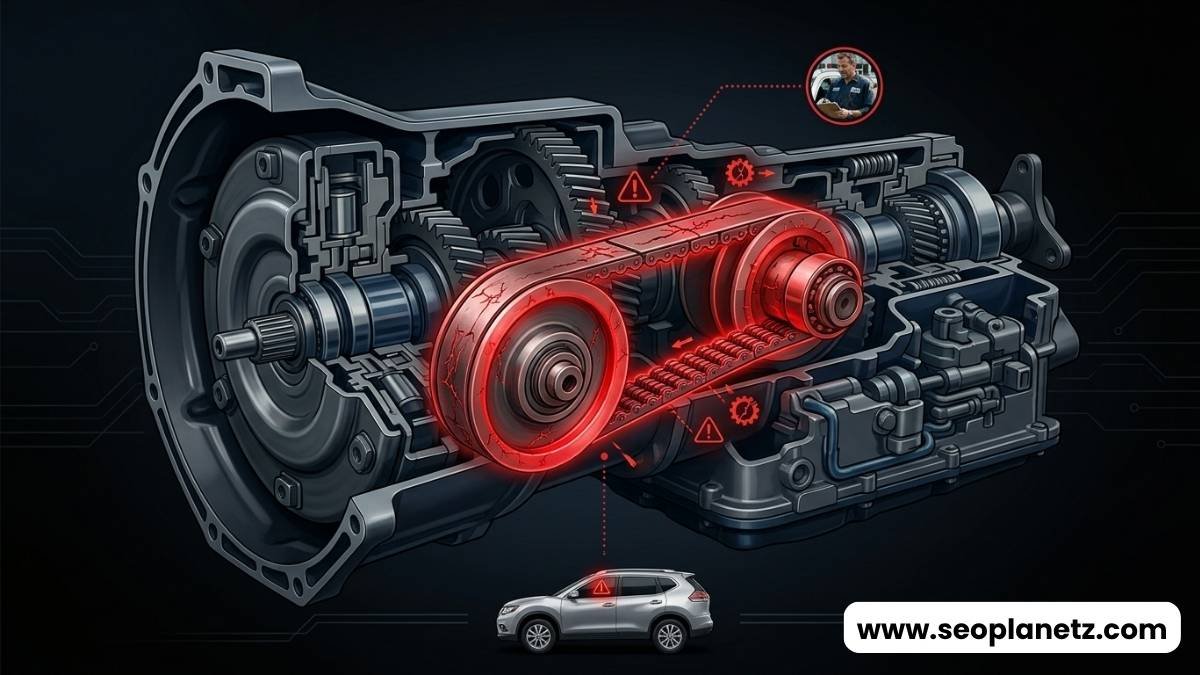
What is a CVT? A Continuously Variable Transmission uses a steel belt running between two variable-diameter pulleys to create a theoretically infinite range of gear ratios. This allows the engine to operate at its most fuel-efficient RPM at all times. The result: smooth acceleration and better fuel economy — in theory.
Why did Nissan’s CVT fail? Nissan’s Jatco-manufactured CVT units fitted to the Rogue had several structural weaknesses: insufficient cooling capacity for sustained highway driving, inadequate fluid capacity for the heat loads generated by the Rogue’s weight, and a belt design that degraded faster than expected under real-world American driving conditions (heavy traffic, long highway distances, towing).
The cost reality: A CVT replacement on a Nissan Rogue runs $3,500 to $8,000 depending on whether you use a dealer, independent shop, or remanufactured unit. On a car worth $8,000 to $14,000, this is often a total-loss event economically.
What Nissan did about it: Nissan extended the CVT warranty on some models and issued technical service bulletins, but the response fell short of what owners needed. Multiple class-action lawsuits were filed. Some owners received partial settlements, but most who experienced CVT failure bore the majority of the cost themselves.
How to check CVT health before buying: Pull the CVT dipstick if accessible. Fresh fluid is reddish-pink and odorless. Dark, burnt-smelling fluid indicates heat damage and is a serious warning sign. During the test drive, accelerate from 0 to 60 mph and listen for hesitation, shuddering, or a rubber-burning smell. A pre-purchase inspection by a mechanic with CVT diagnostic capability is strongly recommended on any pre-2019 Rogue.
How to Inspect a Used Nissan Rogue Before Buying
Whether you are buying a 2019 model or a 2025 model with a completed recall, this inspection checklist will protect your investment:
Step 1: Run the VIN Before anything else, go to NHTSA.gov and enter the VIN. Check for open recalls. For 2023–2025 Rogues, confirm that recall campaigns 26V080 and 26V081 have been completed. For 2019–2024 Rogues with VC-Turbo engines, check recall 25V437.
Step 2: CVT Test Drive (Pre-2019 Models) Accelerate hard from a full stop and note any hesitation. Drive at highway speed for 10 minutes and feel for any shuddering or surging. Decelerate from 70 mph to a stop and listen for unusual sounds.
Step 3: Engine Health Check (2021–2025 Models) Listen for any ticking, knocking, or unusual noise at idle. Ask if there is documented dealer service history showing the ECM software update under the recall. If the seller cannot provide this, factor in the possibility that the recall work has not been done.
Step 4: OBD2 Diagnostic Scan A $30 OBD2 reader connected to the diagnostic port under the dashboard will reveal any stored fault codes. For CVT issues, look for P0868, P0700, or P0776. For VC-Turbo engine issues, look for P0301, P0011, or P0021.
Step 5: Independent Pre-Purchase Inspection Spend $100 to $150 having an independent mechanic inspect any used Rogue before purchase. Ask specifically for CVT health assessment, oil consumption test, and engine inspection. This is the single best investment you can make in the used car buying process.
For anything related to the vehicle’s electronic systems — including the key fob, connectivity, and driver assistance features — our Nissan Key Fob Programming and Replacement Guide covers the most common issues in detail.
Nissan Rogue vs. Competitors: Is It Worth Buying in 2026?
Despite its reliability history, the Rogue remains one of America’s best-selling compact SUVs — and the right model year represents genuine value. Here is how it compares:
Nissan Rogue vs. Toyota RAV4 The RAV4 has a consistently stronger reliability record and better resale value. However, good RAV4 examples command a $3,000 to $6,000 premium over comparable Rogues. For budget-conscious buyers, a 2019–2020 Rogue offers better value per dollar while providing acceptable reliability.
Nissan Rogue vs. Honda CR-V The CR-V is arguably the most reliable compact SUV in its class, particularly the 2017–2022 generations. Like the RAV4, it commands a price premium. The 2022+ Rogue closes the reliability gap significantly while offering more interior space.
Nissan Rogue vs. Hyundai Tucson The Tucson offers strong value and modern design, but the Rogue wins on cargo space and long-term dealer network support in the United States. Our broader comparison of Mercedes vs BMW vs Audi in 2026 shows how brand reputation and recall history affect long-term ownership cost — the same principles apply here.
Nissan Rogue vs. Kia Sportage The Sportage is a strong competitor particularly in the 2022 and newer generation. The Rogue still holds an advantage in cabin space and fuel economy, but the Sportage’s stronger warranty (10-year/100,000 miles powertrain) gives it a significant edge for buyers who are nervous about long-term reliability.
For those interested in the broader Nissan lineup and how the Rogue fits within Nissan’s current SUV strategy, our Nissan Skyline Infiniti full history guide gives excellent context on Nissan’s engineering culture and approach.
Expert Tips for Getting the Best Deal on a Used Nissan Rogue
Tip 1: Use the Recall Data as Negotiating Leverage If you are looking at a 2023, 2024, or 2025 Rogue that still has open recall work, use that as a price reduction tool. Dealers know about the recall — and they know you know. A $500 to $1,500 price reduction on a recall-affected model is a reasonable ask.
Tip 2: Target High-Mileage 2019–2020 Models A 2019 Rogue with 75,000 miles will sell for $12,000 to $15,000 in 2026 — and if the CVT has survived to this mileage, statistical evidence suggests it will likely last considerably longer. Higher mileage on a well-maintained Rogue is less risky than low mileage on a poorly maintained one.
Tip 3: Prioritize Certified Pre-Owned (CPO) Nissan’s CPO program provides a powertrain warranty that covers the CVT and engine. For any Rogue outside CPO, consider whether a third-party powertrain warranty makes financial sense — particularly on 2021–2025 models where VC-Turbo reliability is still being established.
Tip 4: Always Verify EV and Hybrid Costs Separately If you are comparing a Rogue against electric or hybrid alternatives, understand the full cost picture. Our guide on EV Battery Replacement Cost USA 2026 shows why the total ownership cost calculation matters, not just the purchase price.
Tip 5: Check Oil Change Records This applies specifically to 2021–2025 Rogues with VC-Turbo engines. The engine bearing failures were directly linked to oil degradation from overheating. Cars with documented regular oil changes (every 5,000 to 7,500 miles) have shown dramatically lower rates of bearing failure.
Frequently Asked Questions
Q: What is the single worst Nissan Rogue year to buy?
Based on NHTSA complaints, owner reports, and repair cost data, the 2013 Nissan Rogue is the worst model year. It has the highest complaint volume, the most severe CVT failure rates, oil consumption problems, and brake issues — all combined.
Q: Are the 2023–2025 Nissan Rogues safe to buy now that the recall has been issued?
The recall remedy (ECM software update and engine inspection) reduces the risk but does not eliminate it entirely. If the oil pan was inspected for metal debris and no contamination was found, and the software update was applied, the vehicle is likely safe. However, given that bearing failures can occur progressively, we recommend buying CPO with an extended warranty on these years.
Q: How long does a Nissan Rogue CVT last?
On well-maintained pre-2019 models, a CVT can last 120,000 to 150,000 miles. On the worst years (2013–2015), failures at 80,000 to 100,000 miles were common. On 2019 and newer models, with proper fluid maintenance, 150,000 to 200,000 miles is achievable.
Q: What is the most reliable Nissan Rogue year in 2026?
According to AutoReliabilityIndex, J.D. Power, and Consumer Reports combined data, the 2025 and 2026 models score 84/100 for reliability — making them the highest-rated years in Rogue history. For used buyers, the 2022 model offers the best combination of modern platform reliability and accessible used pricing.
Q: Does the 2026 Nissan Rogue have any recalls?
Yes — the 2026 Rogue has one recall involving incorrect spare tire pressure information on the placard. This is a documentation issue, not a mechanical defect. It is a minor recall with no safety implications beyond incorrect tire inflation guidance.
Q: What is the annual repair cost for a Nissan Rogue?
According to NHTSA and repair shop data, the average annual repair cost for a Nissan Rogue is approximately $467 — below the compact SUV average of $521. This average improves significantly for 2019 and newer models.
Final Verdict: Which Nissan Rogue Should You Buy?
Here is the bottom line after analyzing every model year from 2008 to 2026:
Do not buy: 2008, 2013, 2014, 2015, 2017 — CVT failures will cost you more than the car is worth.
Buy with caution: 2016, 2018, 2020, 2021 — acceptable reliability but verify engine type and recall status before committing.
Buy with confidence: 2019, 2022 — best value used options in 2026 with solid reliability records and pre-recall engine configurations.
Best new or CPO purchase: 2026 — IIHS Top Safety Pick, Consumer Reports Recommended, 84/100 J.D. Power score, and only one minor documentation recall.
Handle carefully: 2023, 2024, 2025 — only purchase if recall work (26V080 and 26V081) has been completed and documented. Consider CPO or extended warranty mandatory for these years.
The Nissan Rogue is not a bad SUV. In fact, the 2022 and 2026 versions are among the best compact SUVs in America for the money. The problem is that Nissan’s quality control has been inconsistent across generations — and knowing which years represent engineering maturity versus rushed production is the difference between a smart purchase and an expensive mistake.
Use this guide. Check the VIN. Get the inspection. And you will drive away in a Rogue you can trust.
Sources and External References
- NHTSA Recall Campaign 26V080 — Engine Bearing Failure — Federal recall data for 2023–2025 Rogue
- NHTSA Recall Campaign 26V081 — Throttle Body Gear Failure — Federal recall data for 2024–2025 Rogue
- Consumer Reports Nissan Rogue Reliability — Annual reliability ratings by model year
- AutoReliabilityIndex Nissan Rogue — Comprehensive complaint and reliability scoring
- Autoblog — Nissan Recalls 640,000 Rogue SUVs — February 2026 recall coverage
- CarComplaints.com Nissan Rogue — Owner complaint aggregator
Also Read on CarPlanetz
- 2026 Nissan Rogue Rock Creek Edition — Is It Worth It?
- Nissan Qashqai 2025: Full Specs, Prices, and Honest Review
- Q50 Nissan 2026: Prices, Specs & Features Guide
- How to Negotiate Price for Used Car in 2026
- Nissan Key Fob Programming & Replacement Cost Guide
- EV Battery Replacement Cost USA 2026
- Nissan Skyline Infiniti: Full History & 2027 USA Comeback