How Long Do Car Batteries Last? 7 Critical Facts You Need to Know
Introduction
You turn the key, and nothing happens. Just a faint click. We've all experienced that sinking feeling of a dead car battery at the worst possible moment—maybe on a freezing morning or right before an important meeting.
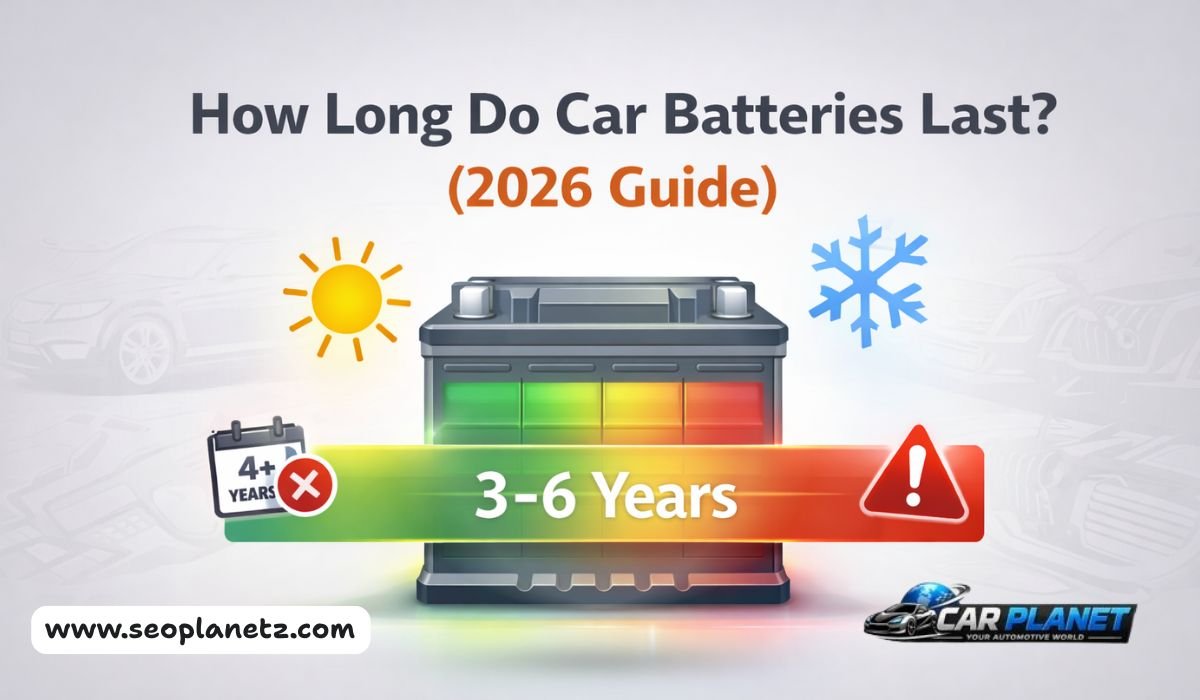
So, how long do car batteries last exactly? The straight answer is 3 to 5 years for most vehicles. But here's the catch: the average car battery life depends on several factors, from where you live to how you drive. Some batteries die after just two years, while others push past six.
In this guide, you'll discover what affects car battery life expectancy, how to spot warning signs before you're stranded, and practical tips to squeeze extra years from your battery. Whether you drive a sedan, SUV, or Subaru, understanding how long car batteries last can save you money and headaches.
What Determines How Long Car Batteries Last?
Understanding Average Car Battery Life
Most car batteries are designed to last between 3 to 5 years under normal conditions. According to Consumer Reports battery testing, this car battery life expectancy isn't just a random estimate—it's based on decades of industry data and real-world testing.
Also read: How to jump a car carefully in 2026
Here's what typically happens over a battery's life:
Years 1-2: Peak performance. Your battery starts the engine instantly, even in cold weather, and powers all your electronics without hesitation.
Years 3-4: Gradual decline begins. You might not notice it daily, but the battery's ability to hold a charge starts diminishing. Cold starts may take slightly longer.
Years 5+: The danger zone. The chemical reactions inside have degraded significantly, and failure can happen without warning.
However, not all batteries are created equal. A premium AGM (Absorbent Glass Mat) battery might last 4-6 years, while a budget battery in a hot climate could fail at just 2.5 years. Understanding how long car batteries last helps you plan for replacement before you're stranded.

Climate Makes a Huge Difference
Temperature is the single biggest factor affecting how long car batteries last, according to AAA's automotive research.
Hot Climates: Heat is actually worse for batteries than cold. High temperatures accelerate the chemical reactions inside your battery, causing faster degradation. In places like Phoenix or Houston, the average car battery life is only 2.5 to 3.5 years. For every 15°F increase above 77°F, battery life can be cut in half.
Cold Climates: While cold doesn't kill batteries as quickly as heat, it severely reduces performance. At 0°F, a battery can lose 60% of its starting power. The stress of cold-weather starting can expose weaknesses in aging batteries. When asking "how long should a car battery last" in cold regions, expect 3-4 years.
Moderate Climates: Batteries last longest in temperate areas with minimal extremes. Coastal California, the Pacific Northwest, and similar regions often see batteries exceed the 5-year mark—proof that climate dramatically affects how long car batteries last.

Your Driving Habits Matter
Short trips are battery killers. Here's why: starting your engine requires a massive power draw (100-300 amps). If you only drive 10 minutes to work, your alternator doesn't have enough time to fully recharge the battery. This chronic undercharging leads to sulfation—hard crystals that form on battery plates and reduce capacity permanently.
This directly impacts how long car batteries last. Conversely, highway drivers who take regular 30+ minute trips tend to get maximum car battery life expectancy because the alternator has time to fully recharge the battery.
Weekend cars suffer too. Vehicles driven infrequently face a different problem: batteries self-discharge naturally, losing about 1-3% of their charge per day when sitting unused. If you only drive once a week, your battery might never reach a full charge, significantly reducing the average car battery life.
Battery Type and Quality
Understanding battery types is crucial when asking "how long do car batteries last." According to Interstate Batteries, battery type significantly affects how long should a car battery last:
Standard Lead-Acid Batteries: 3-4 years. These are the most affordable ($50-$120) but have the shortest lifespan and require occasional maintenance.
AGM Batteries: 4-6 years. These sealed batteries ($150-$300) handle charge-discharge cycles better and resist vibration. They're required for vehicles with start-stop technology and offer superior car battery life expectancy.
Lithium-Ion Batteries: 8-10 years. These premium batteries ($300-$1,000+) are lightweight and long-lasting but aren't compatible with all vehicles.
Premium vs. Budget: A quality battery from Interstate, Optima, or Odyssey will consistently outlast a budget store brand, often by 1-2 years.
How Long Do New Car Batteries Last Compared to Replacements?
Many people assume the original battery in a new car will last longer than a replacement. The truth is more nuanced.
New car batteries typically last the same 3-5 years as quality replacements. They're often manufactured by third-party companies (Interstate, Johnson Controls) and branded with the automaker's name. The main advantage is that they're perfectly matched to your vehicle's electrical system and usually come with better warranty coverage.
Replacement batteries can actually outlast OEM batteries if you upgrade to a premium option. For example, replacing a standard flooded battery with an AGM can add 1-2 years of life, especially in demanding conditions.
The key isn't necessarily OEM vs. aftermarket—it's choosing the right battery type and quality for your vehicle and driving conditions.
How to Know When Your Battery is Dying
Understanding warning signs helps you predict how long do car batteries last in your specific vehicle. Catching these signs early prevents getting stranded. Here's what to watch for:
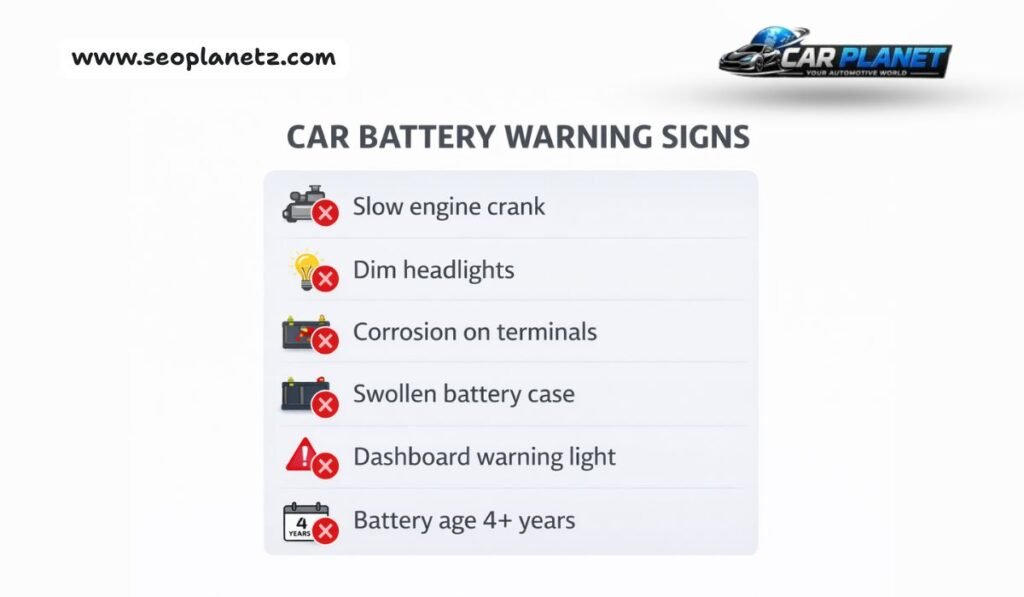
Warning Signs to Never Ignore
Slow Engine Crank: If your engine takes longer to start—that labored "urrr... urrr... vroom" instead of a quick start—your battery is losing its ability to deliver high current. This is often the first sign of decline.
Dimming Lights: Before starting the engine, turn on your headlights. They should be bright and steady. Dim or flickering lights indicate low battery voltage.
Electrical Quirks: Power windows moving slowly, a weak horn, or the radio resetting are all symptoms of unstable voltage from a failing battery.
Dashboard Warning Lights: The battery warning light obviously signals trouble, but even a check engine light can sometimes be triggered by voltage irregularities.
Visible Damage: Check your battery monthly for:
- Corrosion (white, blue, or green buildup on terminals)
- Swelling or bulging case (sign of overheating—replace immediately)
- Cracks or leaks (dangerous—battery acid is corrosive)
Age: If your battery is 4+ years old, it's living on borrowed time regardless of how well it seems to work. Get it tested every few months.
The Simple DIY Test
You can check battery health at home with a $20 multimeter to determine how long your car battery will last:
- Set the multimeter to DC voltage (20V range)
- Touch the red probe to the positive terminal, black to negative
- Read the voltage with the engine off
Healthy battery: 12.6-12.8 volts Weak battery: 12.0-12.4 volts Failing battery: Below 12.0 volts
Most auto parts stores like AutoZone, O'Reilly Auto Parts, and Advance Auto offer free battery testing and will even test it while installed in your car. Take advantage of this service, especially before winter, to check your car battery life expectancy.
How to Extend Your Car Battery Life
Simple habits can add 1-2 years to your battery's lifespan.
Keep It Clean
Corrosion on battery terminals creates resistance, forcing your battery to work harder. Every 6 months:
- Disconnect the negative terminal first
- Mix baking soda and water
- Scrub terminals with a wire brush
- Rinse with clean water and dry thoroughly
- Apply petroleum jelly or terminal protectant spray
- Reconnect positive first, then negative
This 15-minute task can prevent countless starting problems.
Avoid Short Trips When Possible
If you regularly make 5-10 minute trips, try to combine errands into longer drives. Better yet, take a 30-45 minute highway drive once a week to allow your battery to fully recharge.
For cars that sit for days at a time, invest in a battery tender ($30-$60). These smart chargers maintain optimal charge without overcharging, and they're essential for classic cars, motorcycles, or seasonal vehicles.
Park Smart
Whenever possible, park in a garage or shade. Protecting your battery from temperature extremes—especially heat—can significantly extend its life. If you live in a hot climate, consider a battery heat shield ($15-$40) to deflect engine heat.
Minimize Electrical Drain
Turn off all accessories (lights, radio, heated seats) before shutting off your engine. Never leave your car in "accessory mode" for extended periods, as this drains the battery without the alternator charging it.
When to Replace Car Battery: The Complete Guide
The 3-Year Rule: Once your battery hits 3 years old, have it tested every 6 months. At 4 years, test every 3 months. At 5 years, strongly consider proactive replacement, especially before winter or a road trip. Knowing when to replace car battery prevents unexpected breakdowns.
Climate Considerations for How Long Car Batteries Last:
- Hot climates: Replace at 3-4 years
- Moderate climates: Replace at 4-5 years
- Cold climates: Replace at 3-4 years
Don't Wait for Failure: A battery that tests "good" today can fail tomorrow, especially in extreme temperatures. If your battery is 4+ years old and you're planning a long road trip, the $150 replacement cost is cheaper than a tow truck in the middle of nowhere.
Brand-Specific Insights: Subaru Battery Life
Subaru owners often ask about their specific battery expectations. Subaru vehicles typically use conventional lead-acid or AGM batteries, with an average lifespan of 3-5 years—similar to most vehicles.
Models with start-stop technology (newer Outbacks and Foresters) require AGM batteries that handle frequent charge cycles better. The all-wheel-drive system doesn't significantly impact battery life, though cold-weather climates where many Subarus operate can reduce longevity to the 3-4 year range.
Popular Subaru models and typical battery life:
- Outback: 3-5 years
- Forester: 4-5 years
- Crosstrek: 4-5 years
- WRX/STI: 3-4 years (performance driving impacts battery)
FAQs About How Long Car Batteries Last
Q: Can a car battery last 10 years? While extremely rare, some premium batteries in ideal conditions (moderate climate, regular highway driving, excellent maintenance) have been documented lasting 7-8 years. Ten years is virtually impossible with current battery technology. The average car battery life remains 3-5 years.
Q: How many miles should a car battery last? Car batteries age by time, not mileage. A battery sitting unused for 3 years degrades almost as much as one driven 60,000 miles. However, driving patterns (short trips vs. highway miles) do affect car battery life expectancy.
Q: What shortens car battery life the most? Heat is the #1 killer affecting how long car batteries last. High temperatures accelerate internal degradation. Second is chronic undercharging from short trips.
Q: When to replace car battery proactively? Yes, if it's 4+ years old and you're facing winter or planning a road trip. Proactive replacement beats roadside emergencies and ensures you get maximum car battery life expectancy.
Q: How do I know if my Subaru needs a new battery? Same warning signs as any vehicle: slow cranking, dimming lights, age over 4 years, or failing a load test. Subaru batteries follow the same 3-5 year lifespan as most vehicles.
The Bottom Line: How Long Do Car Batteries Last?
So, how long do car batteries last? While 3-5 years is the average car battery life, you're not at the mercy of chance. Understanding the factors that affect car battery life expectancy—climate, driving habits, battery quality—empowers you to maximize longevity.
The smartest approach combines proactive testing (especially after year 3), basic maintenance like terminal cleaning, and smart driving habits that allow proper recharging. Watch for warning signs like slow cranking or electrical issues, and don't hesitate when it's time to replace your car battery—especially if it's 4+ years old and you're facing extreme weather seasons.
Remember: a dead battery always happens at the worst time. A little prevention and awareness can save you from that frustrating experience—and possibly hundreds in emergency service calls.
Take action today: Check your battery's age (look for the date code on the label), schedule a free test at your local auto parts store, and mark your calendar for seasonal testing. Understanding how long should a car battery last helps you stay prepared. Your future self will thank you.