
Introduction
Car overheating is one of the most serious problems a driver can face on the road. When your car overheats, it can lead to catastrophic engine damage if ignored — and in many cases, just a few minutes of driving with a hot engine can cost you thousands in repairs.
According to the National Highway Traffic Safety Administration (NHTSA), engine failure due to overheating is among the leading causes of roadside breakdowns in the United States. Whether your temperature gauge is rising unexpectedly or steam is pouring out from under the hood, understanding why your car is overheating is the first step toward fixing it. This guide covers every cause, symptom, quick fix, and long-term solution — so you’re never caught off guard again.
What Happens When a Car Overheats?
The engine in your car operates within a specific temperature range — typically between 195°F and 220°F (90°C–104°C). When heat exceeds this range, the engine’s metal components begin to warp, gaskets start to fail, and the oil loses its lubricating ability. The cooling system — consisting of the radiator, coolant, water pump, and thermostat — works constantly to prevent this.
When any part of this system fails, heat builds up faster than it can be released, and your car overheats. Left unaddressed, this can cause a blown head gasket, cracked engine block, or total engine seizure.
Also Read: Why Is My Car Smoking? 7 Common Causes and How to Fix Them
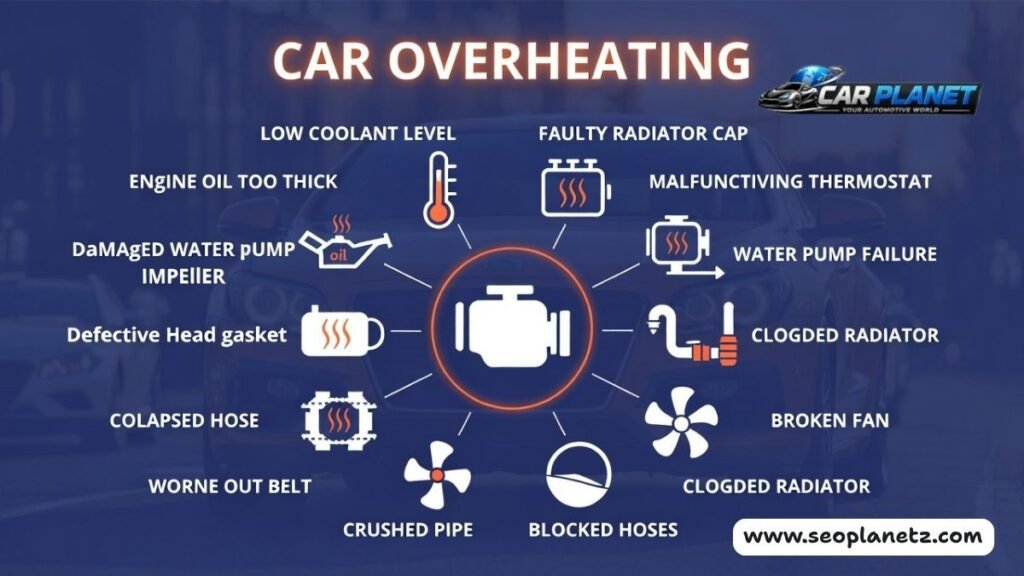
Top 10 Common Car Overheating Causes
Understanding car overheating causes is key to diagnosing your issue correctly. Here are the ten most common reasons:
1. Low or Leaking Coolant
Coolant (antifreeze) is the lifeblood of your car’s cooling system. A low coolant level — whether from a slow leak or evaporation — reduces the system’s ability to absorb and release engine heat. If your car is overheating with coolant appearing full, the coolant may be contaminated or air-locked.
2. Faulty Thermostat
The thermostat regulates coolant flow between the engine and radiator. A stuck-closed thermostat traps hot coolant in the engine, causing rapid temperature spikes. You may notice the temperature gauge rising but the car not overheating immediately — a classic thermostat warning sign.
3. Broken Water Pump
The water pump circulates coolant throughout the system. If the pump’s impeller is worn or the shaft is broken, coolant stops moving — and your engine temperature skyrockets. This is one of the most overlooked car overheating causes.
4. Clogged or Damaged Radiator
A clogged radiator can’t dissipate heat efficiently. Debris, mineral deposits, or bent fins all reduce airflow and cooling capacity. This is especially common in older vehicles and is a major reason for car overheating while driving at highway speeds.
5. Blown Head Gasket
A blown head gasket is both a cause and a result of overheating. It allows combustion gases into the cooling system, creating air pockets that block coolant flow. Signs include white smoke from the exhaust, oil in the coolant reservoir, and bubbling in the radiator.
Also Read: How to Negotiate a Car Price: The Complete Used Car Negotiation Guide in 2026
6. Broken Radiator Fan
The radiator fan pulls air through the radiator when the car is stationary or moving slowly. If it fails, you’ll notice car overheating when idle or in traffic, but normal temperatures at highway speeds where natural airflow compensates.
7. Blocked Coolant Hoses
Collapsed or kinked coolant hoses restrict circulation. Over time, hoses harden, crack, or swell internally. A soft or spongy hose is a clear warning sign.
8. Faulty Radiator Cap
The radiator cap maintains pressure in the cooling system. A weak cap lowers the boiling point of coolant, causing it to vaporize too early. This is a cheap fix that many people overlook.
9. Air Lock in the Cooling System
Air trapped in the coolant system creates “hot spots” that can trigger car overheating even when coolant levels appear normal. This often occurs after coolant replacement if the system isn’t properly bled.
10. Engine Oil Issues
Low or degraded engine oil increases friction and heat. While oil and coolant serve different purposes, a significant oil problem accelerates engine temperature rise — especially under load.
Car Overheating Causes vs. Symptoms: Quick Reference Table
| Cause | Key Symptom | Urgency Level |
|---|---|---|
| Low Coolant | Steam, high temp gauge | 🔴 High |
| Faulty Thermostat | Temp gauge fluctuates | 🟠 Medium-High |
| Broken Water Pump | Coolant leak, no heat in cabin | 🔴 High |
| Clogged Radiator | Overheating at highway speeds | 🟠 Medium |
| Blown Head Gasket | White smoke, oil in coolant | 🔴 Critical |
| Broken Radiator Fan | Overheating at idle/traffic | 🟠 Medium-High |
| Faulty Radiator Cap | Coolant overflow tank bubbling | 🟡 Low-Medium |
| Air Lock | Overheating despite full coolant | 🟠 Medium |
| Clogged Coolant Hose | Visible hose damage, heat spikes | 🟠 Medium |
| Low Engine Oil | Rising temp + oil warning light | 🔴 High |
Warning Signs Your Car Is Overheating
Recognizing overheating car symptoms early can save your engine. Watch for:
- Temperature gauge rising into the red zone or beyond the midpoint
- Steam or smoke coming from under the hood
- Burning smell from the engine (though a burning smell from car but not overheating can indicate other issues like burning oil or a slipping belt)
- Reduced engine power or unusual knocking sounds
- Coolant warning light illuminating on the dashboard
- Ticking or thumping noises from the engine
Some drivers report car smoking but not overheating — this is often caused by coolant or oil dripping onto hot engine components, not the cooling system itself.
Also Read: 2026 Kia Stinger: The Ultimate Review, Pricing, and Specs
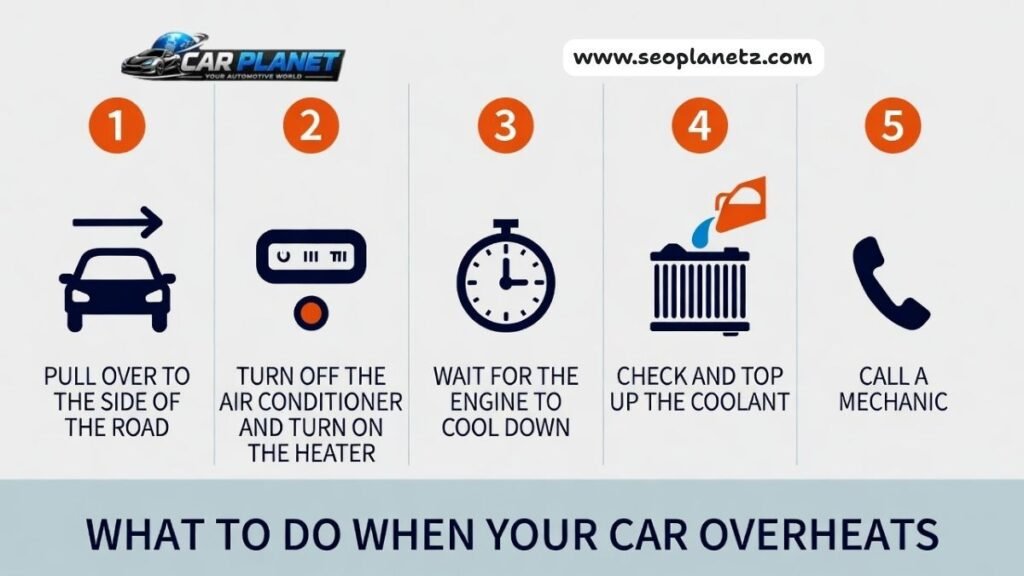
What to Do If Your Car Is Overheating
Knowing what to do when car is overheating can prevent a minor inconvenience from becoming a major repair bill.
Step 1: Pull Over Safely
As soon as you notice the temperature gauge in the red, pull off the road immediately. Do not continue driving — every second of operation at extreme heat risks permanent engine damage.
Step 2: Turn Off the AC, Turn On the Heater
This sounds counterintuitive, but turning on the heater at full blast pulls heat from the engine into the cabin, giving the engine temporary relief. Simultaneously, turn off the air conditioning to reduce engine load.
Step 3: Let the Engine Cool
Turn off the engine and wait at least 15–30 minutes before opening the hood. Never remove the radiator cap when the engine is hot — pressurized steam can cause serious burns.
Step 4: Check Coolant Level
Once cool, carefully open the radiator cap and check the coolant level. If low, add a 50/50 mix of coolant and water as a temporary fix for overheating car situations. Check coolant reservoir too.
Step 5: Call for Help or Drive Carefully
If the temperature stabilizes, you may be able to drive slowly to a nearby mechanic. But if the gauge climbs again, pull over immediately. How far can you drive an overheating car? The answer is: ideally, not at all — but in emergencies, under 1 mile at very low speed with constant temperature monitoring.
Also Read: How to Jump a Car Safely and Correctly in 2026
Temporary Fix for Overheating Car: Emergency Tips
If you’re stranded and need a temporary fix for an overheating car:
- Add water to the coolant reservoir (not the radiator directly when hot)
- Use a stop-leak product for minor coolant leaks (short-term only)
- Drive only with the heater on full blast
- Avoid stop-and-go traffic — keep moving for airflow
- Check for obvious hose leaks or disconnected belts
These are emergency measures only. Always get a proper diagnosis from a certified mechanic as soon as possible. You can find a trusted mechanic near you through AAA’s Approved Auto Repair network.
Car Overheating When AC Is On: Why It Happens
Car overheating when AC is on is a specific and common complaint, especially in summer. The air conditioning compressor adds significant load to the engine and also generates heat that the condenser must expel near the radiator. If the cooling system is already marginally functional, the added AC load can push temperatures over the limit.
Common causes specific to this situation include a faulty condenser fan, a weak radiator, or low refrigerant causing the compressor to work harder. Have your AC system inspected alongside your cooling system if this is your issue.
How to Fix Overheating Car: Repair Cost Guide
| Repair | DIY Difficulty | Average Cost (Parts + Labor) |
|---|---|---|
| Coolant Refill | ⭐ Easy | $15–$50 |
| Thermostat Replacement | ⭐⭐ Moderate | $150–$250 |
| Radiator Cap Replacement | ⭐ Easy | $10–$30 |
| Water Pump Replacement | ⭐⭐⭐ Hard | $300–$750 |
| Radiator Replacement | ⭐⭐⭐ Hard | $400–$900 |
| Head Gasket Repair | ⭐⭐⭐⭐ Expert | $1,000–$2,000+ |
| Radiator Fan Replacement | ⭐⭐ Moderate | $200–$500 |
| Coolant Hose Replacement | ⭐⭐ Moderate | $100–$300 |
For detailed repair guidance, the Car Care Council and Consumer Reports Car Maintenance Guide are excellent resources.
Car Won’t Start After Overheating: What Now?
If your car won’t start after overheating, the engine may have suffered:
- Hydrolocked cylinders (coolant entered combustion chamber)
- Warped cylinder head preventing compression
- Seized pistons from lack of lubrication
- Melted electrical components near the engine
In these cases, a professional inspection is essential. The Automotive Service Excellence (ASE) website can help you find certified technicians in your area.
Also Read: 2025 Ford Edge Complete Guide to Price, Features, and Specs
How to Prevent Car Overheating
Prevention is always better than repair. Follow these habits to avoid car overheating:
- Check coolant level every 1–2 months
- Flush and replace coolant every 2–3 years (or per manufacturer specs)
- Inspect hoses and belts during every oil change
- Replace the thermostat every 5 years as preventive maintenance
- Keep an eye on the temperature gauge, especially in heavy traffic or summer heat
- Service your AC system annually
The U.S. Department of Energy’s vehicle maintenance guide recommends regular cooling system inspections as part of a routine maintenance schedule.
Key Takeaways
Before wrapping up, here’s a quick summary of what you need to know about car overheating:
- Car overheating occurs when the cooling system fails to manage engine heat within the safe range of 195°F–220°F
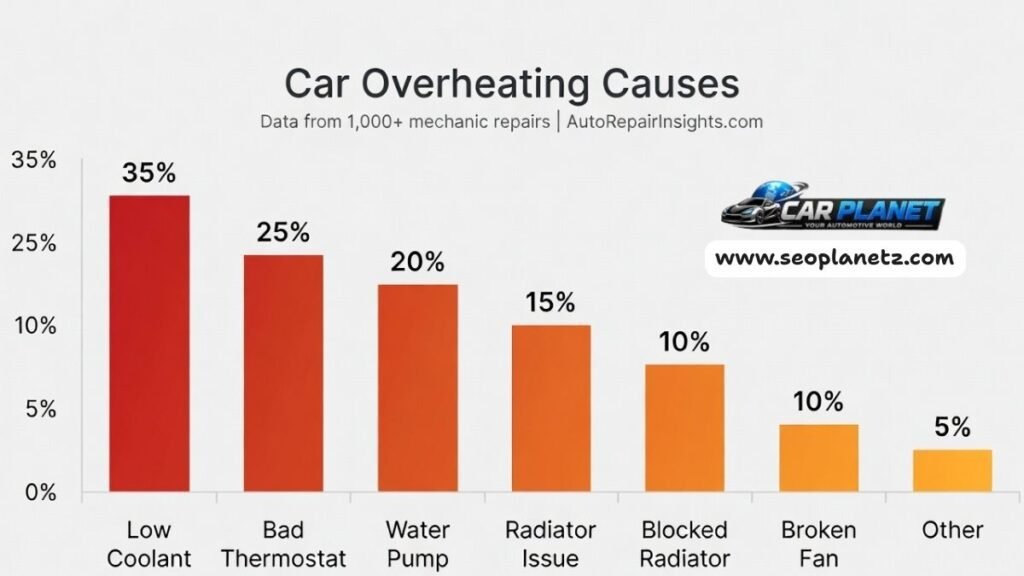
- The most common causes include low coolant, a faulty thermostat, broken water pump, and a clogged radiator
- Symptoms include a rising temperature gauge, steam from the hood, burning smells, and reduced engine power
- If your car overheats, pull over immediately, turn on the heater, and wait 15–30 minutes before inspecting
- A temporary fix for overheating car situations involves adding coolant/water — but always get a professional diagnosis afterward
- Repair costs range from $10 (radiator cap) to $2,000+ (head gasket), depending on the cause
- Regular maintenance — including coolant flushes and hose inspections — is the best way to prevent overheating
Frequently Asked Questions
Q: How do you fix a car that overheats?
First, pull over safely and let the engine cool for at least 15–30 minutes. Check the coolant level and top it off if low. Then identify the underlying cause — whether it’s a faulty thermostat, broken water pump, or leaking hose — and have it repaired by a professional. Driving a car that keeps overheating without fixing the root cause will cause severe engine damage.
Q: What are 10 common causes of overheating in a car?
The 10 most common car overheating causes are: low or leaking coolant, faulty thermostat, broken water pump, clogged radiator, blown head gasket, broken radiator fan, blocked coolant hoses, faulty radiator cap, air lock in the cooling system, and low engine oil. Each requires a different fix, so proper diagnosis is important.
Q: Can you drive a car when it’s overheating?
You should not drive an overheating car. Every mile driven at high engine temperature risks permanent damage including a warped cylinder head, blown head gasket, or total engine seizure. In an absolute emergency, you can drive very slowly for less than a mile with the heater on full blast — but pull over immediately if the temperature keeps rising.
Q: How does a car act when it overheats?
A car overheating typically shows several signs: the temperature gauge climbs into the red zone, steam or smoke rises from the hood, you may smell something burning, the engine may knock or tick, and the car may lose power. Some vehicles also display a coolant warning light. Ignoring these overheating car symptoms can lead to complete engine failure.
Also Read: 2020 Hyundai Elantra Review, Price, and Specs
Q: Why is my car overheating all of a sudden?
Sudden car overheating is usually caused by a sudden coolant leak, a thermostat that’s just failed, or a water pump that’s seized. It can also happen if you’ve recently driven in extreme heat or towed a heavy load. Check your coolant level first — if it’s low, you likely have a leak that needs immediate attention.
Q: Why is my car overheating when I have coolant?
If your car is overheating but has coolant, the issue is likely with coolant circulation rather than the coolant level itself. Common culprits include a stuck thermostat, a failed water pump, a clogged radiator, air lock in the system, or a blown head gasket that’s contaminating the coolant with combustion gases.
Q: What causes car overheating when idle?
Car overheating while idling or at low speeds is most often caused by a broken radiator fan. At speed, natural airflow cools the radiator — but when idling, the car depends entirely on the electric fan. A failed fan means no airflow, and temperatures climb quickly. Check your radiator fan first if overheating only happens in traffic or at stops.
Conclusion
Dealing with a car overheating situation is stressful, but it doesn’t have to be catastrophic — if you act quickly and know what to look for. From a simple low coolant level to a serious blown head gasket, car overheating causes span a wide range of complexity and cost. The key is never to ignore the warning signs. Pull over, let the engine cool, perform a basic check, and get a professional diagnosis as soon as possible.
By staying on top of routine maintenance and understanding the signs of car overheating, you can avoid expensive repairs and keep your engine running smoothly for years to come. Whether you’re facing car overheating while driving on the highway or noticing your car overheating when idle in traffic, the solutions in this guide give you everything you need to handle the situation confidently and safely.
For more detailed maintenance guidance, consult resources like the Kelley Blue Book car care center or speak with an ASE-certified mechanic in your area.