
Introduction
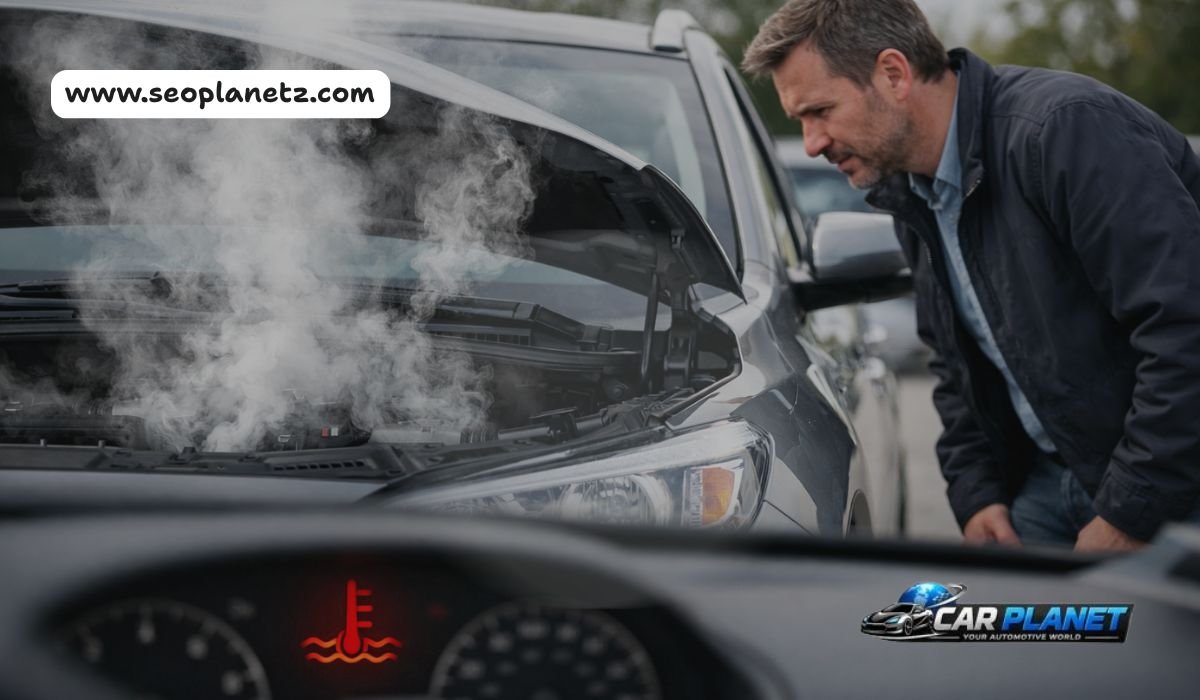
Imagine driving down the highway when suddenly you notice wisps of smoke billowing from under your hood or trailing behind your vehicle. Your heart races, palms sweat, and panic sets in. If you’ve ever wondered “why is my car smoking,” you’re not alone. Car smoke is one of the most alarming issues drivers face, and it’s your vehicle’s way of screaming for help.
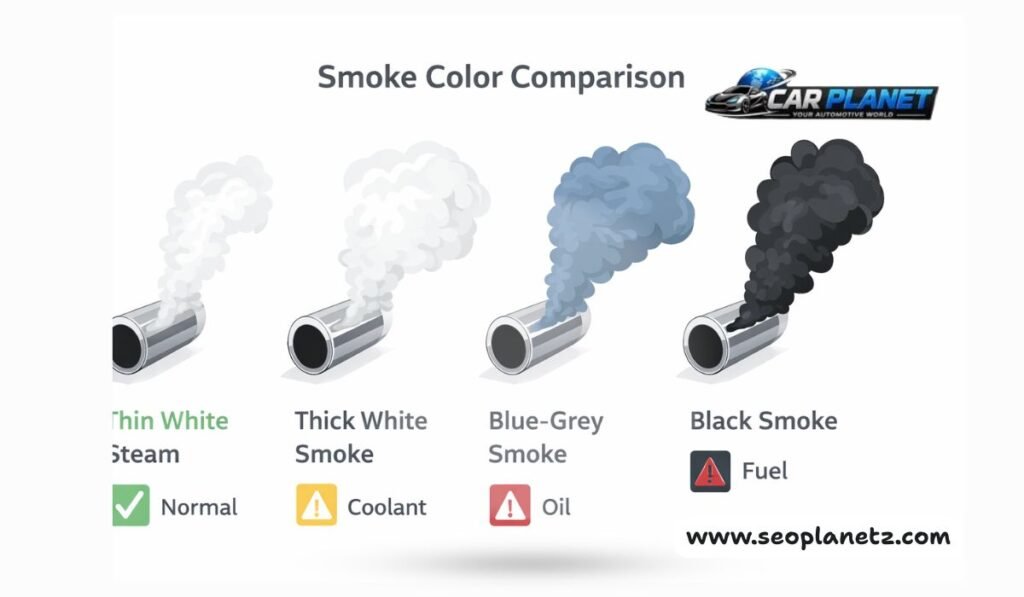
Whether it’s white, blue, black, or gray smoke, each color tells a different story about what’s going wrong under the hood. In this comprehensive guide, we’ll explore the seven most common reasons why your car might be smoking, what each type of smoke means, and most importantly, how to fix these issues before they turn into expensive repairs.
Understanding Car Smoke: What Your Vehicle Is Trying to Tell You
Why is my car smoking? This question demands immediate attention because smoke is never a good sign. Your car operates through a complex system of fluids, combustion processes, and mechanical components working in perfect harmony. When smoke appears, it indicates that something has disrupted this balance.
Also Read: How to Jump-start a Car in 2026? Complete Guide
The color, smell, and consistency of the smoke provide crucial diagnostic clues. Light steam on a cold morning might be completely normal, while thick black smoke indicates a serious problem requiring immediate intervention. Understanding these differences can mean the difference between a simple fix and catastrophic engine failure.
What Different Smoke Colors Indicate:
| Smoke Color | What It Means | Urgency Level |
|---|---|---|
| White (thin, disappears quickly) | Normal condensation | Low – No action needed |
| White (thick, persistent) | Coolant burning/Head gasket | High – Stop driving |
| Blue or Gray | Engine burning oil | Medium-High – Get checked soon |
| Black | Rich fuel mixture | Medium – Reduces efficiency |
| Light Gray | Transmission fluid burning | Medium – Check transmission |
The 7 Common Causes of Why is My Car Smoking and How to Fix Them
1. Coolant Leak or Blown Head Gasket (White Smoke)
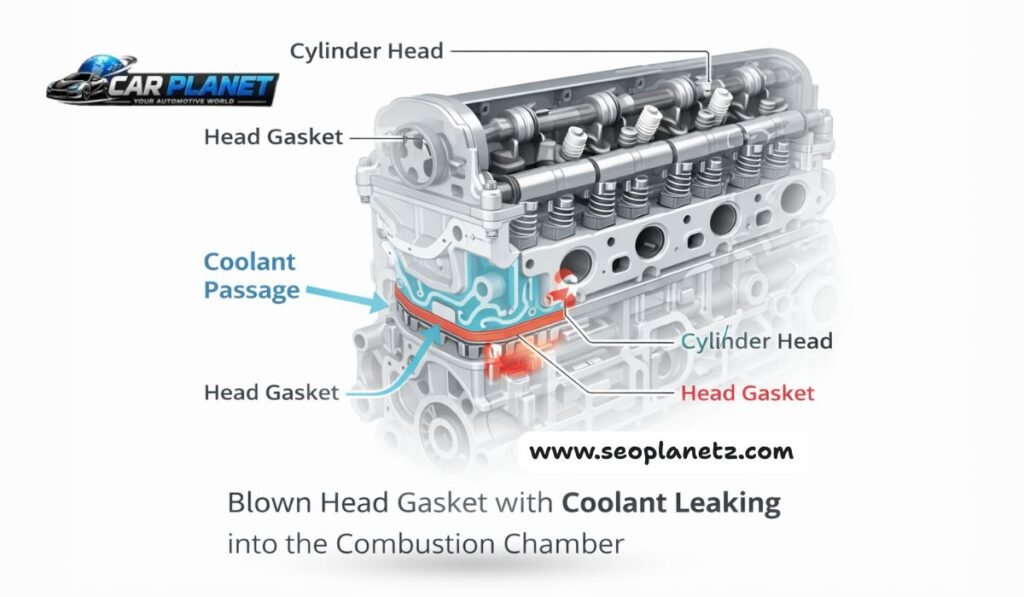
White smoke pouring from your exhaust, especially thick, sweet-smelling clouds, typically indicates coolant burning in the combustion chamber. This is one of the most serious answers to why is my car smoking. A blown head gasket allows coolant to seep into areas where it shouldn’t be.
Symptoms to watch for:
- Sweet smell from exhaust (like maple syrup)
- Engine overheating
- Milky or foamy residue on oil dipstick
- Loss of coolant without visible external leaks
- White smoke persisting after engine warms up
How to fix it: Head gasket replacement is a major repair costing $1,000-$2,000 depending on your vehicle model. A mechanic will remove the cylinder head, replace the gasket, and ensure the head surface is perfectly flat. Ignoring this problem leads to complete engine failure costing $4,000-$8,000 for a rebuilt engine.
2. Burning Oil (Blue or Gray Smoke)
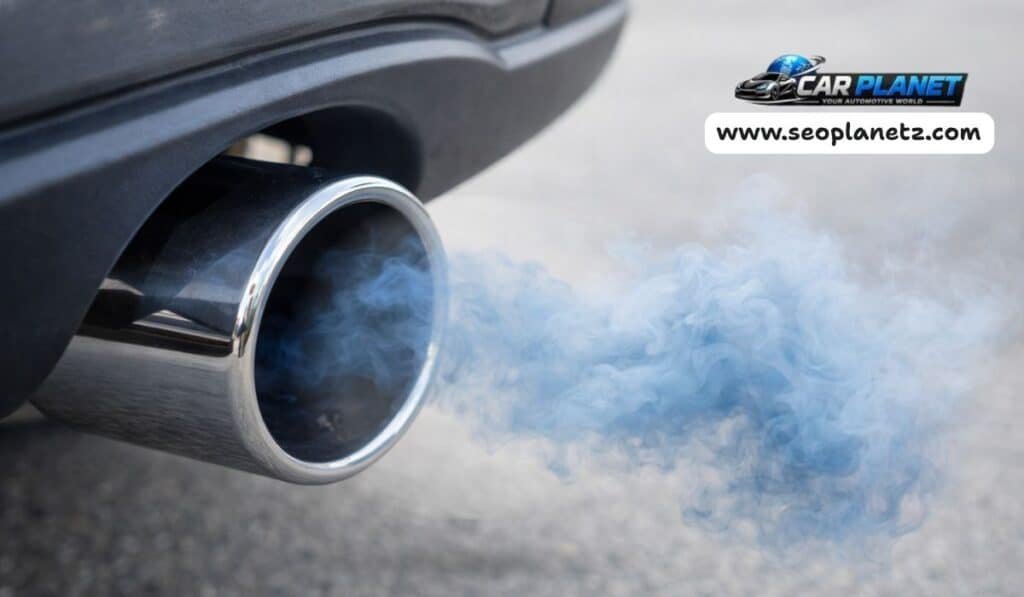
If you notice blue or bluish-gray smoke from your exhaust, especially when accelerating or after idling, you’re likely burning oil. This happens when engine oil seeps into the combustion chamber and ignites along with the fuel.
Common causes include:
- Worn piston rings that no longer seal properly
- Damaged valve seals allowing oil to drip into cylinders
- Failing PCV (Positive Crankcase Ventilation) valve
- Turbocharger seal failure in turbocharged engines
How to fix it: A faulty PCV valve costs only $20-$75 and is easy to replace. However, worn piston rings or valve seals require engine disassembly, with costs ranging from $1,500-$3,500. Check your oil level regularly—if you’re constantly adding oil between changes (more than a quart every 1,000 miles), you’re burning it. Continuing to drive damages your catalytic converter ($1,000-$2,500 to replace).
3. Rich Fuel Mixture (Black Smoke)
Black smoke from your exhaust indicates your engine is burning too much fuel relative to air—a “rich” fuel mixture. While less immediately dangerous than white or blue smoke, black smoke still answers the question of why is my car smoking.
Primary causes:
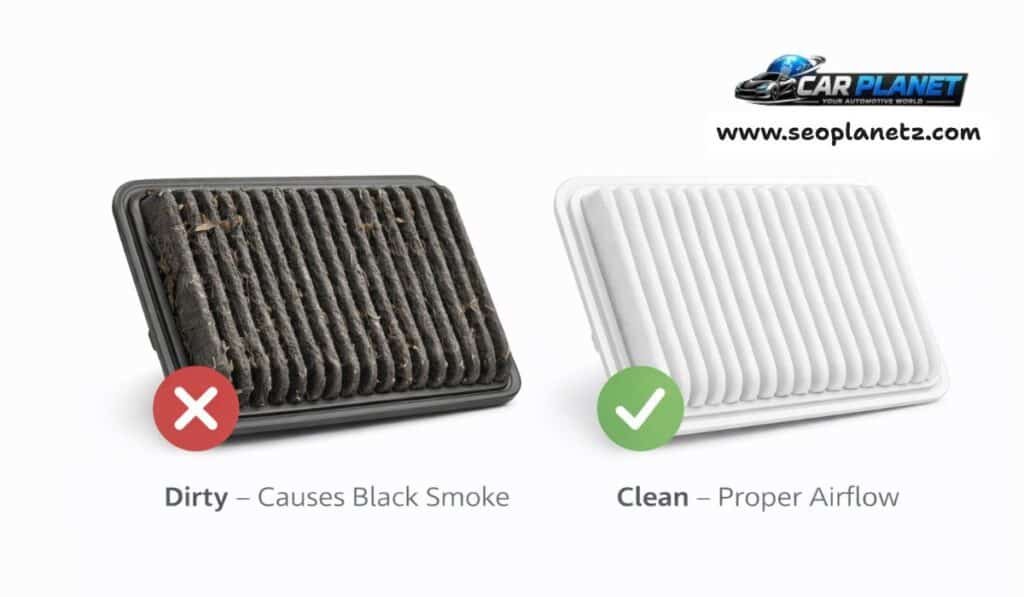
- Clogged or dirty air filter restricting airflow
- Malfunctioning fuel injectors stuck open or leaking
- Faulty oxygen sensors sending incorrect data
- Failing mass airflow (MAF) sensor
How to fix it(why is my car smoking): Start with the simplest solution: replace your air filter ($15-$50 DIY). If black smoke persists, have a mechanic run diagnostic tests to identify sensor failures or injector problems. Oxygen sensor replacement costs $200-$400, while fuel injector cleaning runs $50-$100 per injector. A professional fuel system cleaning service ($150-$300) often resolves multiple issues simultaneously. According to the EPA’s mobile source pollution guidelines, vehicles emitting excessive black smoke exceed acceptable emission standards and contribute significantly to air quality problems. Addressing this issue promptly not only fixes your car but also helps reduce environmental pollution.
4. Transmission Fluid Problems (Light Gray or White Smoke)
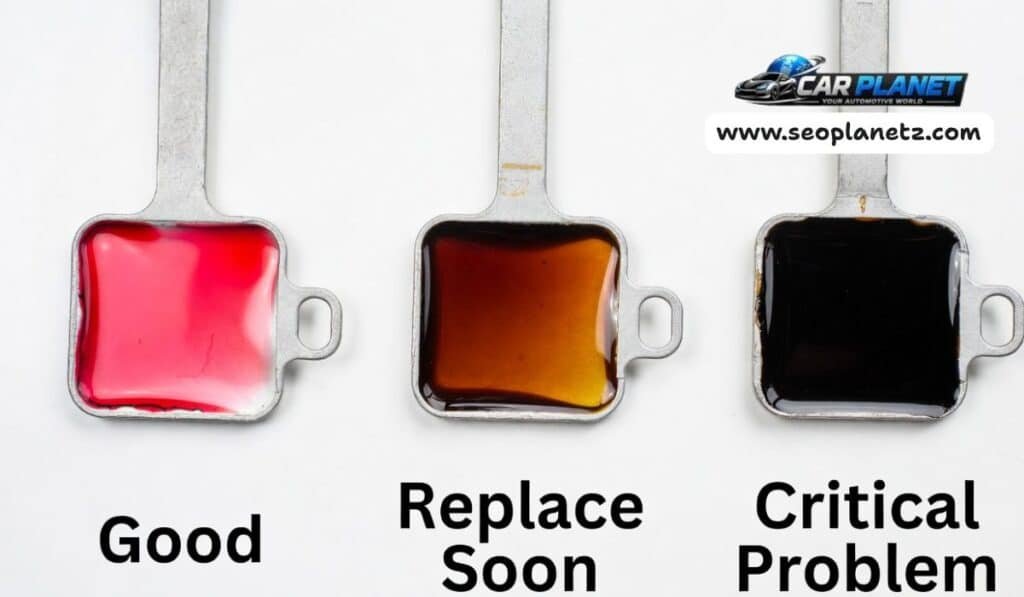
Light gray or thin white smoke sometimes indicates transmission fluid burning rather than coolant. When transmission fluid leaks onto hot engine components or the transmission overheats, it produces light-colored smoke with a distinctive burnt smell.
Warning signs:
- Smoke from under the hood rather than exhaust pipe
- Burnt, acrid smell (not sweet like coolant)
- Transmission slipping or rough shifting
- Low transmission fluid levels
- Reddish fluid leaking under vehicle
How to fix it: Check transmission fluid level and condition. If it’s low or appears dark and burnt, you may have leaks or overheating issues. Transmission fluid leaks require identifying and repairing the source ($150-$600). If the transmission is overheating, you might need a flush ($150-$250) or, in severe cases, rebuild or replacement ($1,800-$3,500).
5. Overheating Engine (Steam and White Vapor)
Sometimes what appears to be smoke is actually steam from an overheating engine. When engine temperatures exceed normal operating ranges (typically 195-220°F), coolant boils and creates steam that escapes from the radiator cap or cooling system components.
Overheating causes:
- Low coolant levels due to leaks
- Failing water pump
- Broken thermostat stuck closed
- Radiator blockage or damage
- Cooling fan malfunction
How to fix it: Engine overheating is a serious concern that requires immediate attention. AAA reports that overheating-related breakdowns are among the top reasons for roadside assistance calls, with thousands of drivers stranded annually due to cooling system failures. Regular cooling system inspections can prevent most overheating emergencies and save you from expensive towing fees and engine damage.
6. Oil Leaking onto Hot Engine Components
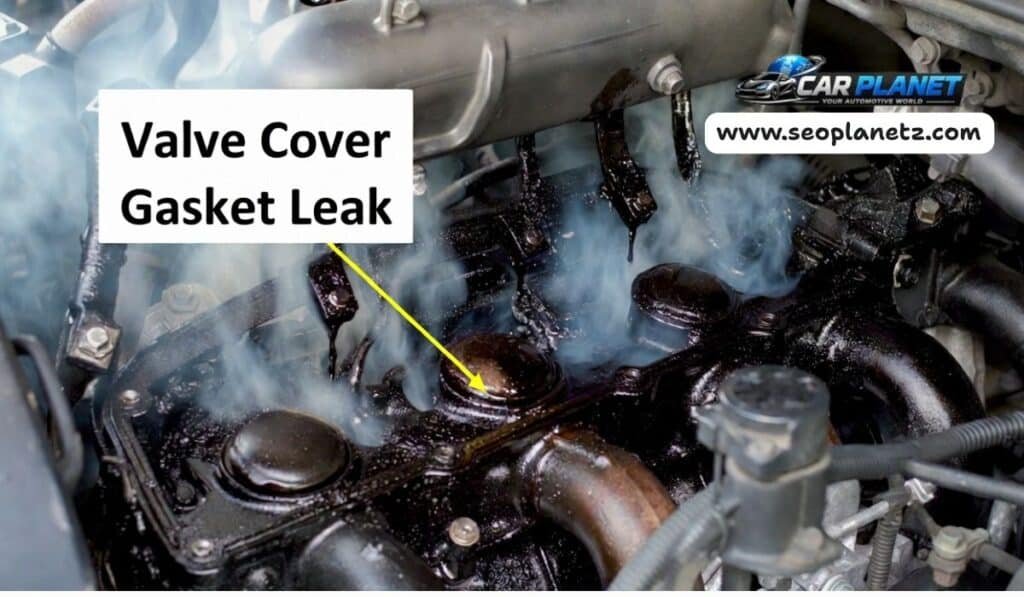
If you see smoke from under the hood rather than the exhaust, oil might be leaking onto hot engine parts like the exhaust manifold. This creates smoke and a burning oil smell distinct from exhaust-related issues and want to know why is my car smoking then read the common leaks problems below.
Common leak sources:
- Valve cover gaskets (top of engine, very common)
- Oil pan gasket (bottom of engine)
- Oil filter housing or incorrectly installed oil filter
- Camshaft and crankshaft seals
How to fix it: Identify the leak source by examining the engine when cold, looking for oil residue trails. Valve cover gasket replacement costs $150-$350. Oil pan gaskets require more labor ($200-$600). Clean leaked oil from engine components with degreaser to eliminate smoke and fire risk. While not immediately critical, oil leaks lead to low oil levels, which can cause severe engine damage.
7. Clutch Problems (Manual Transmission Vehicles)
For manual transmission vehicles, smoke from around the wheels or underneath during acceleration might indicate clutch slippage. A worn or burning clutch produces gray or white smoke with a distinctive acrid smell.
Clutch failure symptoms:
- Difficulty shifting gears
- Slipping—engine revs but car doesn’t accelerate proportionally
- Burning smell during driving
- Soft or spongy clutch pedal feel
How to fix it: Clutch replacement is necessary when components wear out, typically costing $500-$1,500 for economy cars and $1,200-$2,500 for larger vehicles. This is normal wear-and-tear maintenance on manual transmissions, with typical clutch life ranging from 60,000-100,000 miles. There’s no temporary fix for a failing clutch—once it starts slipping significantly, replacement is your only option.
Also Read: How long do car Batteries last? Complete Facts
What to Do When Your Car Starts Smoking
When smoke appears, your immediate response can prevent minor problems from becoming major disasters. Here’s exactly what to do:
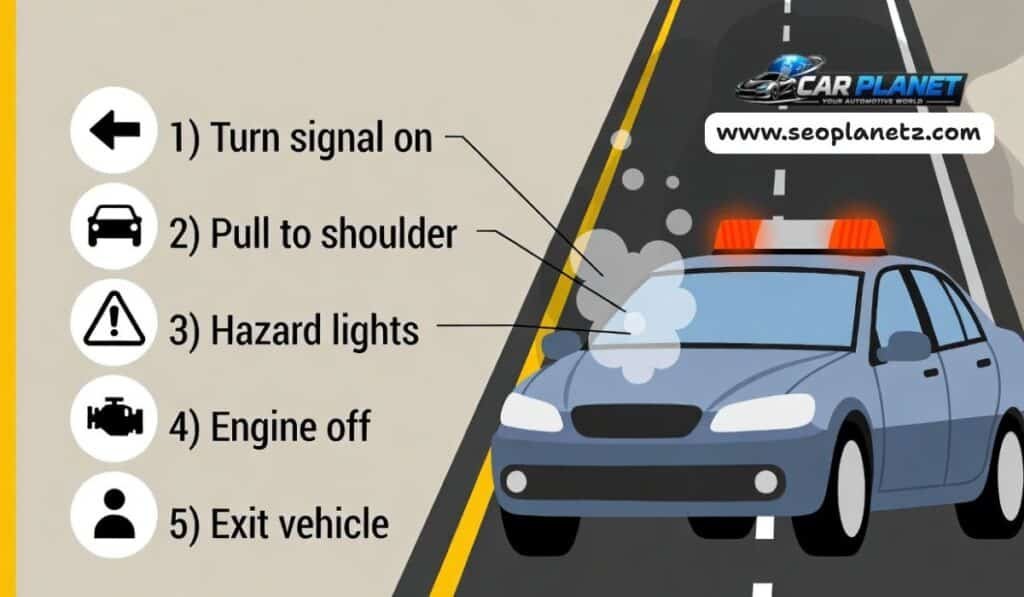
If you’re driving and notice heavy smoke:
- Safely pull over immediately – Use your turn signal and move to the shoulder
- Turn off the engine – This stops the damage from progressing
- Turn on hazard lights – Alert other drivers
- Exit the vehicle safely – Get away from the car, especially if you smell fuel
- Never open the hood immediately – If you see flames, call 911 and stay back
For less severe smoke:
Once parked safely, wait 5-10 minutes for the engine to cool. Then:
- Carefully open the hood
- Check fluid levels (oil, coolant, transmission)
- Note the smoke characteristics: color, smell, source location
- Take photos for your mechanic
- Don’t attempt to drive long distances—have the vehicle towed if smoke is persistent
Preventing Car Smoking Issues: Maintenance Tips
Why is my car smoking? Preventive maintenance is your best defense against car smoking issues. The National Highway Traffic Safety Administration emphasizes that following manufacturer-recommended maintenance schedules significantly reduces the risk of mechanical failures and improves overall vehicle safety. Investing in regular maintenance costs a fraction of what you’d spend on emergency repairs and keeps you safe on the road.
Essential preventive measures:
Oil & Lubrication:
- Change oil every 3,000-5,000 miles (conventional) or 7,500-10,000 miles (synthetic)
- Use the correct oil viscosity specified by your manufacturer
- Check oil level monthly
Cooling System:
- Flush and replace coolant every 30,000-50,000 miles
- Inspect hoses annually for cracks or bulges
- Check coolant level monthly when engine is cold
Air & Fuel Systems:
- Replace air filter every 12,000-15,000 miles
- Use quality fuel from reputable stations
- Replace fuel filter per manufacturer schedule (30,000-60,000 miles)
Transmission:
- Change automatic transmission fluid every 30,000-60,000 miles
- Inspect for leaks monthly
- Don’t ignore shifting problems
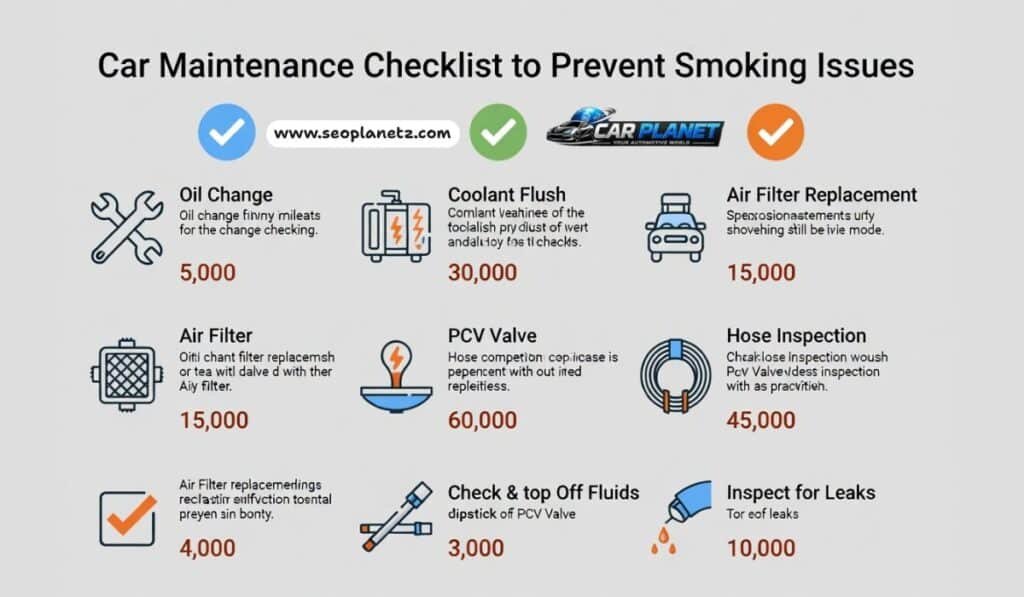
Cost comparison: An oil change costs $40-$80. An engine replacement costs $4,000-$8,000. A coolant flush costs $100-$150. A head gasket replacement costs $1,000-$2,000. Prevention is always cheaper.
When to See a Mechanic Immediately & ask him Why My is Car Smoking
Some smoking situations demand immediate professional attention. Don’t delay if you experience:
Critical warning signs:
- Heavy white smoke suggesting coolant burning (head gasket failure)
- Blue smoke accompanied by rough running or significant power loss
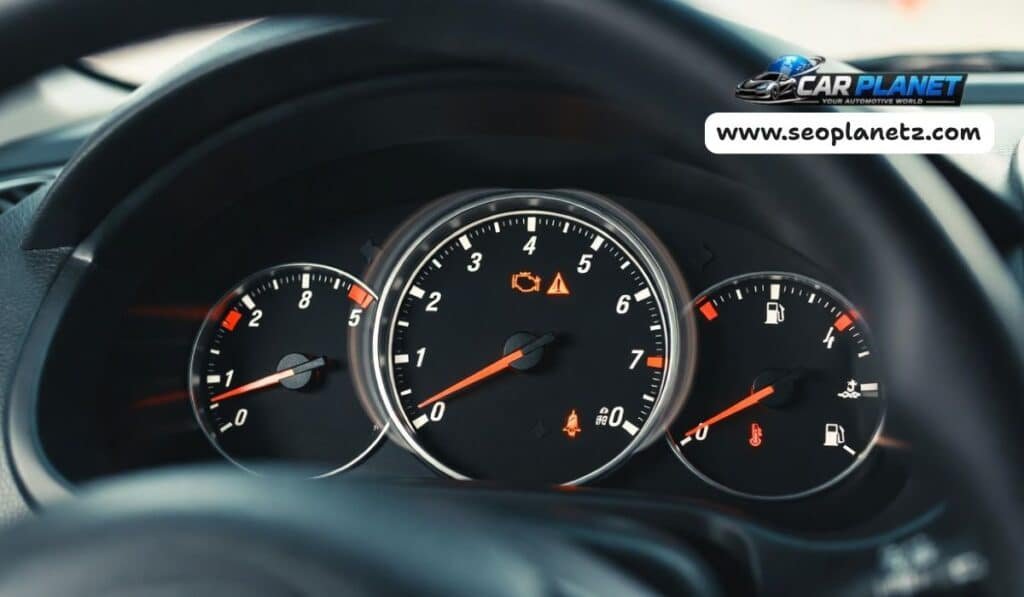
- Any smoke with temperature warning lights illuminated
- Smoke accompanied by unusual noises (knocking, grinding, squealing)
- Smoke that increases rather than decreases as the engine warms
- Multiple warning lights on your dashboard alongside smoke
- Sweet smell with smoke (coolant leak)
- Smoke after any collision or impact
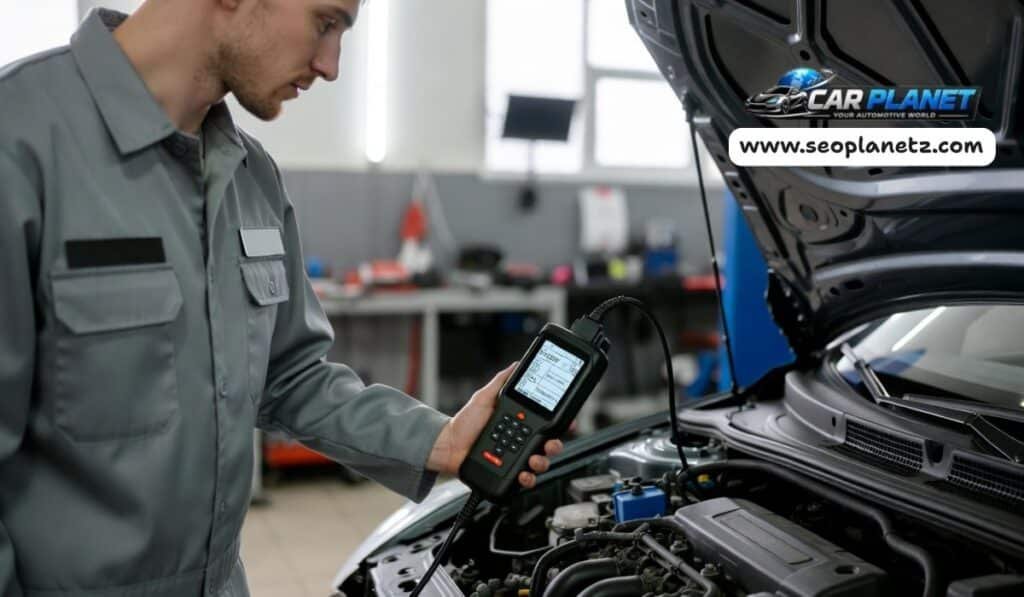
Professional diagnostic advantages:
Modern vehicles store trouble codes that mechanics can read with scan tools, making diagnosis faster and more accurate. A $100-$150 diagnostic fee now might prevent a $5,000 engine replacement later. When choosing a repair shop, look for ASE-certified mechanics who have passed rigorous testing and demonstrate proven expertise in automotive diagnostics and repair. ASE certification ensures your mechanic has the knowledge and skills to properly diagnose and fix complex engine problems.
Red flags to avoid with mechanics:
- Won’t show you the problem or explain what’s wrong
- Pressure you to make immediate decisions
- Don’t provide written estimates
Green flags of good mechanics:
- ASE certifications
- Show you the damaged parts
- Provide written estimates and warranties
- Positive reviews across multiple platforms
Frequently Asked Questions (FAQ)
Q1: Why is my car smoking white smoke from the exhaust?
Thin white smoke on cold mornings is normal condensation. Thick, persistent white smoke with a sweet smell indicates coolant burning, usually from a blown head gasket. This requires immediate attention; repair costs are $1,000-$2,000.
Q2: What does blue smoke from my car mean?
Blue smoke means your engine is burning oil due to worn piston rings, damaged valve seals, or a clogged PCV valve. PCV valve replacement costs $20-$75, while serious issues like piston rings cost $1,500-$3,500.
Q3: Is it safe to drive my car if it’s smoking?
Light white steam on cold mornings is safe. Thick white, blue, or black smoke with power loss or warning lights means stop immediately. Driving can turn a $500 repair into a $5,000 engine replacement.
Q4: How much does it cost to fix a smoking car?
Costs vary: PCV valve ($20-$75), air filter ($15-$80), oxygen sensor ($200-$400), valve cover gasket ($150-$350), head gasket ($1,000-$2,000), piston rings ($1,500-$3,500), engine replacement ($4,000-$8,000).

Q5: Can I fix a smoking car myself?
You can replace air filters, PCV valves, and top off fluids yourself. Never attempt head gasket replacement, piston rings, or transmission work without expertise—these require specialized tools and can cost more if done wrong.
Q6: What should I do immediately when my car starts smoking?
Pull over safely, turn off the engine, turn on hazard lights, and exit the vehicle. Wait 5-10 minutes before opening the hood. Note smoke color and smell, check fluid levels, and call for a tow if smoke is persistent.
Q7: Why is my car smoking when I first start it but then stops?
Light white smoke for 30-60 seconds is normal condensation. Blue smoke on startup that disappears indicates worn valve seals ($800-$1,500 to fix). It’s not an emergency but should be addressed soon.
Q8: Does black smoke mean my engine is failing?
Black smoke indicates too much fuel burning (rich mixture) from a clogged air filter, faulty sensors, or bad injectors. It’s not immediately catastrophic but wastes fuel and can damage spark plugs and the catalytic converter if ignored.
Q9: How can I prevent my car from smoking?
Change oil regularly (3,000-7,500 miles), flush coolant (30,000-50,000 miles), replace air filters (12,000-15,000 miles), check fluid levels monthly, and follow your vehicle’s maintenance schedule religiously. Prevention costs far less than repairs.
Q10: When is smoking from a car an emergency?
It’s an emergency if you see: thick white smoke with overheating, visible flames, heavy smoke with power loss, loud knocking noises, temperature gauge in red zone, smoke after collision, or smoke with fuel smell. Pull over immediately and call for help.
Also Read: How to negotiate a Car price in 2026?
Conclusion
Understanding why is my car smoking empowers you to respond appropriately when problems arise. Whether it’s white smoke from coolant leaks, blue smoke from burning oil, black smoke from rich fuel mixture, or steam from overheating, each type provides valuable diagnostic information.
The seven common causes we’ve covered—head gasket failure, burning oil, black smoke from car, rich fuel mixture, transmission problems, overheating, external oil leaks, and clutch issues—account for the vast majority of smoking cars. By knowing the warning signs and understanding urgency levels, you can make informed decisions about whether to pull over immediately or schedule a repair appointment.
Remember: smoke is never normal once your engine reaches operating temperature, color and smell are your best diagnostic tools, early intervention prevents expensive repairs, and regular maintenance prevents most smoking problems. Your car is communicating through that smoke—listen to what it’s saying, take appropriate action, and you’ll keep your vehicle running safely for years to come.
Don’t ignore the warning signs, don’t delay necessary repairs, and don’t let cost concerns prevent proper diagnosis. Address smoking issues promptly to protect your investment, ensure your safety, and avoid catastrophic breakdowns.