
10 Critical Causes about Why Won’t My Car Start
If you’ve ever wondered why won’t my car start, you’re not alone — it’s one of the most frustrating situations any driver faces. Whether you’re heading to work on a cold morning or returning from a long trip, a car that refuses to start can throw off your entire day. The good news is that most starting problems have clear causes and straightforward solutions. In this guide, we’ll walk you through the 10 most common reasons your car won’t start in 2026, along with practical tips to diagnose and fix each one. Understanding these issues can save you time, money, and a lot of stress.
| What You See or Hear | The Most Likely Culprit | Urgency Level |
| Rapid “machine-gun” clicking when turning the key | Weak Battery (Not enough juice to engage) | 🟢 Easy Fix |
| A single loud “Thunk” or complete silence | Faulty Starter Motor or Ignition Switch | 🟡 Needs Repair |
| Engine cranks (Rrr-Rrr-Rrr) but just won’t “catch” | Fuel Pump or Spark Plug Failure | 🟠 Intermediate |
| Dashboard lights flicker like a disco or dim down | Loose Battery Terminals or Alternator | 🟢 Check Now |
| Car starts, runs for 2 seconds, then dies | Security/Immobilizer or Clogged Fuel Filter | 🟡 Tech Issue |
| Starts fine after sitting for 20 minutes | Engine Flooding or Vapor Lock (Heat) | 🟢 No Cost Fix |
| Loud bang or grinding followed by total failure | Timing Belt Snapped (Serious Damage) | 🔴 Stop & Tow |
1. Dead or Weak Battery — The #1 Reason Why Won’t My Car Start
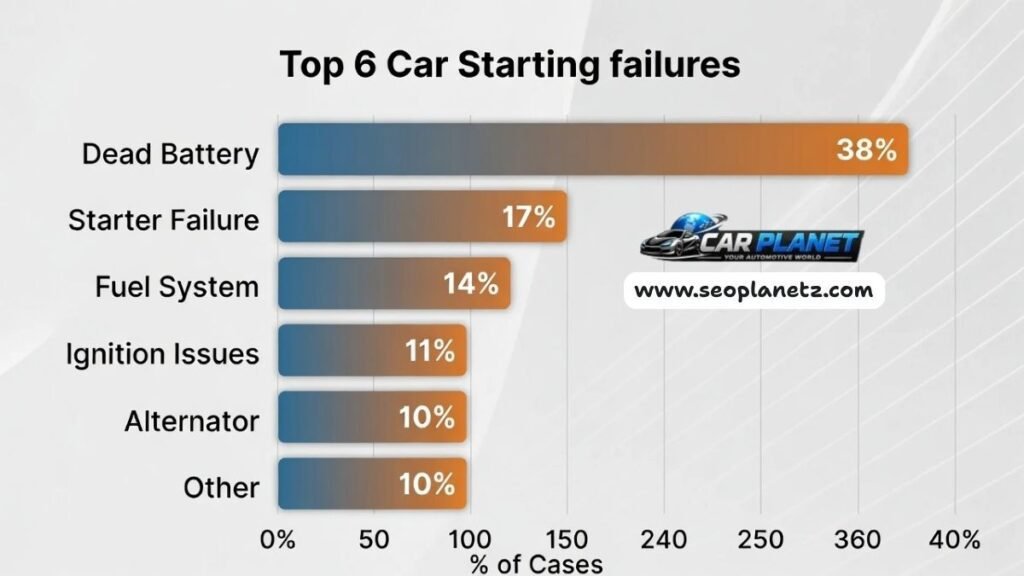
A dead battery is the leading cause of a car not starting. Car batteries typically last 3–5 years, and when they fail, you’ll often hear a clicking sound or nothing at all when you turn the key.
Signs of a dead battery include dim headlights, slow engine cranking, and electrical components not working properly. If your car won’t start but the lights turn on, the battery may be weak rather than completely dead.
Also Read: 2017 Honda Civic Review, Price, and Specs
You can test your battery with a multimeter — a healthy battery reads 12.6 volts or higher.
| Battery Voltage | Battery Condition |
|---|---|
| 12.6V+ | Fully charged |
| 12.0–12.5V | Partially discharged |
| Below 12.0V | Needs replacement |
| 0V | Dead/faulty cell |
2. Why Won’t My Car Start by Faulty Starter Motor
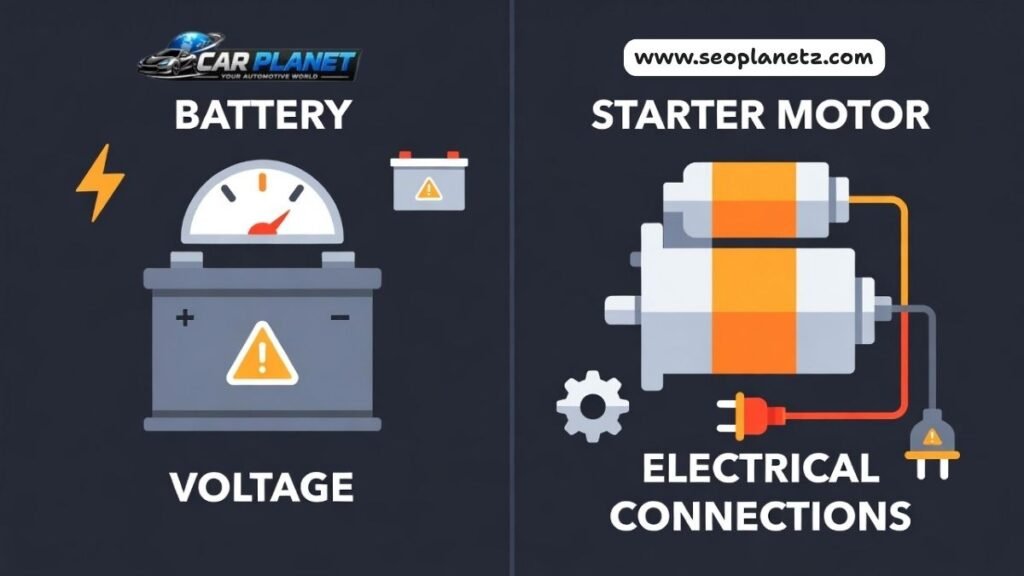
The starter motor cranks the engine when you turn the ignition. When it fails, you may hear a single loud click or no sound at all, even if the battery is fully charged.
A bad starter is often confused with a dead battery. The key difference: if jump-starting doesn’t help and the battery is good, suspect the starter. This is a common reason why won’t my car start even with a jump.
Also Read: Why Is My Car Smoking? 7 Common Causes and How to Fix Them
A starter motor replacement typically costs $150–$400 depending on the vehicle.
3. Why Won’t My Car Start in the Cold — Frozen or Weak Battery
Cold weather is a major enemy of car batteries. At 32°F (0°C), a battery loses about 20% of its capacity. At -4°F (-20°C), that loss jumps to 50%.
This is why won’t my car start in the cold is such a common search in winter months. The engine oil also thickens in low temperatures, requiring more power to turn the engine over — a double strain on an already weakened battery.
Parking in a garage, using a battery tender overnight, or upgrading to a cold-weather battery can prevent this issue. According to AAA, cold weather battery failures spike dramatically between November and February.
Also Read: How to Jump a Car Safely and Correctly in 2026
4. Bad Alternator (Why Won’t My Car Start)
The alternator charges your battery while the engine runs. If the alternator fails, the battery drains even while driving — and eventually, the car won’t start at all.
Symptoms include a battery warning light on the dashboard, dimming lights while driving, and electronics behaving erratically. Many drivers mistake this for a battery problem, but replacing the battery won’t fix a bad alternator.
A healthy alternator outputs between 13.5–14.5 volts. You can test this with a multimeter while the engine is running.
Also Read: How Long Do Car Batteries Last? 7 Critical Facts You Need to Know
5. Fuel System Problems — Empty Tank or Bad Fuel Pump
Sometimes the answer to why won’t my car start up is surprisingly simple: you’re out of fuel. A faulty fuel gauge can show incorrect readings, leading drivers to believe they have more gas than they do.
Beyond an empty tank, a failed fuel pump prevents fuel from reaching the engine. You may hear the engine cranking normally but failing to fire. A clogged fuel filter can produce the same result.
Fuel pump replacement costs range from $220 to $1,000 depending on vehicle type. The Car Care Council recommends replacing fuel filters every 30,000 miles as a preventive measure.
6. Ignition Switch Failure
The ignition switch sends electrical current to the starter and fuel system. When it fails, turning the key does nothing — the engine doesn’t crank, and no electrical systems activate.
Unlike a dead battery, a faulty ignition switch means the car has power but refuses to respond. This is a key distinction when diagnosing why won’t my car start but has power.
Watch for warning signs like the car stalling shortly after starting, or accessories not working even when the key is in the “on” position.
Also Read: Do Electric Cars Have Transmissions in 2026? The Complete Guide
7. Clogged or Failing Spark Plugs
Spark plugs ignite the air-fuel mixture in the engine cylinders. Worn or fouled spark plugs cause misfires, rough idling, and eventually prevent the car from starting at all.
Most spark plugs last 30,000–100,000 miles depending on type (copper vs. iridium). If your car cranks but won’t start, failing spark plugs are a strong suspect — especially if the engine runs roughly when it does start.
Replacing spark plugs is a relatively affordable fix, typically $60–$250 for a full set.
8. Why Won’t My Car Start With a New Battery — Check These Parts
If you’ve just installed a new battery and the car still won’t start, the problem lies elsewhere. This is a frustrating but common scenario.
The most likely culprits are a bad alternator (which damaged the old battery and will drain the new one), a faulty starter, loose or corroded battery terminals, or a security system that hasn’t been reset after the battery swap.
Always clean the battery terminals during replacement and ensure a tight connection. Sometimes the fix is as simple as properly re-seating a loose cable.
| Component | Average Replacement Cost | Lifespan |
|---|---|---|
| Car Battery | $100–$250 | 3–5 years |
| Alternator | $300–$700 | 7–10 years |
| Starter Motor | $150–$400 | 100,000–150,000 miles |
| Fuel Pump | $220–$1,000 | 100,000+ miles |
| Spark Plugs | $60–$250 (set) | 30,000–100,000 miles |
| Ignition Switch | $80–$250 | 10+ years |
8.5 The “Survival” Checklist: 7 Quick DIY Fixes Before You Call a Tow Truck
If you’re stranded, don’t panic. Before spending $100+ on a mechanic, try these expert-approved “hacks” that often solve the problem in minutes:
-
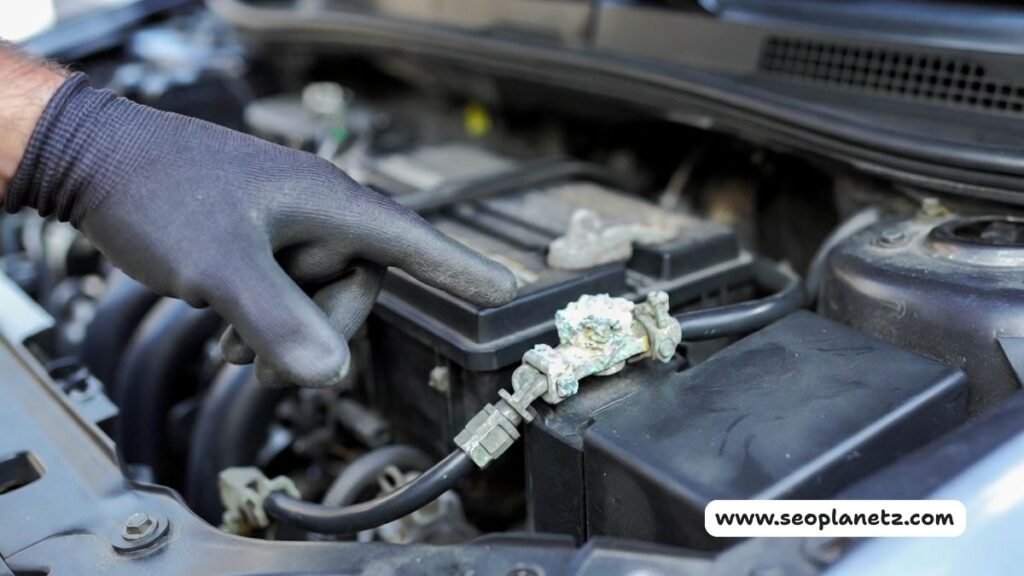
The “Wiggle Test” (Battery Terminals): Give your battery cables a firm tug. If they move even a little bit, your starter isn’t getting enough juice. Tighten the bolts and if you see white crusty powder, pour some soda or warm water on them to clear the corrosion instantly.
-
The “Neutral” Trick: Sometimes your car’s computer “forgets” it’s in Park. Try shifting the gear lever to Neutral (N) and then turn the key. This bypasses a faulty Neutral Safety Switch, which is a very common hidden culprit.
-
Tap the Starter Motor: If you hear a single click, your starter solenoid might be stuck. Find the starter (usually a small cylinder near the engine) and give it a light tap with a wrench or a heavy shoe. This can “wake up” the motor for one last start so you can drive home.
-
The “Key Fob Reset”: If your push-button start isn’t responding, your fob battery might be too weak to send a signal. Hold the key fob directly against the Start button while pressing it. Most cars have a hidden backup sensor there specifically for dead fobs.
-
Cycle the Fuel Pump: Turn your ignition to the “ON” position (dash lights on) without starting the car. Wait 3 seconds, turn it off, and repeat 3 times. This helps prime the fuel lines if your fuel pump is starting to struggle.
-
Check for “Vapor Lock” in Heat: If it’s a scorching day, your fuel might have turned into gas bubbles in the lines. Open the hood to let the engine cool for 20 minutes, then try again.
-
The “Jump-Start” Patience: Most people try to start the car the second the cables are connected. Don’t. Let the donor car run for at least 5 minutes to give your dead battery a “surface charge” before you try to crank it.
9. Why Your Modern Car Won’t Start: Signal Interference
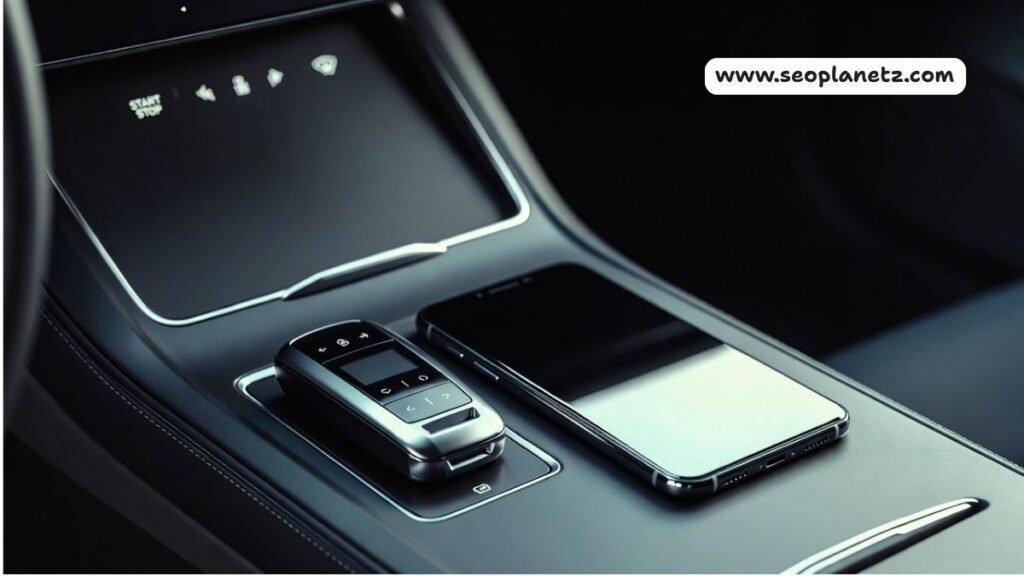
In 2026, keyless start systems are standard, but they aren’t foolproof. Sometimes your car refuses to start simply because your Smart Key Fob is too close to your smartphone or a powerful laptop in your bag. The electromagnetic signals from these devices can “jam” the security handshake between the key and the car.
-
The Fix: Try holding your key fob directly against the Start/Stop button while pressing it. Most manufacturers build a “passive” backup sensor there specifically for this signal ghosting issue.
Also Read: AWD vs FWD in 2026: What’s the Difference Between Them?
10. Corroded or Loose Battery Terminals (The “Invisible” Fault)
You might have a brand-new battery, but if the terminals (the metal clamps) are loose or covered in white, crusty powder (acid corrosion), the electricity simply can’t flow to the starter. This is a classic reason why your car has power for the radio but won’t crank the engine.
Pro Tip: Even a half-turn of a loose bolt can prevent a car from starting. Always give the cables a firm tug—if they move, they aren’t tight enough. Cleaning them with a simple mixture of baking soda and water can often solve a “dead car” problem in minutes without spending a dime.
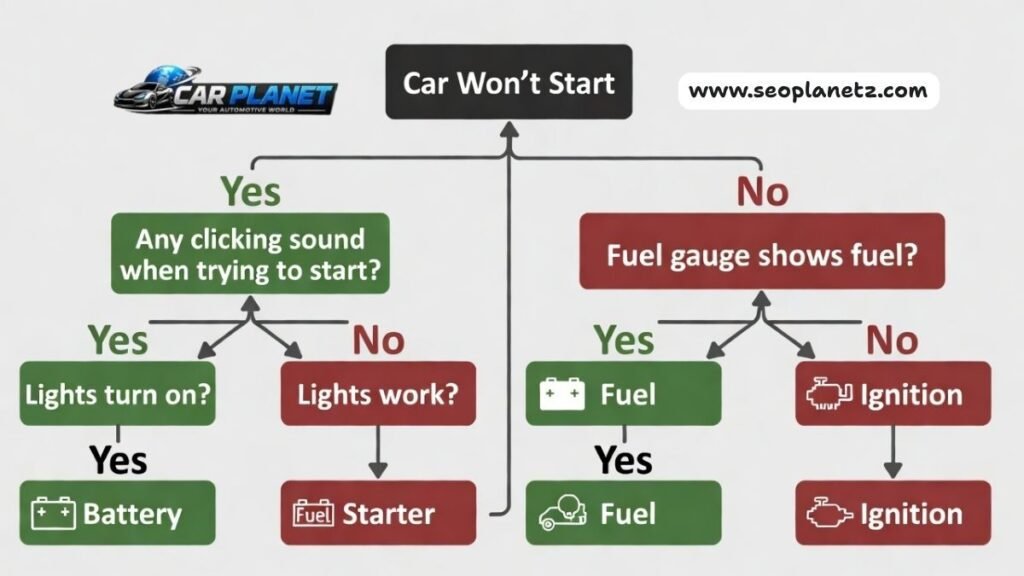
A broken timing belt is a serious mechanical failure that can bend engine valves and cause expensive damage. Timing belt replacement is recommended every 60,000–100,000 miles as preventive maintenance. Check your vehicle manual or Edmunds for your model’s specific interval.
Key Takeaways
Understanding why won’t my car start starts with knowing where to look. Here are the most important points from this guide:
- A dead or weak battery is the #1 cause — test voltage before anything else.
- Cold weather dramatically reduces battery performance and is a leading seasonal cause.
- If the car won’t start even with a jump, the starter motor or ignition switch may be the culprit.
- A new battery that still won’t start points to the alternator, starter, or loose terminals.
- Fuel pump failure, bad spark plugs, and anti-theft system glitches are frequently overlooked causes.
- Timing belt failure is the most serious cause and may indicate significant engine damage.
- Most starting issues are preventable with regular maintenance and periodic inspections.
Frequently Asked Questions
Q: Why is my car suddenly not starting?
Sudden starting failure is most commonly caused by a dead battery, blown fuse, or faulty starter motor. Check if the lights and electronics are working to narrow down whether it’s an electrical or mechanical issue.
Q: Why won’t my car start but I still have power?
If the lights and radio work but the engine won’t crank, the problem is likely the starter motor, ignition switch, or a poor connection between the battery and starter. Power reaching accessories doesn’t mean enough current is reaching the starter.
Q: What is the first thing to check when a car won’t start?
Always check the battery first. Test the voltage with a multimeter or try jump-starting. If the car starts with a jump, the battery or charging system is the issue. If it doesn’t, move to checking the starter and fuel system.
Q: How do you tell if it’s your starter or battery?
If you hear rapid clicking when you turn the key, it’s usually the battery. A single loud click or complete silence points to the starter. A fully charged battery that still won’t crank the engine is a strong indicator of starter failure.
Q: How do I tell if I blew my engine?
Signs of engine damage include loud knocking or grinding before the car stopped, white or blue smoke from the exhaust, oil spots under the car, and the engine cranking but never firing. A compression test performed by a mechanic confirms internal engine damage.
Q: How do I fix my car if it won’t start?
Start by diagnosing the cause — check the battery, starter, fuel level, and warning lights. Simple issues like a dead battery or empty tank you can fix yourself. For starter, alternator, or engine problems, professional repair is recommended. Resources like RepairPal can help you estimate fair repair costs.
Q: Why won’t my car start with a jump?
If jump-starting doesn’t work, the battery may be completely dead (not accepting charge), or the problem isn’t the battery at all. A faulty starter motor, bad ignition switch, or seized engine won’t be fixed by a jump. Have the vehicle diagnosed by a mechanic.
Q: Can a bad ground cable cause a car not to start?
Yes. A corroded or loose ground cable prevents the electrical circuit from completing, causing symptoms identical to a dead battery — even if the battery is fully charged. Always check both positive and negative cable connections.
Q: Why does my car not start when it’s hot outside?
Heat can cause vapor lock in the fuel system, a failing heat-sensitive starter solenoid, or battery issues. If your car refuses to start after sitting in the sun, wait 20–30 minutes and try again. Persistent hot-weather starting issues should be diagnosed by a mechanic.
Q: How long does it take to charge a dead battery?
A standard charger takes 4–8 hours to fully charge a dead battery. A trickle charger takes 12–24 hours. A jump start gives only a surface charge — you should drive for at least 30 minutes or use a proper charger afterward.
Q: Is it safe to drive with a battery warning light on?
No. A battery warning light usually means the alternator is not charging properly. You may have 30 minutes to 1 hour of driving before the car dies completely. Head straight to a mechanic or auto parts store for testing.
Also Read: The Ultimate 2025 Nissan Maxima Specs, Prices, and Performance Guide
Our Final Opinion:
Knowing why won’t my car start can save you hours of frustration and hundreds of dollars in unnecessary repairs. The most common causes — dead batteries, starter failure, fuel system problems, and ignition issues — are all diagnosable with a little patience and the right information. Whether your car won’t start in the cold, won’t start with a new battery, or simply has no response at all, working through the checklist in this guide will point you toward the answer.
Regular maintenance is your best defense. Replace your battery every 4–5 years, keep up with spark plug and timing belt intervals, and don’t ignore warning lights on your dashboard. If you’re ever unsure why won’t my car start, don’t hesitate to consult a certified mechanic — catching a small problem early prevents a much bigger one later. For more guidance, Consumer Reports’ car reliability database is an excellent resource for your specific make and model.